



OPINION:
On Nov. 1, Russia formally left the Council of Europe’s anti-torture convention. That ends, on paper, the convention’s monitoring of Russia’s prisons. In practice, Moscow had already kept out the inspectors for years.
It is not hard to understand why. Since its full-scale invasion, Russia has used torture as a strategy to crush dissent in occupied Ukraine. Few have felt it more than the priests and pastors who refuse to submit.
Russia’s goal is to break any religion that the Kremlin cannot command. It is failing.
People were interested in these podcasts
Our team has interviewed several of those pastors and priests. Their ordeals often start with the loss of their church and end in a basement.
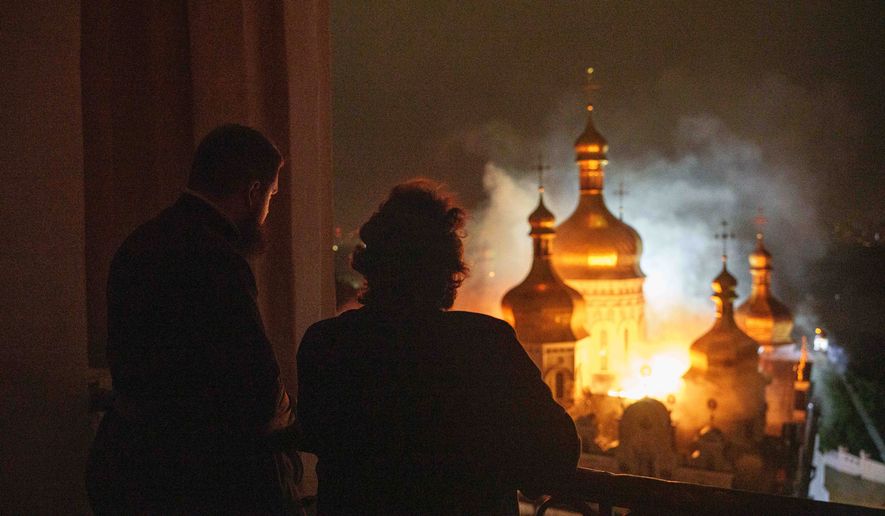
As of February 2026, Russia has damaged or destroyed more than 740 religious buildings. Moscow could argue that these churches are collateral damage in war, but strikes during services, attacks far from the front and the disproportionate toll on Protestant churches make that argument hard to believe.
Torture admits no such argument. Nobody tortures by accident. Under occupation, it even has its own phrase: being “taken to the basement.”
So why would an army that claims to defend Christianity torture a Christian priest or pastor?
Often, because of the church he serves. Occupation officials and Russian state media brand Protestant congregations as “cults” and “Western agents.” Pastors we interviewed were asked to name their “American CIA handler.” Greek Catholic communities are cast as instruments of “Catholic expansion.” Independent Orthodox communities are branded “schismatics.”
Moscow is not just controlling religious life in the lands it occupies. It is eliminating any of it that stays independent. Churches that refuse to submit have their buildings seized, their services banned, and their pastors and priests persecuted or driven out.
Those who try to register must provide the authorities with the names, addresses, ages and nationalities of their members, and their founders must hold Russian passports.
This system has a church behind it. The Russian Orthodox hierarchy, whose patriarch chairs the council that declared the invasion a “holy war,” has taken over the Orthodox dioceses in occupied Ukraine.
For Viktor, a Ukrainian evangelical in our film “A Faith Under Siege,” the Russian Orthodox hierarchy’s role was personal. He says Russian forces held him in a basement and tortured him for 25 days. Then they brought in a Russian Orthodox priest, who forced him to kiss a cross and tried to cast demons out of him, all because he was a Protestant.
Viktor’s story is not unique. As of December 2025, at least 54 civilian clergy who continued their ministry had been killed, and the fate of 20 priests abducted by Russian forces is still unknown.
Of the released prisoners interviewed by United Nations monitors, more than 95% of Ukrainian prisoners of war and 85% of civilian detainees reported torture or ill-treatment, and Russia still holds more than 16,000 Ukrainian civilians.
Yet the torture is failing at its purpose.
The Rev. Petro Krenitsky was serving the Divine Liturgy in Melitopol when Russian agents came for him. They demanded he reveal what he had heard in confession. When he refused, they beat him, stripped him and forced him to his knees.
“I asked the Holy Spirit, ’Lord, give me strength. Be closer to me than all of this hell,’” Father Krenitsky says in our short film, “No Priests Left.” He came out of it able to say something he could not before: that he understands “where the martyrs got their strength when they were tortured.”
Torture is built to isolate, to convince a man that he is alone and that his God has abandoned him. It failed in that room.
A regime can seize a church, monitor its congregation and choose its pastor. It cannot destroy faith. Congregations bombed out of their buildings worship in shelters and ruined sanctuaries, and Ukraine has registered more than 3,000 new religious organizations since the invasion.
Faith in Ukraine has survived torture, but faith alone cannot hold Russia accountable for the pain it has inflicted. Washington can help. Congress should pass the Countering Russia’s War on Faith Act, which would require the government to document religious persecution in occupied Ukraine and sanction those responsible.
The Trump administration should demand independent access to every prison holding Ukrainian clergy and make their release a condition of any peace deal. Russia left the anti-torture convention so that no one would be watching. America should make sure that everyone is.
• Colby Barrett is an entrepreneur, farmer and former Marine officer who has traveled to Ukraine four times with humanitarian aid convoys. Steven Moore is founder of the Ukraine Freedom Project and is a former congressional Republican.

Please read our comment policy before commenting.