



OPINION:
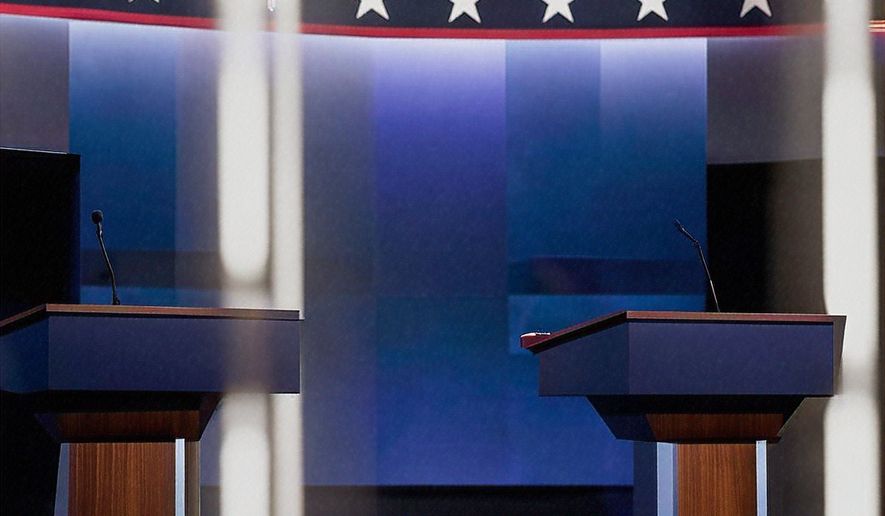
Two weeks ago on this page, we chastised Sen. Mark R. Warner, Virginia Democrat, for his unwillingness to agree to debate his Republican challenger in his bid for a fourth term in the U.S. Senate.
At the time, Mr. Warner claimed that his Senate schedule was too busy to permit him to debate retired Army Maj. Gen. Bert Mizusawa, the Republican nominee.
That was then, and this is now.
People were interested in these podcasts
The Senate adjourned Oct. 3 for a full month before the Nov. 3 elections, so Mr. Warner can no longer hide behind that flimsy excuse.
Unfortunately for voters who want to cast an informed ballot, however, Mr. Warner’s evasion appears to be part of a calculated pattern. Democrats running for high office seem intent on keeping their electorates in the dark about their liberal voting records and their ill-advised, far-left policy prescriptions.
In Florida, Democratic gubernatorial nominee David Jolly announced Sept. 20 that he would not debate Rep. Byron Donalds, a Republican. The men are competing to succeed term-limited Gov. Ron DeSantis, a Republican.
“We can understand why Jolly wouldn’t want to get up and defend his crazy liberal agenda in a debate. It’s because his campaign is too far left and too expensive for Florida,” Mr. Donalds’ campaign said.
In Arizona, Gov. Katie Hobbs, a Democrat seeking a second four-year term, is refusing to debate her Republican challenger, Rep. Andy Biggs.
Ms. Hobbs, who in 2022 won her first term by a narrow margin, likewise refused that year to debate her Republican opponent, retired TV news anchor Kari Lake. Then, as now, she is opting instead for safe campaign rallies attended by friendly partisans.
“Arizona voters, especially the independent and persuadable voters up for grabs this cycle, deserve to hear from statewide candidates in a traditional debate setting, one that was held in every Arizona gubernatorial race since 1954, until Katie Hobbs ran for the position in 2022,” Biggs campaign adviser Drew Sexton said in a statement.
Ms. Hobbs’ campaign manager, Nicole DeMont, responded in a statement that the Democratic governor declined to debate “because face-to-face engagement with Arizonans is more effective than a stage designed for short sound bites and political theater.”
Translation: Ms. Hobbs does not want to answer tough questions about her four years in the governor’s office — or what she proposes for the next four years.
If she were truly interested in engaging with Arizona voters, Ms. Hobbs could reach far more of them in debates televised statewide than at a candidate meet-and-greet. She prefers to hobnob (pun intended) with friendlies at tightly controlled partisan campaign rallies, where the risk of potentially damaging gaffes is minimized.
Yet the most egregious example of Democratic candidates thumbing their noses at voters arose in Minnesota earlier this month.
The three Democratic candidates for statewide office — outgoing Sen. Amy Klobuchar, running for governor; Lt. Gov. Peggy Flanagan, hoping to take the Senate seat being vacated by retiring Sen. Tina Smith; and Keith Ellison, seeking another term as state attorney general — have all faced backlash over debate scheduling. Ms. Klobuchar and Ms. Flanagan have spurned invitations from KSTP-TV, the ABC affiliate in St. Paul, for Oct. 2 debates with their Republican counterparts.
Back in Virginia, Mr. Warner must defend his nearly 18-year voting record, which hardly ever deviates from the liberal Democratic Party line.
By not debating and by sticking to friendly campaign rallies, he is intentionally keeping the Virginia electorate largely in the dark about his record.
He owes Virginia voters a chance to see him and Mr. Mizusawa side by side behind lecterns in a TV studio and to hear their competing visions for the nation’s future.
Mr. Warner is cynically taking advantage of the fact that tens—if not hundreds—of thousands of Virginians have already cast ballots in the state’s unduly long early-voting period, which began Sept. 19.
So even if Mr. Warner were now to finally agree to debate and then commit a serious gaffe, too bad for those who already voted for him. There is no “buyer’s remorse” provision in politics.
Still, Mr. Warner should agree to three televised debates across the commonwealth: in Northern Virginia, the Virginia Beach/Norfolk area and Roanoke.
All the other debate-dodging Democratic candidates for elective office should likewise step up. The American people deserve better.

Please read our comment policy before commenting.