



OPINION:
The wisdom of President Kennedy’s astute economic policy observation in October 1963 that “a rising tide lifts all boats” appears to have been lost on far too many in the WNBA and beyond.
The women’s basketball league, now in the final week of its 2026 season, was largely ignored by sports fans for most of the first 27 years of its existence. That was until the 2024 season, when Caitlin Clark signed with the Indiana Fever and went on to win the WNBA Rookie of the Year award.
Ms. Clark — twice named the national college basketball player of the year and the NCAA Division I all-time leading scorer while playing for the Iowa Hawkeyes — has taken the WNBA by storm over her three seasons in the league, with record-setting on-court performances and a telegenic, girl-next-door persona.
People were interested in these podcasts
In the 2026 regular season, which ended Sept. 24, she scored 891 points and had 333 assists, for a per-game average of 22.3 points and 8.3 assists. She also became the first WNBA player to record five games of 30 points and 10 assists in a single season.
In Game 2 of the first-round playoff series against the Las Vegas Aces on Sept. 29, The Athletic reported, Ms. Clark became “the first player in WNBA history to surpass 25 points and 15 assists in a playoff game.”
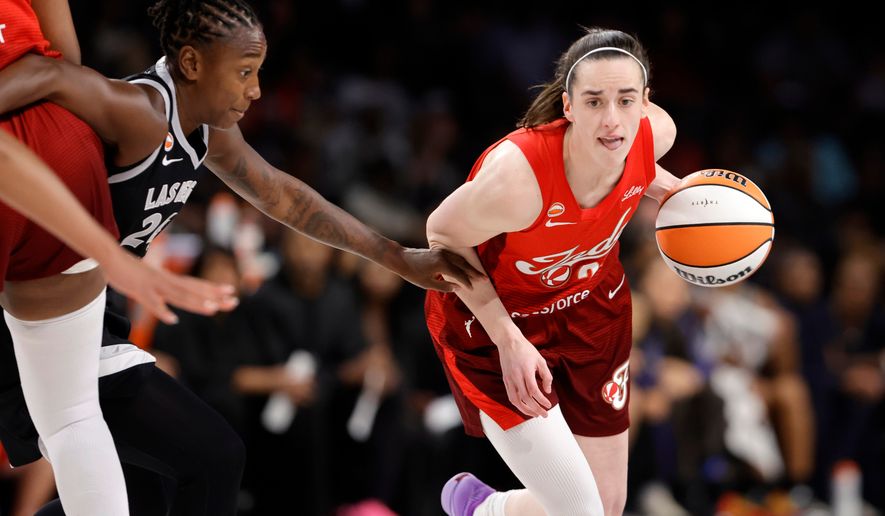
These are just a few of Ms. Clark’s many statistical achievements, so it is hardly an overstatement to say that the Indiana Fever point guard is the “rising tide” that is lifting the WNBA’s boats as a whole — along with everyone on them.
You might even say Ms. Clark’s “rising tide” has turned a tugboat into a cruise ship.
The exponentially greater interest in women’s basketball — much higher attendance at league games and much larger TV audiences, especially when Indiana is playing — is partly because of what Forbes dubbed “the Caitlin Clark Effect.”
That tide, in turn, has lifted all boats for WNBA players’ earnings, which have risen dramatically as a direct result of greater fan interest. The pre-Clark minimum salary was a paltry $64,154 — by pro sports standards. The minimum salary rose to $270,000 this year under a new collective bargaining agreement.
Teams’ valuations have also risen sharply: According to Sportskeeda Basketball, the Indiana Fever had a pre-Clark valuation of $90 million in 2023. The team is now valued at $560 million.
All this is why it is mystifying and disturbing that large numbers of other WNBA players, coaches and team officials — and even many supposed WNBA fans on social media — begrudge Ms. Clark, 24, any credit for it.
Ahead of this year’s WNBA All-Star Game in late July, for example, the other players voted Ms. Clark only the 11th-best point guard in the 15-team league.
That was as preposterous as it was petty. Yet jealousy alone does not entirely explain why the WNBA is looking this gift horse in the mouth.
Playing in a league where 65% to 70% of the players are Black and an estimated 25% to 38% are gay, Ms. Clark — who is White and straight — has long been the target of blatant racism and shameless heterophobia.
Indiana Fever- and WNBA-related Facebook pages, for example, are rife with ugly, hateful, racist posts by Black men who treat Ms. Clark as an unwelcome interloper in what they seem to think is a sport reserved solely for Blacks.
The only thing these racist, jealous haters can point to is the fact that the Indiana Fever has not won a WNBA championship during her three years in the league, as if she could do that all by herself.
As for losing in the playoffs, Ms. Clark is surely crying all the way to the bank from endorsement deals with Nike, Gatorade, State Farm and Xfinity — as well as her own Nike sneaker line — with jersey sales exceeded only by those of Stephen Curry of the Golden State Warriors.
Ms. Clark even had her own limited-edition cereal brand, Caitlin’s Crunch Time, sold exclusively in 570 Hy-Vee supermarkets across nine Midwestern states. All this, as much as anything, is likely what really explains the unwarranted hatred and unseemly jealousy. As that renowned philosopher Taylor Swift once observed: “Haters gonna hate.”
To her credit, however, Ms. Clark wisely and maturely remains above the fray, resisting what is surely an urge to fire back, and instead heeding Ms. Swift’s advice to “Shake It Off.”

Please read our comment policy before commenting.