


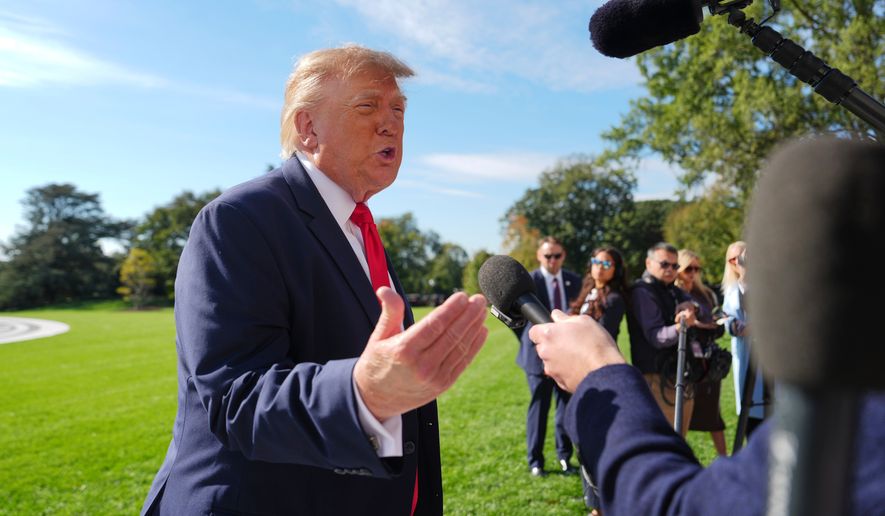

President Trump is exempting some Canadian products from U.S. tariffs, a move viewed as a late attempt to bolster Republican Sen. Susan Collins as she faces a tough reelection fight in border-state Maine.
Ms. Collins said the exemptions will apply to nine categories of products crucial for Maine’s agricultural industries, including blueberry, potato, apple, and seaweed producers.
Agricultural and refrigeration machinery, corrugated paper and plastic packing bags are among the exempted categories.
People were interested in these podcasts
“Many of our farmers and growers rely on specialized equipment, packaging materials, and other products from Canada that are either unavailable from American suppliers or cannot be replaced without incurring significant expense,” Ms. Collins said, adding she pushed for exemptions in talks with Trump administration officials. “I will continue working directly with administration officials to seek additional relief from tariffs and encourage a broader trade agreement with Canada, our neighbor, ally, and largest trading partner.”
The White House said the exemptions would be backfilled with tariffs on certain valves, carpets, waste products and other items, so the move is more a tariff replacement than an erosion of levies.
Ms. Collins, who is trying to fend off Democratic challenger Troy Jackson in Maine, represents a border state whose economy is intertwined with Canada’s.
Also, there are competitive Senate races in Michigan and Minnesota.
Tariffs, or duties on foreign goods brought to U.S. markets, are the key plank of Mr. Trump’s trade agenda. He said they protect domestic industries and level the playing field for U.S. producers, whose products are sometimes shut out of foreign markets.
Mr. Trump imposed 50% tariffs on a broad swath of Canadian goods over the summer, saying Ottawa had mistreated American producers while providing favorable treatment.
Canadian officials retaliated with “dollar for dollar” tariffs on American products, resulting in a bitter standoff and name-calling between the neighbors.
Critics of Mr. Trump’s tariffs say they raise prices on U.S. consumers, as importers pass along the costs of duties, and burden American producers that rely on imported products to do business.
Economic analysts said Mr. Trump wants to limit any economic fallout from his tariffs in a midterm cycle that’s focused on affordability.
“We have yet to see to what extent voters’ disapproval of tariffs influences actual decisions at the ballot box,” Cato Institute Policy Analyst Alfredo Carrillo Obregon said. “But one thing is increasingly clear: high tariffs, especially on longstanding allies and large trading partners, are not just bad economics; they are also bad electoral politics.”
Democrats slammed the move as a last-ditch ploy.
“Trump’s desperate, eleventh-hour attempt to save Susan Collins’ political career is an admission that American voters are rejecting his toxic tariff policies,” said Sen. Ron Wyden, Oregon Democrat and ranking member of the Senate Finance Committee. “No one will forget how Trump raised prices on thousands of products American families need by slapping trade taxes on goods from around the world.”
Contact the author


Please read our comment policy before commenting.