


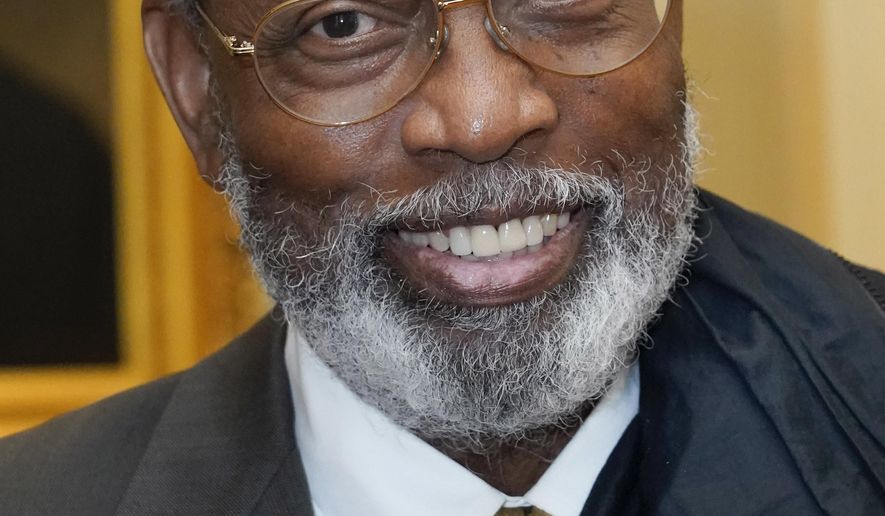

An appeals court unceremoniously booted U.S. District Judge Henry Wingate off a case after he admitted to using artificial intelligence to write an opinion and acknowledged the AI fabricated parties to the case and invented precedents.
The case involved Mississippi’s law preventing diversity, equity and inclusion spending and barring DEI training in public education.
Judge Wingate had issued a temporary restraining order blocking the law last year, but later had to withdraw the opinion, admitting to “clerical” errors. It was only under pressure from Sen. Chuck Grassley, chairman of the Senate Judiciary Committee, that he formally acknowledged what had seemed clear to observers — that AI had been used to write — and bungle — the ruling.
People were interested in these podcasts
“The proceedings in the district court were a botch job, to say the least,” Judge Jeffrey E. Smith of the 5th U.S. Circuit Court of Appeals wrote in a ruling Thursday.
He erased Judge Wingate’s orders in the case and sent the case back to the district court with a directive to find a different judge to take over.
The case was one of two last year in which federal judges admitted mistakes in their opinions stemmed from AI.
Judge Wingate first tried to sweep the matter away, quietly removing the erroneous restraining order and replacing it with a new one, without explanation.
When Mississippi asked that the original be restored to keep the record intact, Judge Wingate refused. Indeed, Judge Smith said the appeals court was “lucky” that one of the real parties in the case included the original erroneous order in its filings with the three-judge panel.
And even then, the revised restraining order wasn’t free of errors. It still included citation to a case that doesn’t exist. That wasn’t discovered until the proceedings in the 5th Circuit.
The AI issues aside, Judge Smith said Judge Wingate made “egregious” conclusions, including giving the law’s challengers every benefit of the doubt “with barely a glance at the arguments of the defendants.”
“That is legal analysis so poor that it hardly deserves the label,” Judge Smith scolded.
He said the AI problems demanded Judge Wingate give up the case.
“Given the embarrassment of the AI hallucinations and mistakes of law in the two TROs and the preliminary injunction, it would be an understandable — though obviously unjust — temptation for the judge to want to find a way to prove that, even with correct law and fact, his initial view should prevail,” he wrote.
As for Mississippi’s law, he said when the case goes back to a new lower judge, the challengers will “have a high burden to show that this policy is unlawful.”
Contact the author


Please read our comment policy before commenting.