


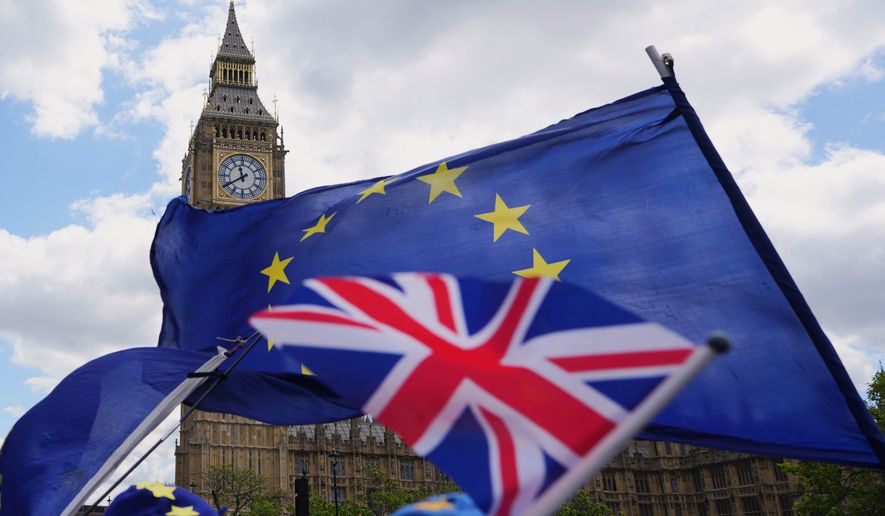

LONDON — For a decade, British governments have observed a cardinal rule: Don’t mention Brexit. In particular, don’t suggest that voters’ 2016 decision to leave the European Union should be reversed.
Prime Minister Andy Burnham, who marked his 100th day in office on Tuesday, has broken that code of silence and reignited a debate that bitterly divided the country. He says Brexit has been a failure and Britain should seek a much closer relationship with the EU, with options up to and including rejoining the 27-nation bloc.
“I am positive about closer ties with Europe and I’m not hiding that,” Burnham told the Sunday Times. “I think it will add to British GDP. I think it will give us stronger control of migration. I want to make those arguments.”
People were interested in these podcasts
In recent interviews, Burnham has said the country should have an “evidence-based debate” about the consequences of Brexit. He gave the example of immigration. Supporters of Brexit argued that it would give the country control over its borders by ending the right of EU citizens to live and work in Britain, and of British nationals to settle across the bloc.
While Britain now sets its own immigration policy, Burnham said leaving the bloc had made it harder to control unauthorized migration because Britain has lost access to EU databases and agreements.
“The truth of the matter is we’ve lost immigration control in the way that we once had,” Burnham told broadcaster ITV on Monday.
Brexit brought economic and political pain
Most economists agree that Brexit has hurt the British economy, but few politicians have wanted to reopen the painful debate.
The decision of British voters, by 52% to 48%, to leave the bloc after four decades of membership was followed by years of Britain-EU wrangling over divorce terms. Britain finally left the EU in 2020 with a bare-bones trade deal that erected new barriers to doing business with the bloc of 450 million people on Britain’s doorstep.
In seeking closer ties, Burnham remains bound by the pledge of Keir Starmer, whom he replaced as Labour Party leader and prime minister, not to rejoin the bloc’s tariff-free customs union or frictionless single market for goods, services and workers.
Burnham says that could change after the next national election, which must be held by 2029.
He told the Labour Party’s annual conference last month that “Brexit has done more harm than good” and he will seek political consensus on a new relationship, with future options including rejoining the bloc.
A Britain-EU summit in Brussels on Nov. 20 is set to discuss a more limited reset: a trade deal for food and drink, agreements on energy and emissions trading and a plan to let young people work for limited periods across Britain and the EU.
Around the same time as the summit, the British government says Burnham will set out options for the long-term relationship with Europe, and ask the public to weigh in.
Burnham’s office stressed that he wasn’t prejudging the outcome of that debate. But Downing Street acknowledged that Britain and EU officials are already holding informal talks about the future relationship, with options including a return to the single market and freedom of movement.
The EU is welcoming but wary
The EU has welcomed Britain’s warmer tone, but its leaders are wary of British attempts to secure some of the benefits reserved for members only.
In Britain, the return of the Brexit debate has stirred mixed feelings of hope, opposition and dread.
Anti-immigration Reform UK leader Nigel Farage, who campaigned for years to take the country out of the EU, said Burnham “has no mandate” to renegotiate Brexit.
Even within the governing center-left Labour Party, views are mixed. Labour lawmaker Melanie Onn, who represents a district that voted heavily in favor of Brexit in 2016, warned against “reopening the divisions of the past.”
“Political trust is hard won and easily lost,” she wrote on the Politics.co.uk website.
David Henig, a trade expert at the European Centre for International Political Economy, said public support for Brexit has declined over the years. But he said politicians remain reluctant to revisit an issue that caused “a nervous breakdown for U.K. politics,” triggering a decade in which Britain has had seven prime ministers.
He said that for Burnham, “it’s the wider political support that is not there at the moment: within Labour, within his own Cabinet.
“The biggest challenge is actually not in Brussels,” Henig said. “I don’t think it’s with the public either. It’s whether he can make this work in terms of the politics.”

Please read our comment policy before commenting.