



One of Democrats’ first moves if they win congressional majorities will be to permanently reexpand Obamacare subsidies to lower out-of-pocket premium costs for people who purchase health insurance through the public marketplace.
The plan, which could cost as much as $350 billion, is one of the few concrete legislative proposals Democrats offered as they campaign on lowering the cost of living ahead of next week’s midterm elections.
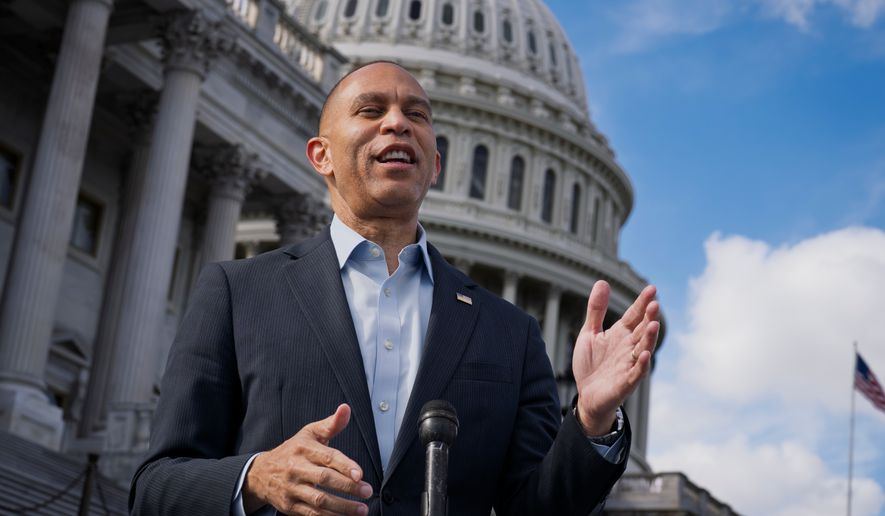
“We’re going to extend the Affordable Care Act tax credits, which will help make health insurance premiums more affordable for over 20 million Americans directly and tens of millions more whose premiums have increased indirectly, even if they may be on private insurance,” House Democratic Leader Hakeem Jeffries of New York said on MS NOW.
People were interested in these podcasts
The base version of the tax credits still exists. It was Democrats’ pandemic-era expansion, which made the subsidies more generous and extended them to people earning above 400% of the federal poverty level for the first time, that expired last year.
Even if Democrats win majorities in the House and Senate, their legislation to renew the enhanced subsidies will need at least some GOP support to clear a filibuster in the Senate.
President Trump could issue a veto or demand restrictions in exchange for his signature. He has opposed the structure of the subsidies, which are paid directly to insurance companies, and said he would rather give consumers the money and more flexibility to choose their own plans.
’The first thing’
Reinstating the enhanced Obamacare subsidies has united Democrats who are divided on whether to push for “Medicare for All” or some other health care plan funded entirely by the government.
“I’d like to see a public option get passed. People can keep their private insurance if they like it, but getting a public option passed,” Democratic House candidate Rebecca Cooke said at a debate this month. “And I think the first thing that I’d like to do, if Democrats win back the House, H.R. 1, is expanding that ACA tax credit premium for three more years.”
Ms. Cooke is running in Wisconsin’s 3rd Congressional District against two-term Republican Rep. Derrick Van Orden.
“To be clear, I voted to extend the Obamacare subsidies. I’m one of six Republicans that did that,” Mr. Van Orden responded in the debate. “It would be nice to get a little credit here.”
Mr. Van Orden was actually one of 17 House Republicans who voted for a bill in January to renew the expanded subsidies for three years. Democrats were able to force the floor vote after getting four Republicans to sign onto a discharge petition, but the measure stalled in the Senate.
Pennsylvania Rep. Scott Perry, one of the Republicans who voted against renewing the expanded subsidies, said in a debate that there are better ways to lower health care costs than sending subsidies directly to insurance companies.
“I actually believe that the money should go to the people that are paying the premiums at a minimum,” he said. “And then we need to reform the system so that you’re not taxed for healthcare, so that there’s transparency, so that there’s portability, so that we can see what the prices are, so that we can shop around, and that we’re focused on wellness as opposed to sick care, which is what we have now.”
Cost increases and enrollment drops
After the enhanced subsidies expired, monthly out-of-pocket premium costs for Americans who enrolled in 2026 Obamacare plans increased by an average of 58%, according to KFF, a nonprofit health policy research organization.
The increase would have been far higher had everyone kept their same plan, but many Obamacare enrollees switched to plans with lower premiums and higher deductibles. As a result, the average deductible for Obamacare plan holders increased by 37% to a record high of $3,786 in 2026, KFF said.
KFF surveyed a group of Obamacare enrollees before the enhanced subsidies expired in 2025 and again in early 2026 after they had to make plan decisions without the more generous benefits.
Eight in 10 said their health care costs increased and 55% said they had to cut back on other household spending to afford coverage.
Seven in 10 reenrolled in Obamacare, although 28% changed marketplace plans. One in 10 decided to forgo insurance, while the others obtained coverage elsewhere.
Nationwide enrollment in the individual health insurance market fell 18% when measured year-over-year in June, according to KFF.
That time period accounts for people who initially signed up for 2026 plans but dropped them because of high costs, resulting in an overall enrollment decrease of around 4.6 million people.
A Trump administration report issued in June said 19.2 million Americans were enrolled in Obamacare plans – still far higher than the 10 million annual average before Democrats’ 2021 expansion of the tax credits.
The report said nearly half of the enrollment growth during the Biden administration was suspected to be “improper, phantom or fraudulent” due to autoenrollments and people misstating their income to gain access to the new $0 premium plans.
The Trump administration said its “program integrity efforts” have stopped 2.9 million people from receiving subsidies they did not qualify for.
“We estimate 2.6 million improper and phantom enrollments remain, including over 1 million enrollments without a Social Security number,” the report said.
The Congressional Budget Office last year estimated that making the pandemic-era expansion of the Obamacare subsidies permanent would increase the number of people with health insurance by 3.8 million over a decade at a cost of $350 billion.
The cost estimate was prepared before the enhanced subsidies expired, and CBO said legislative action to renew them after a lapse would result in lower costs to the federal government.
Mixed up with Medicaid
On the campaign trail, Democrats often discuss rising premiums from the expiration of the enhanced Obamacare subsidies in tandem with GOP spending cuts to Medicaid in Mr. Trump’s second-term tax cut law, the One Big Beautiful Bill Act.
“Mike Collins and Donald Trump passed the biggest Medicaid cut in history. A hospital in Mike Collins’ own district had to shut down its labor and delivery unit, citing those Medicaid cuts,” Georgia Democratic Sen. Jon Ossoff said during a debate with his GOP opponent this month.
“Not to mention health insurance premiums have doubled for more than a million Georgians; 300,000 have lost their insurance altogether,” he said.
Democrats say if they win the majority, they will reverse the Medicaid cuts and permanently renew the enhanced Obamacare subsidies.
A House Democratic healthcare working group that presented legislative options to Mr. Jeffries last month suggested both should be priorities for the first 100 hours of the next Congress. It is not yet clear whether they would package them in a single bill or as separate measures – a decision that could impact potential GOP support.
Some Democrats are advocating for a bipartisan approach to reinstating the enhanced subsidies that could address GOP concerns about fraud.
“I’m a part of a bipartisan group – Democrats, Republicans, House and Senate members. We have talked about it, and we can make reforms,” Rep. Don Davis, North Carolina Democrat, recently told Spectrum News.
Contact the author


Please read our comment policy before commenting.