



OPINION:
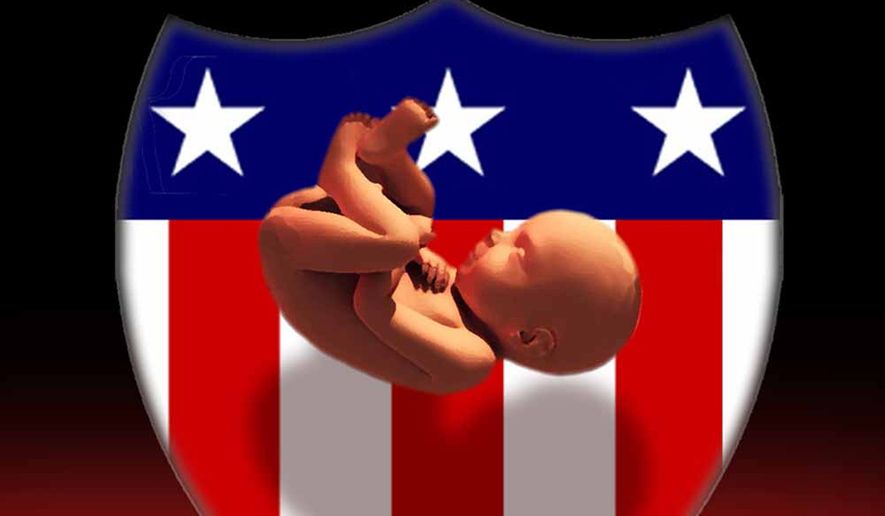
Four years ago, the U.S. Supreme Court issued its historic decision in Dobbs v. Jackson Women’s Health Organization, overturning the 1973 Roe v. Wade decision that legalized unlimited abortion.
The Dobbs ruling restored to the American people and their elected representatives the authority and ability to enact laws protecting unborn children.
For the pro-life movement, Dobbs was not the end of our struggle to protect life, but a beginning. For nearly 50 years, abortion policy was removed from the democratic process. Roe v. Wade imposed a nationwide abortion regime that prevented any meaningful protection for unborn children and their mothers.
People were interested in these podcasts
Dobbs changed that by returning the issue to the people.
Today, Americans are engaged in a debate that was largely suppressed under Roe. State legislatures, governors, members of Congress and voters are now determining how best to protect human life.
Some states have enacted strong protections for unborn children. Others have moved in the opposite direction, adopting policies that allow abortion at any time throughout pregnancy. The contrast could not be clearer.
With the 2026 midterm elections now just days away, voters face important decisions about the future of these policies. One of the critical lessons of the post-Dobbs era is straightforward: Elections matter.
The outcome of a gubernatorial race may determine whether a state adopts or rejects pro-life legislation. A state legislative election may decide whether parental involvement laws remain in place. Congressional elections may influence federal policies concerning taxpayer funding of abortion, conscience protections for medical professionals and support for pregnant women and families.
In other words, Dobbs restored citizens’ ability to shape public policy through the democratic process, making civic engagement more important than ever before.
Yet Dobbs offers another lesson.
The pro-life movement cannot rely solely on legislation. Lasting change requires persuasion. It requires reaching citizens who may not share our convictions and helping them understand both the humanity of the unborn child and the importance of supporting women who face difficult circumstances.
Advances in science continue to reveal the remarkable development of children before birth. We continue to be awed by ultrasound images that make clear what previous generations could only imagine. Pregnancy resource centers, maternity homes and adoption ministries working seamlessly with countless community organizations continue to provide practical assistance to mothers and families in need.
National Right to Life state affiliates’ campaigns — like Right to Life of Michigan’s “Life. The Other Choice” — connect women with the resources they need to make an informed choice and find support if they choose life. These efforts demonstrate that the pro-life movement is motivated not merely by opposition to abortion but also by a commitment to mother and child.
Americans deserve honest discussions about what abortion does, about the humanity of the unborn child and about policies that genuinely help women. They also deserve to hear the stories of families who chose life despite difficult circumstances and discovered hope where others predicted hardship.
These midterm elections will provide an opportunity for voters to evaluate competing visions for America. One vision treats abortion as an unlimited right that should remain available at any time throughout pregnancy — a position that destroys an unborn child and leaves many women grieving. The other recognizes that unborn children are members of the human family and that society has an obligation to protect vulnerable lives while supporting women and families.
The enduring significance of Dobbs is that these questions are now being decided where they always should have been: in the hands of the American people.
As citizens prepare to vote in the 2026 midterms, they should remember that the future of millions of lives will be shaped by voters who take seriously the duty to participate in our democracy and to speak on behalf of those who cannot speak for themselves.
Four years after Dobbs, the question is no longer whether Americans will have a voice in decisions about abortion policies. They do. The question is how they will choose to use it.
• Carol Tobias is the president of the National Right to Life Committee. For more information, please visit nrlc.org.

Please read our comment policy before commenting.