


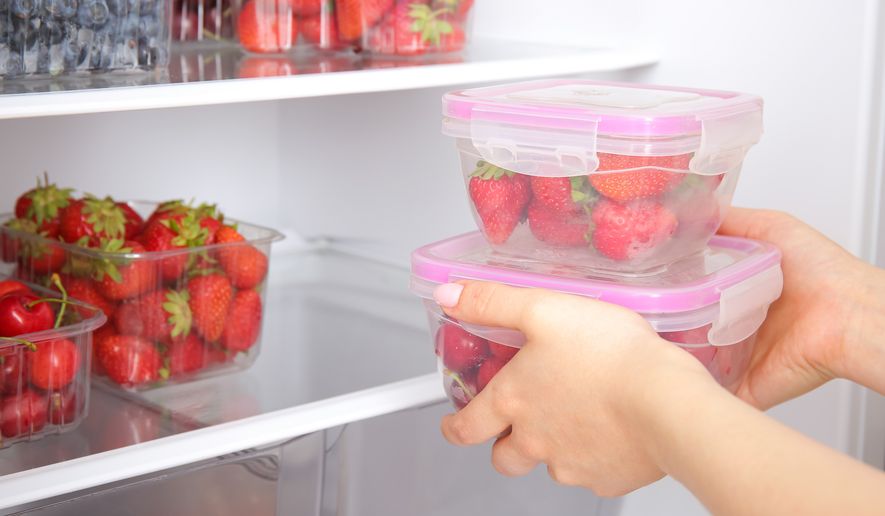

You bring home a box of strawberries, rinse them at the sink so they are ready to go, dry them off, and put them in the fridge. It feels like the responsible thing to do.
It is also the single fastest way to lose half of them to mold by Wednesday.
Food scientists at university extension programs, the people who write the actual storage guidance, are unusually direct about this one. The University of California’s guide to strawberries states it plainly: do not wash berries until just before eating or preserving, because washing adds moisture and causes them to spoil more rapidly.
People were interested in these podcasts
Strawberries are porous, thin-skinned, and have no protective wax layer. Any water left on the surface goes into the fruit and creates exactly the conditions mold spores need. The rinse you did to be careful is the thing that shortens their life.
What to Do Instead
The sequence matters more than any single trick.
Sort first. Strawberries stop ripening the moment they are picked, so a bruised or soft berry will never recover, and one moldy fruit will infect the ones touching it. Pull anything damaged before storage, not after.
Store them unwashed, in a single layer if you can manage it, on a sheet of paper towel that absorbs any condensation. Skip the airtight container. Berries need humidity, ideally 90 to 95 percent, but they also need air moving around them. A container with the lid resting loosely on top, or the original clamshell with its vents, works better than a sealed jar.
Then put them in the refrigerator. Michigan State University Extension recommends storing at 40°F, which matches the Food and Drug Administration’s guidance for perishable fresh fruit. Under good conditions, strawberries hold for up to about a week, though the realistic window is shorter for anything already ripe when you bought it.
Wash them only when you are ready to eat. Cool running water, a gentle rub, then pat dry. If you want the vinegar rinse that circulates online, one part white vinegar to three parts water does reduce surface mold spores. But do it as a quick dip rather than a soak, rinse it off, and do it at the last minute, never before storage.
And leave the green caps on until the end. Hulling a strawberry opens the flesh and starts the clock.
The Part About Flavor Is Real
There is a legitimate complaint buried in the advice to keep strawberries out of the fridge, and it is worth separating from the storage question.
Cold genuinely dulls a strawberry. The aromatic compounds that make it taste like anything are far less volatile at refrigerator temperature, which is why a berry straight from the crisper can taste like sweet water and feel slightly rubbery.
The fix is not to abandon refrigeration. It is to take the strawberries out roughly 30 to 60 minutes before serving and let them come back to room temperature. The aroma returns, the texture softens, and you get the flavor without having spent three days growing mold on the counter.
Where the Bad Advice Comes From
Buying well helps too, and it is where most people lose the game before they start. Look at the bottom of the container rather than the top. Check for pressure marks and any berry that has gone translucent or dull. Shallow packaging beats deep packaging, because the fruit at the bottom of a tall box is already being crushed by everything above it.
Do that, keep them dry until the last minute, and refrigerate them properly. The rest of the internet’s strawberry advice is mostly noise.
This article was constructed with the assistance of artificial intelligence and published by a member of The Washington Times' AI News Desk team. The contents of this report are based solely on The Washington Times' original reporting, wire services, and/or other sources cited within the report. For more information, please read our AI policy or contact Steve Fink, Director of Artificial Intelligence, at sfink@washingtontimes.com
The Washington Times AI Ethics Newsroom Committee can be reached at aispotlight@washingtontimes.com.

Please read our comment policy before commenting.