


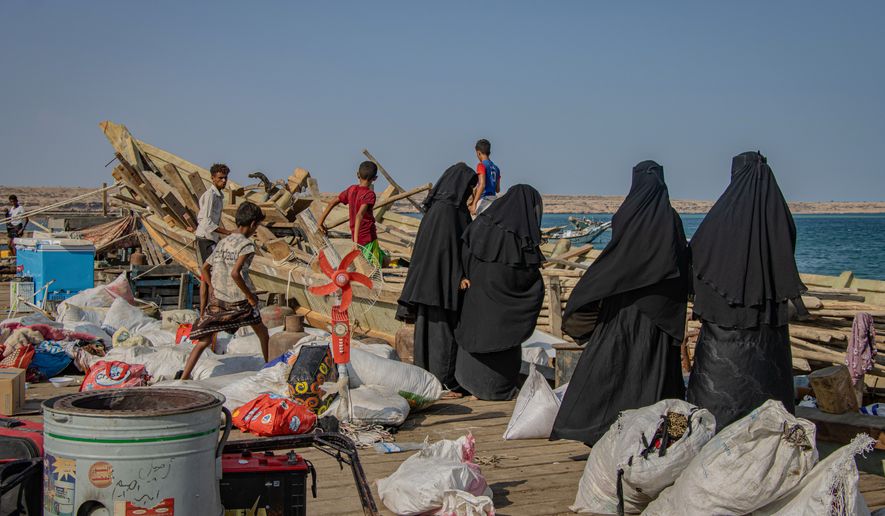

NAIROBI, Kenya — A fuel shortage in Yemen is hampering the movement of people fleeing the country’s escalating fighting and seeking safety across the Red Sea in Djibouti, with the U.N. migration agency warning that more Yemenis are ready to make the crossing by boat.
More than 2,000 Yemenis are currently in Djibouti, where the country’s government and the International Organization for Migration (IOM) are providing food and shelter.
Yemen’s internationally recognized government and Saudi Arabia have been battling the Iranian-backed Houthi rebels for 12 years. The recent escalation has ended a ceasefire that had largely stopped civil war across Yemen since 2022. The Houthis kept to the sidelines during the initial, heavy phase of the Iran war, but in July they resumed attacks on Saudi Arabia and declared a blockade against the oil giant.
The numbers fleeing the fighting in Yemen are soaring, with nearly 94,000 people already displaced.
Frantz Celestin, the IOM’s regional director for East and Southern Africa, said the number of arrivals had slowed because of the fuel shortage, but warned that more people were expected to make the dangerous crossing.
“We expect more to come,” he told The Associated Press on Monday. “What we were told is that there are a lot of people who are willing and ready to come. They simply don’t have fuel to make the journey. There’s a fuel shortage in Yemen that may explain the lull that we’ve seen today.”
The prospect of more arrivals is raising concerns that Djibouti, the small Horn of Africa nation, could struggle to accommodate the influx.
“When you have that many people come in a short amount of time, it’s bound to overwhelm the system,” Celestin said. “But so far, they (Djibouti) are managing it quite well. But there may be a time, if they continue to come, when they may overwhelm the capacity of the country to house and accommodate all of them.”
Djibouti’s Finance Minister Ilyas M. Dawaleh said the situation was “becoming increasingly difficult for our country, despite our unwavering commitment to humanitarian assistance.”
“We cannot allow those who have sought refuge among us to suffer. I am proud of my fellow Djiboutians for their collective mobilization and their remarkable solidarity with our Yemeni brothers and sisters,” he wrote in a post on X.
Dawaleh also praised residents of Obock, a coastal town in northern Djibouti that has been on the front line of the humanitarian response.
The IOM’s Celestin said the arrivals were putting additional pressure on communities and called for more international support, including additional tents and medical services.
Sandrine Desamours, the UNHCR representative in Djibouti, said the humanitarian response was already facing funding constraints and was being stretched by the influx. She warned that some Yemenis could move onward to Somalia, another Horn of Africa country grappling with its own humanitarian crisis.
She said, while the Markazi refugee camp has room for around another 5,000 refugees, “we are preparing for more than 10,000 arrivals.”
She added: “An overwhelming number are children and adolescents, and UNHCR has been working with the government to integrate them into existing, crowded schools. We need support before space, water, shelter and essential services run out.”
Djibouti sits across the Bab el-Mandeb Strait from Yemen, making it one of the closest places of refuge for Yemenis fleeing the conflict.
On Monday, the Houthi-run Yemen Petroleum Company said a recent increase in local fuel prices was driven by rising global oil prices and higher import costs, blaming the US-Iran war, international sanctions and what it described as a Saudi blockade imposed when the civil war in Yemen began 12 years ago.

Please read our comment policy before commenting.