



Senate Republicans on Thursday tried to quickly clear a House-passed bill responding to voter concerns about data centers driving up electricity prices, but were blocked by Democrats.
Senate Democrats said the Ratepayer Protection Act, which passed the House on Wednesday in an overwhelming 417-3 bipartisan vote, didn’t go far enough.
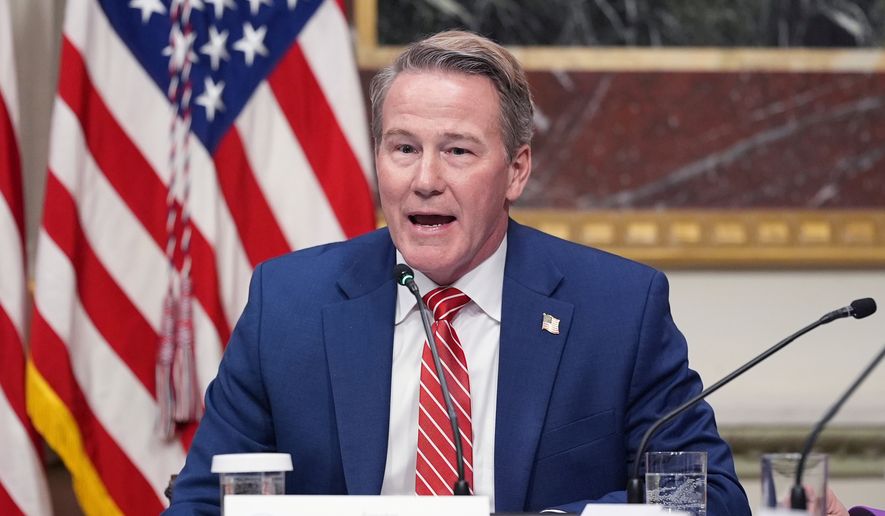
Sen. Jon Husted, the lead Senate sponsor of the bill, went to the floor Thursday to try to pass the bill by unanimous consent and send it to President Trump’s desk.
“The companies creating enormous new demands for electricity should pay the costs required to serve them,” the Ohio Republican said. “Working families, small businesses and senior citizens should not open up their electric bills and discover they are paying for the power infrastructure needed by some large tech company in the world or in their neighborhood.”
Sen. Martin Heinrich, the top Democrat on the Energy and Natural Resources Committee, blocked Mr. Husted’s unanimous consent request. He said the bill “falls short” in its effort to protect electricity consumers from higher costs.
“Rather than voluntary pledges or suggestions to states, Congress needs to pass real legislation with real teeth,” the New Mexico Democrat said.
The Ratepayer Protection Act would create a federal standard for electric utilities to recover “the full, incremental cost of any generation, transmission, or distribution upgrade necessary” to serve data centers that would create an aggregate, peak electric demand of 100 megawatts or more.
However, it leaves the final decision on whether to adopt the federal standard up to state utility regulators and nonregulated utilities, only requiring them to “consider” it and decide within two years.
Mr. Heinrich said his bill, the Grid Savings Act, would actually require large load customers like data centers to pay for the facilities needed to connect them to the grid — “not to consider it, not to make pledges, to actually do it.”
He said the Ratepayer Protection Act is the only bill that has a shot at becoming law before the midterms because it passed the House, which adjourned shortly after that vote on Wednesday until after the Nov. 3 election.
The Senate is scheduled to be in session through the remainder of September.
“Before we leave here, we ought to do something on a matter that the American people have asked us to do something about,” Mr. Husted said, calling it “a shame” that Democrats blocked that opportunity.
Fellow Ohio Republican Sen. Bernie Moreno was even more blunt, saying Democrats are obstructing the bill “so they could just put up another TV ad to say that electricity prices are high, so that they can win an election.”
“Instead, the victim of all this is the taxpayer of the United States of America, who is going to see electricity prices continue to go up because we could have passed the law to solve it,” he said. “Like the American people, I’m sick of it.”
Former Ohio Sen. Sherrod Brown, the Democrat trying to unseat Mr. Husted this fall, has accused him of giving out billions in “sweetheart tax cuts” to bring data centers to Ohio when he was lieutenant governor.
“Jon Husted is the guy that was the point man on the data centers — 225 data centers are coming to Ohio or already there, which raises your electric bills, which gobbles up our farmland, which drinks up our water,” Mr. Brown said in a video posted Thursday on social media.
Anti-data center voters have emerged as a prized bloc in the midterm campaigns.
In Ohio, a Bowling Green State University poll found that 75% of likely voters oppose the construction of data centers in their communities, 63% oppose their construction in the state and 55% oppose building data centers nationwide.
“With affordability concerns front and center for the American people, it’s unfortunate — but not surprising — to see Senate Democrats block @SenJonHusted’s commonsense Ratepayer Protection Act,” said Senate Majority Leader John Thune, South Dakota Republican, on X. “They’ll need to explain to their constituents why they say one thing on this issue but do another when it comes to making a law.”
Contact the author


Please read our comment policy before commenting.