



OPINION:
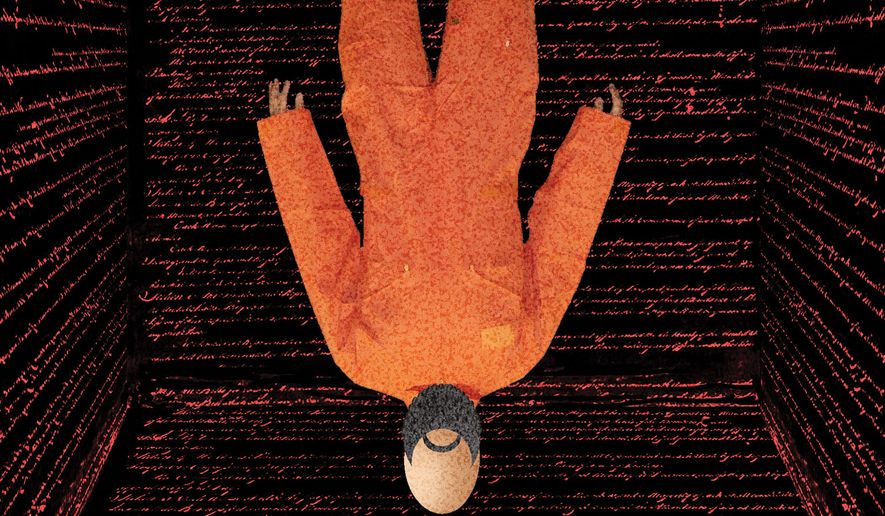
The recent suppression of Khalid Sheikh Mohammed’s torture-tainted confessions at Guantanamo Bay is far more than a victory for a defendant. It is a victory for the Constitution.
The United States government today alleges that Mohammed was the mastermind of the Sept. 11, 2001, attacks, a crime of historic horror that demands accountability.
For nine years, the government told us that the mastermind of the attacks was Osama bin Laden, whom it never charged for 9/11-related crimes. Then, after it dispatched U.S. commandos to murder him when they could have arrested him, it recognized it killed the wrong man: Mohammed was the mastermind.
People were interested in these podcasts
By then, Mohammed had been tortured for three years by the CIA and the U.S. military.
But accountability obtained through unlawful methods is not justice. It is merely punishment wearing the costume of law.
The judge who recently suppressed Mohammed’s statements (a U.S. Air Force lieutenant colonel) did not create this crisis. He inherited it. He did not erase evidence. He confronted the unavoidable consequences of a decision made more than 20 years ago: The decision by President George W. Bush to authorize a system of torture that guaranteed that the most important terrorism prosecution in American history would be burdened by questions of legitimacy from the beginning.
The judge found that the abuse Mohammed endured in CIA and military custody was so severe that its coercive effects continued years later, contaminating subsequent statements made to FBI investigators.
The constitutional problem was not limited to what happened in a particular interrogation room on a particular day. The problem was the continuing psychological impact of the government’s criminal conduct.
The government cannot torture a suspect, obtain information and then attempt to cleanse the evidence through later civilized questioning. Constitutional protections are not satisfied by changing the interrogator’s nameplate.
The FBI’s inexplicable failure to provide Miranda warnings added another layer of constitutional aberration. The entire purpose of Miranda is to prevent the government from using its immense power to obtain statements from a person who does not voluntarily choose to speak.
This should never have been a military commission case.
After more than two decades, the United States still has not produced a final resolution in one of the most consequential criminal cases in its history. How many convictions have there been at Gitmo for 9/11? ZERO.
Had this prosecution been brought in federal court in Manhattan, it would have been governed by decades of precedent, a single trial judge, a single prosecution team, established discovery rules and a functioning appellate structure.
The case would have been difficult and complex, but it would have been a real prosecution rather than a constitutional experiment conducted in slow motion.
Instead, Mr. Bush — embarrassed that 9/11 took place on his sleepy watch — persuaded Congress to create an extraordinary system; and then his White House successors discovered that extraordinary systems have extraordinary weaknesses.
The Guantanamo military commissions have produced exactly the outcome that critics predicted: endless litigation over basic questions of evidence, procedure and constitutional authority. Mohammed’s case has cycled through four prosecution teams and five judges while the families of victims continue to wait for a conclusion.
Once coercive interrogation became government policy, prosecutors faced an unavoidable dilemma: Seek convictions using evidence compromised by criminal conduct, or confront the reality that the government had damaged its own case.
The prosecutors eventually recognized that problem. They pursued plea negotiations because a negotiated resolution offered something a contested trial might not: finality and legitimacy. A plea agreement was accepted by the accused, prosecutors, Pentagon officials and the military judge, offering a path toward ending a case that had already consumed years of litigation.
Then the political branches intervened.
The agreement was accepted by the Army general in charge of all prosecutions, herself a former judge. Then Secretary of Defense Lloyd Austin rejected the agreement and fired the general. Then the same prosecution team that had negotiated the plea sought to undo it. Then the military trial judge who accepted the plea declined to discard it. Then an appellate court reversed that decision.
The spectacle was extraordinary: The government negotiated a resolution, defended the process, challenged the process and continued litigating a case it had spent decades trying to avoid.
The final constitutional insult may be the government’s position that even an acquittal would not necessarily end Mohammed’s confinement. If the government may imprison a person indefinitely regardless of whether prosecutors can prove guilt beyond a reasonable doubt, then the trial is a symbolic sham and the Constitution becomes just dust.
The purpose of a trial is not theater; it is to determine whether the government has met its burden under law.
An acquittal is not a technicality. It is the Constitution’s command when the government fails to prove its case. The alternative is a system in which accusations become convictions, detention replaces adjudication, and the courtroom becomes a stage for an already predetermined outcome.
That is not the American system of justice.
The irony is profound. The United States created the Guantanamo commissions in the name of efficiency and security. Instead, it created a process monumentally slower and profoundly less trusted than the ordinary courts it abandoned. It sought extraordinary justice and produced extraordinary confusion.
The lesson is not that constitutional protections are obstacles to defeating terrorism. The lesson is the opposite. Constitutional protections are what separate a lawful government from the very conduct it condemns.
The military judge’s ruling is a warning to the government that evidence matters, procedure matters, and the methods used to obtain justice determine whether the result deserves to be called justice at all.
After 20 years of delay, the United States is finally confronting the consequences of its own choices.
A small act of judicial courage at Guantanamo has exposed a much larger failure: A system built to avoid constitutional limits ultimately became trapped by its own rejection of first principles.
• To learn more about Judge Andrew Napolitano, visit https://JudgeNap.com.
Follow the author

Please read our comment policy before commenting.