


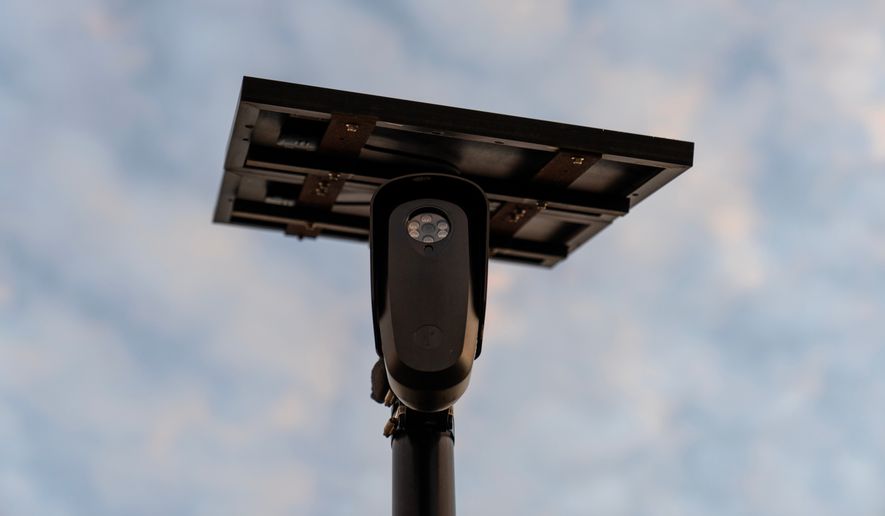

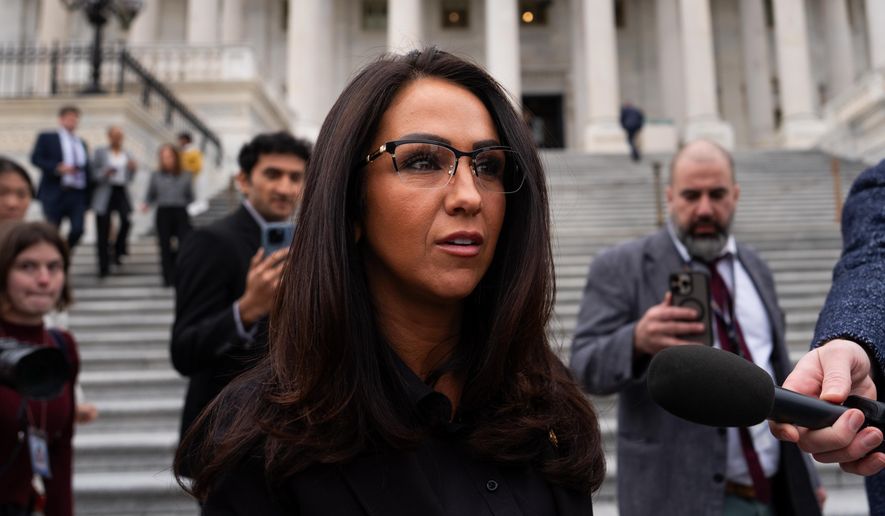
Rep. Lauren Boebert has joined the ranks of political leaders who want to rein in the growing use of Flock license plate readers on public roads.
She cast the expanding network of Flock cameras as part of an American surveillance state born in the aftermath of the Sept. 11, 2001, terrorist attacks.
“Since September 11, 2001, Americans have been asked repeatedly to trade pieces of liberty for promises of security,” Ms. Boebert, Colorado Republican, wrote in a Daily Caller op-ed. “The justification was almost always the same: ’If you’re innocent, you have nothing to worry about.’ That phrase has become the soft rationalization for hard erosions of privacy.”
People were interested in these podcasts
Thousands of pole-mounted license plate readers have now popped up on public roadways and parking lots across the nation. Most of the devices are owned and operated by Atlanta-based Flock Safety. They are leased to state and local law enforcement, who use the data to catch criminals, find missing people and provide evidence in court.
But public backlash over the surveillance network has led dozens of jurisdictions to cancel their Flock leases and pull down the license plate readers.
Florida Gov. Ron DeSantis, a Republican, recently banned the license plate readers from all state roads.
“If we had all of these around the country when COVID happened, you absolutely would have seen those turned on people who were outside of lockdown orders in California” and other states, Mr. DeSantis said.
Ms. Boebert said the use of the artificial intelligence-powered cameras, which continuously scan and log license plates and other vehicle information, lacks “statutory limits, democratic consent or individualized suspicion.”
She likened the expanding network of cameras to the 2001 Patriot Act, a law passed in the wake of the 9/11 terrorist attacks that greatly expanded law enforcement and intelligence surveillance powers.
At least seven jurisdictions in Colorado, among them Denver and Colorado Springs, have removed the cameras due to public backlash over privacy concerns.
Ms. Boehbert said federal funding should not be used to purchase Flock cameras and laws must be changed to require warrants, limit Flock camera data retention, ban selling the data and “educate the public about how their everyday liberties are being put at risk.”
“I stand with law enforcement. I stand with the Constitution,” she wrote. “We can protect public safety without surrendering the right to live unmonitored lives. That balance is not only possible — it is essential if liberty is to mean anything for the next generation.”
A growing faction of congressional lawmakers wants to investigate Flock cameras and regulate them.
House Judiciary Committee Chairman Jim Jordan, appearing on News Nation, signaled he’s open to regulating the cameras.
“We need to put some safeguards in place,” said the Ohio Republican.
GOP Sen. Josh Hawley of Missouri, chairman of the Judiciary Subcommittee on Crime and Counterterrorism, announced he’s investigating Flock.
He wrote a letter to Flock Safety CEO Garrett Langley, demanding he turn over company documents.
“To be sure, I want law enforcement to have tools to catch offenders and keep the public safe. But Americans do not surrender their privacy rights when they drive to work, drop their kids off at school, or go to church,” Mr. Hawley wrote to Mr. Langley.
According to the American Civil Liberties Union, between 80,000 and 100,000 Flock cameras installed across the U.S. perform more than 20 billion scans monthly.
Flock said its technology is in more than 4,000 communities and has helped solve crimes and improve safety.
Contact the author


Please read our comment policy before commenting.