



OPINION:
When an authoritarian government responds to a small event with overwhelming force, the response itself becomes intelligence.
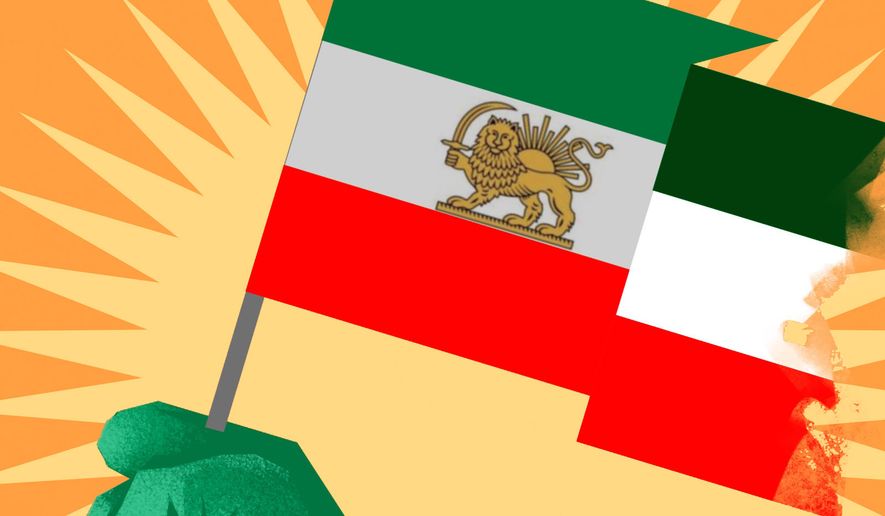
A recent video from near Karaj, west of Tehran, illustrates the point. Motorcyclists and several cars moved through the streets flying the flags of the People’s Mojahedin Organization of Iran, or MEK.
Iranian state television quickly announced that “all the individuals” in the footage had been identified and arrested.
People were interested in these podcasts
The regime disclosed neither the number of people arrested nor the date that the video was recorded. Still, the public announcement was significant.
For years, Iran has described the MEK as a spent force with no social base. If that were true, a few motorcyclists near Karaj should not have triggered an immediate security response. Tehran’s reaction shows that its own assessment is different.
The Karaj motorcade was not isolated. To mark the MEK’s 61st anniversary, the National Council of Resistance of Iran reported that resistance units had conducted 150 actions and street gatherings in Tehran and 27 other cities.
Iranian state media did not confirm the figures, but the geographic spread of the images, the reaction of state media and harsher sentences for alleged MEK supporters show that the regime views this network as a real threat.
At the same time, three rounds of voting held concurrently in seven European countries elected Mahnaz Maimanat as the MEK’s new secretary-general. She has served in the movement’s leadership since 1989.
According to published accounts, Ms. Maimanat’s mother and two brothers lost their lives opposing the Iranian regime. One brother was executed in 1983; the other was executed during the 1988 massacre of political prisoners.
Women have held central leadership roles in the MEK for more than three decades, but publicly electing a woman under today’s conditions carries a particular message. While the Iranian regime suppresses women in the streets and excludes them from political power, its most organized opponent has again placed a woman at the head of its executive structure.
The confrontation is between two opposing models for Iran’s future.
Washington should not treat these developments as mere domestic Iranian news. The U.S. generally measures Iran’s power by its missiles, nuclear capacity, proxies and oil revenue. Yet the regime’s behavior reveals another factor: its fear that public discontent will become organized resistance.
That may be the greatest vulnerability of a government capable of enduring external pressure but deeply afraid of organized society at home.
Mass protest alone does not guarantee political change. Anger without networks can be crushed or exhausted. Lasting change requires organization, communications, persistence and a willingness to bear costs.
Someone who knowingly risks prison and execution by carrying a banned movement’s flag belongs to the highest-risk layer of political activism.
The continued appearance of such people after repeated arrests and executions suggests that a network beneath society’s visible surface is reproducing itself.
This does not mean that Washington should appoint the MEK (or any other movement) to govern Iran. The decision of governance belongs to the Iranian people. Nor should the U.S. launch another war for regime change.
The point is simpler: U.S. policy should not exclude from its calculations a force that Tehran itself regards as an existential threat.
Such recognition can become a practical lever. The U.S. can preserve access to the open internet when Tehran shuts down communications, provide accountability bodies with evidence about perpetrators of repression, direct targeted sanctions at commanders and judges involved in arresting and executing dissidents, and make clear that diplomacy with Tehran does not mean silence vis-a-vis the execution of political prisoners.
The purpose of such a policy is not to impose change from outside, but rather to increase Iranians’ ability to determine their own future. For years, Iran has used diplomacy to buy time and the threat of war to mobilize its forces. Supporting free communications and holding repressors accountable would disrupt that cycle without deploying American troops.
Was the Karaj motorcade the opening of a final confrontation? No one can predict the next uprising or its outcome, but two changes are evident: The regime no longer treats the MEK merely as an enemy of the past, and the MEK is moving from exclusively clandestine activity to a more coordinated public presence.
By announcing the participants’ arrests, Tehran inadvertently revealed its fears. Washington should heed the message.
America’s most effective leverage against Iran may be neither another bomb nor another negotiating concession, but rather a society able to communicate freely and organize its resistance.
• Hamid Enayat is a political commentator and specialist on Iran, human rights, fundamental liberties and the fight against the death penalty. He works with the National Council of Resistance of Iran.

Please read our comment policy before commenting.