



Canada made good Tuesday on its pledge to impose retaliatory tariffs on a suite of U.S. goods, hitting American dairy, furniture, appliances and other goods with levies ranging from 15% to 50%.
Ottawa also doubled tariffs on U.S. steel and aluminum to 50%, as the trade war between the North American neighbors showed no signs of abating.
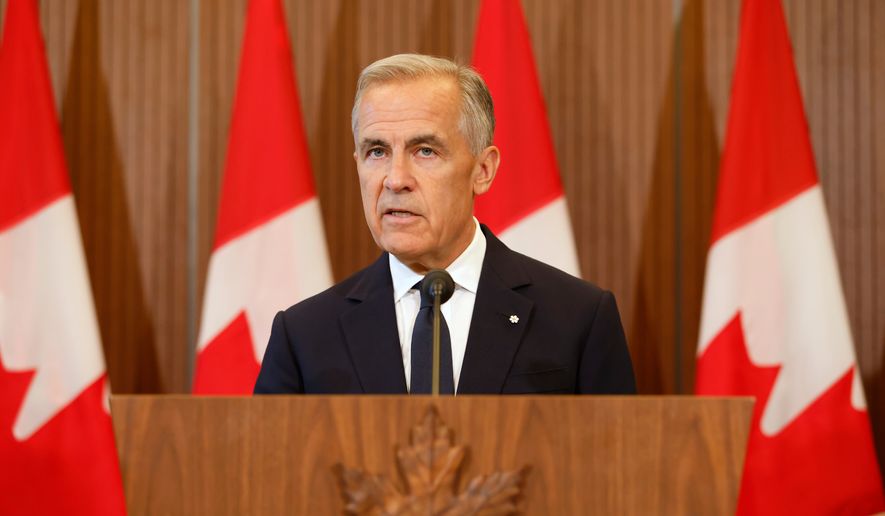
Canadian Prime Minister Mark Carney, whose decision to play hardball with President Trump is generally popular at home, said the blowback from trade tensions would be tough — but worth it.
“There is always a cost to action. But it doesn’t come close to the cost of standing still,” Mr. Carney said Tuesday in a video address to the nation. “This is about who we are as Canadians. “It’s about our livelihoods and the country we leave to our kids. The truth is, adversity only makes us stronger; it always has.
The U.S. recently imposed 50% tariffs on a suite of Canadian goods after negotiators failed to reach a deal over Ottawa’s treatment of certain American sectors.
Mr. Trump says Canada put up trade barriers to American goods for years, even as it gave favorable treatment to products from other places.
SEE ALSO: Trump’s memes taunting Mexico, Canada draw backlash from leaders
The president says Canadian negotiators are nasty and that Americans do not need anything Canada produces. Administration officials accused the Canadian side of tanking trade talks to whip up political fervor ahead of pivotal elections in Quebec and Alberta this fall.
Canada responded with “dollar for dollar” tariffs on nearly $28 billion in U.S. goods, which took effect at midnight Monday.
Tariffs are duties imposed on foreign goods brought into a country’s markets.
They are typically used to protect domestic industries against unfair competition, while generating revenue for national treasuries.
Mr. Trump also uses tariffs to gain leverage over other countries in negotiations.
Critics of sweeping tariffs say they disrupt trade, weaken bilateral ties and raise prices when importers pass along the cost of duties to consumers.
Those concerns cut across party lines.
Sen. Susan Collins, a Maine Republican facing reelection, praised Canada for dropping seafood from its tariff list but worries the trade war will harm her state.
“For Mainers, commerce with Canada is a regular occurrence, as Maine borders only one state but shares a 611-mile border with Canada,” Ms. Collins said in late August while urging Trump officials to restart trade talks. “The United States and Canada must come back to the negotiating table and reach a fair agreement to prevent these damaging tariffs from taking effect and protect Maine workers, employers, and communities from unnecessary economic harm.”
Contact the author


Please read our comment policy before commenting.