



A version of this story appeared in the daily Threat Status newsletter from The Washington Times. Click here to receive Threat Status delivered directly to your inbox each weekday.
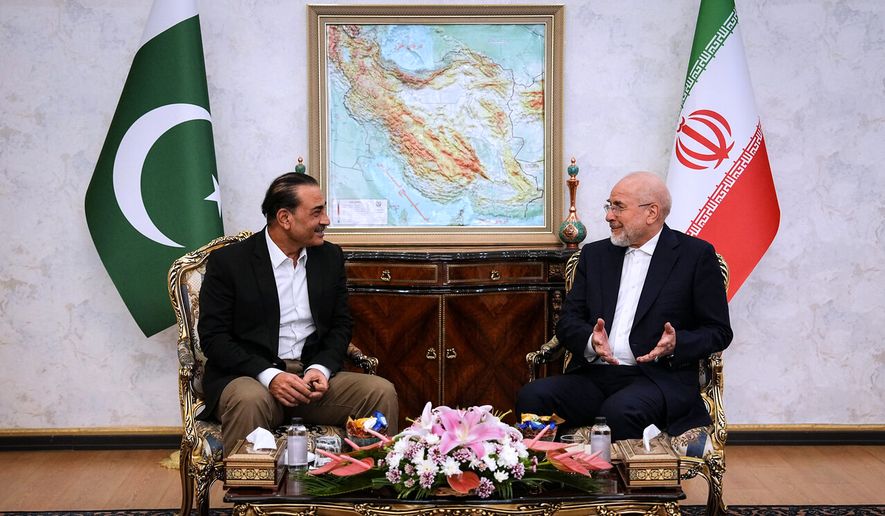
Field Marshal Asim Munir, Pakistan’s army chief, met with top Iranian diplomats and military officials in Tehran on Tuesday to discuss bilateral relations and the status of talks with Washington.
The field marshal has served as one of Pakistan’s key mediators in peace talks between the U.S. and Iran, along with Pakistan’s Prime Minister Shehbaz Sharif and Foreign Minister Ishaq Dar.
Field Marshal Munir met with parliament Speaker Mohammad Bagher Ghalibaf and Mohsen Rezaei, the secretary of Iran’s Supreme National Security Council, two of the most important officials in the country.
People were interested in these podcasts
Mr. Ghalibaf, who has also represented Iran in negotiations with the U.S., told Field Marshal Munir that Washington violated the Islamabad memorandum of understanding and that military actions would not change Iran’s demands.
Field Marshal Munir played a key role in negotiating the memorandum, which established a ceasefire across the region and opened the door to technical talks between Iran and the U.S. The deal has been effectively dead since July, after Iran began striking ships in the Strait of Hormuz.
Mr. Rezaei, a key confidant of Supreme Leader Mojtaba Khamenei, told Field Marshal Munir during their meeting that Iran will not accept any deal that allows its highly enriched uranium to leave the country.
“Not even a particle of enriched nuclear material will leave Iran,” Mr. Rezaei said, adding that there will be no further negotiations with the U.S. until there’s trust.
Field Marshal Munir was also expected to meet with Iranian Foreign Minister Abbas Araghchi, another official who represented Iran during negotiations with the U.S. this year.
The visit comes one day after Russian Foreign Minister Sergey Lavrov visited Tehran for meetings with Mr. Araghchi and Iranian President Masoud Pezeshkian. The meetings mostly discussed the status of the U.S.-Iran peace process as well as deepening the Iran-Russia relationship.
While Iranian and U.S. officials have said in the past few weeks that negotiators are exchanging messages and proposals through mediators, it remains unclear how far apart both sides are on major issues.
At the center of negotiations is Iran’s nuclear program and its blockade of the Strait of Hormuz, an important shipping route used to transport one-fifth of the world’s supply of oil and natural gas.
Iran has kept the waterway effectively closed since March, trapping several commercial tankers in the Persian Gulf and striking any ships that try to transit. The closure and the strikes have forced oil prices far above prewar levels.
Iran has maintained that it will retain some control over the waterway even after the war and has floated instituting tolls for shipping wishing to move through safely. Washington has rejected such a structure and has demanded that Iran lift the blockade and let the strait return to its prewar status as international waters.
The U.S. has also demanded that Iran abandon its nuclear program and hand over control of its stockpiles of highly enriched uranium.
Iran has resisted any limits to its nuclear program, which Tehran insists is used for peaceful purposes.
Esmail Baghaei, spokesman for Iran’s Ministry of Foreign Affairs, on Tuesday insisted that the U.S. and Iran have not discussed the nuclear issue during recent negotiations.
Contact the author


Please read our comment policy before commenting.