By John Solomon
How the government's punishing of the exposure of official wrongdoing can linger for years
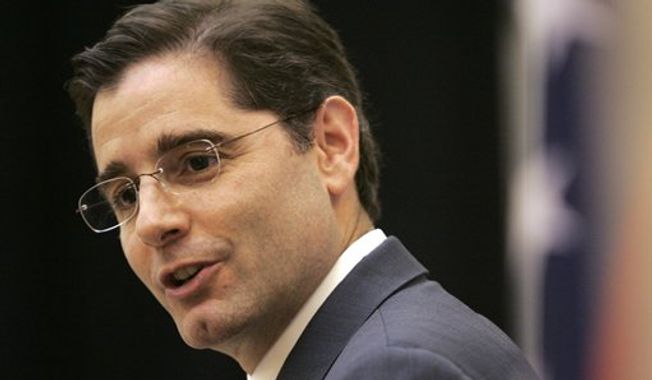
Federal Communications Commission Chairman Julius Genachowski (jen-uh-KOW'-skee) is reportedly set to announce Friday that he will step down.

Smartphones can hail a cab, stream football games and take high-quality photos, so the wireless industry's latest trick may seem as out of place as it was long in coming — rendering the phone as useless as a plastic brick.
Superstorm Sandy knocked out a quarter of the cell towers in an area spreading across 10 states, and the situation could get worse, federal regulators said Tuesday.

The first presidential debate, and last week’s vice-presidential debate, had many unusual twists and turns. In the former, Mitt Romney put on the performance of his career and beat the “greatest-orator-the-world-has-ever-seen” President Barack Obama. In the latter, the dignified Paul Ryan eked out a close victory over the buffoonish Joe Biden.
The day before the vice presidential debate the guest list for moderator Martha Raddatz's 1991 wedding has become an issue, of sorts.

Republican leaders of a House committee criticized the Federal Communications Commission on Tuesday for sending about $1 million in stimulus funds to a London company to collect data on broadband speeds of various U.S. Internet providers.
The Justice Department announced Thursday it will order changes to protect consumers in deals between Verizon and four of the nation's largest cable companies.
Broadcasters anticipating a major constitutional ruling on the government's authority to regulate what can be shown and said on the airwaves instead won only the smallest of Supreme Court victories Thursday.
The Supreme Court on Thursday unanimously threw out fines and other penalties against broadcast companies that violated the Federal Communications Commission policy regulating curse words and nudity on television airwaves.
The Federal Communications Commission voted Friday to require broadcast TV stations to post online the advertising rates they charge political candidates and advocacy groups.

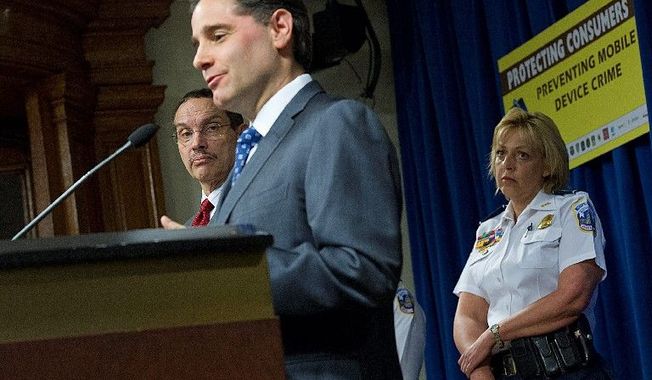
D.C. Mayor Vincent C. Gray and police chiefs from the District, Philadelphia and New York City announced a nationwide strategy on Tuesday to make stolen smartphones "as worthless as an empty wallet."
Major wireless service companies have agreed to disable cellphones after they are reported stolen under a strategy intended to deter the theft and resale of wireless devices.

House Republicans on Tuesday pushed forward a bill designed to increase transparency at the Federal Communications Commission and prevent what critics say are needless regulations that have created uncertainty in the market and inhibited deal-making.

The chairman of the Federal Communications Commission called Wednesday for the private sector to help secure U.S. Internet infrastructure from criminals, hackers and terrorists.
The Federal Communications Commission on Tuesday overhauled two telephone subsidy programs for low-income Americans while adding a new broadband Internet subsidy.
Last month, Mr. Genachowski said the FCC and Mexican government agreed to disable lost or stolen phones on networks in either country, an initiative designed to crack down on the cross-border market for stolen goods.
Mr. Genachowski claims he must act because 18 million are without "fixed broadband" that meets speed targets set by agency bureaucrats.