Independent voices from the TWT Communities

The Republican Party's recent political struggles and electoral woes have led to an extensive period of self-evaluation. There has definitely been no shortage of criticism from various circles of interest about the party's policies, ideas and future.

Political wise guys would have you believe that conservatives these days have but two options: either assisted living in a senior community or a bed in a hospice. We are headed for the ash heap of history, where we will be buried without honors — a footnote, at best, to 20th-century politics.

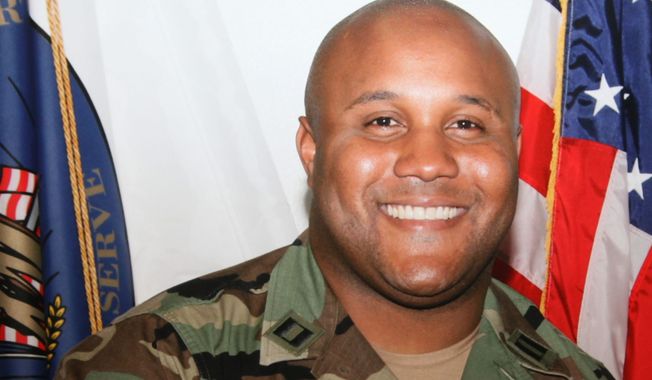
CNN's Carol Costello asked her panel a question Wednesday morning that might have a few people scratching their heads. The "CNN Newsroom" host asked nonprofits founder Van Jones, Politic365's Jason Johnson and The New York Times' Ross Douthat if the Christopher Dorner case teaches us anything about guns.

If you put a piece of duct tape over Ross Douthat's name on the dust jacket, the content of "Bad Religion," subtitled "How We Became a Nation of Heretics," would surprise you as a far more cerebral and introspective work than could be expected from the "America-has-turned-its-back-on-God" genre.

Andrew Breitbart would not have been surprised by the out- pouring of liberal hate after his death. He would have reveled in it, relished it, retweeted it. He enjoyed watching the left unmask itself, revealing pretensions at "civility" to be nothing more than bullying. He would have laughed to see Rolling Stone quietly pulling its ads off the page where Matt Taibbi - a drug-abusing misogynist, Andrew would have noted - had done his worst.

Liberals are having a difficult time explaining what happened to them on Election Day. Actually, it appears that many of them do not know what happened to them. They are in denial.
Cultural losses
Cultural losses
Subtle salvo
Subtle salvo
Mr. Douthat notes that the places where "prosperity Gospel" churches are most popular are also the regions of the country with the highest number of foreclosed and underwater mortgages.
Later, when evangelicalism did carve out its own space in the world of pop culture and the creative arts, Mr. Douthat claims it "still felt ingenuous and tacky ... geared to an undemanding audience and easily dismissed by anyone outside the circle of devout ... much of it was theologically embarrassing."