



OPINION:
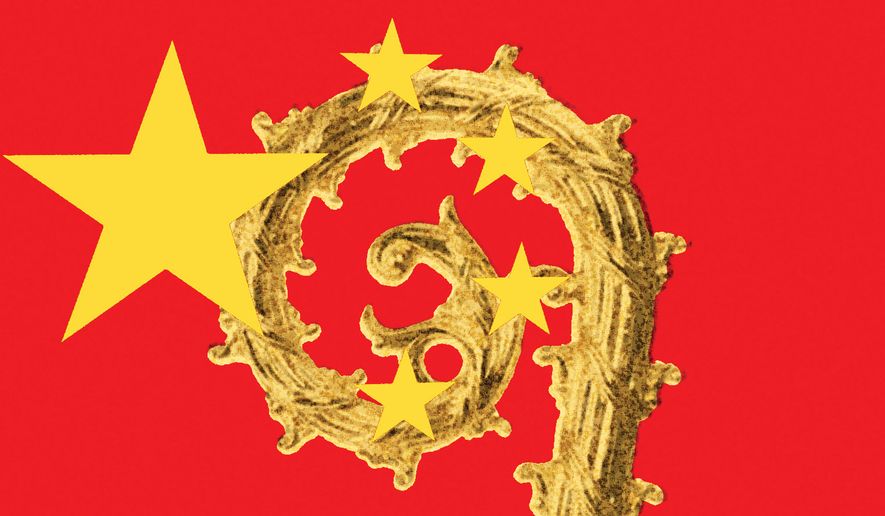
The Vatican has abandoned the Catholic faithful in China. This neglect calls into question Rome’s long-standing moral authority in defending religious freedom and has caused confusion among Roman Catholics worldwide.
A secret Vatican agreement signed with Beijing in 2018 and negotiated by Vatican Secretary of State Cardinal Pietro Parolin was presented as a narrow pastoral arrangement over the appointment of Catholic bishops in China. Rome wanted to avoid permanent schism between the Roman Catholic Church and the pro-communist Chinese Catholic Patriotic Association.
The details of the 2018 agreement remain a secret. What is known, however, is that under it, Beijing proposes candidates for bishops and the Pope retains a veto. The agreement was renewed in 2020 and 2022 and extended in 2024 through October 2028.
People were interested in these podcasts
The agreement was designed only to regularize disputed appointments of bishops and to preserve a channel of dialogue with the Chinese Communist Party. Those goals proved illusory at best, and the agreement has failed China’s independent underground Catholics.
For decades, Chinese Catholics were divided. The official, state-supervised church is subordinate to the CCP and the underground church — bishops, priests, religious sisters, seminarians and lay faithful loyal to Rome.
The Vatican believes that the arrangement facilitates episcopal appointments, but the agreement has helped Beijing pressure underground Roman Catholics to join the pro-communist church, apparently with Rome’s acquiescence.
Underground Catholic communities continue to face escalating ideological control, surveillance, travel restrictions, destruction of churches and pressure to merge into the state-approved church. Chinese authorities arbitrarily detain bishops and clergy and some have forcibly disappeared.
Others are subjected to house arrest, with the Vatican deal used as a tool of coercion.
Bishops and clergy also face ideological training and constant surveillance. Children have been blocked from entering churches. Chinese authorities have demolished or closed Catholic churches and shrines.
Xi Jinping’s policy of “Sinicization” reshapes doctrine, controls clergy, alters religious spaces, criminalizes unauthorized activity and pushes every recognized faith toward party loyalty.
Most estimates place the number of Chinese Catholics at 6 million. Nongovernmental estimates suggest 10 million to 12 million Catholics in China, roughly half of whom practice outside the official Chinese Catholic Church.
Beijing derisively ignores the Vatican agreement by installing unapproved bishops in unapproved dioceses. Some Vatican-recognized bishops have even been asked to resign by Rome to make room for Beijing’s appointments.
In a 2025 brazen act of defiance, Beijing installed two priests as bishops during the period between Pope Francis’ death and Pope Leo XIV’s election. Pope Leo then accepted the appointments after the fact as valid.
During the most recent agreement negotiations, then 94-year-old Cardinal Joseph Zen, the retired archbishop of Hong Kong and prominent human rights advocate, traveled to the Vatican to forcefully argue against any extension. Cardinal Zen articulated that the communist Chinese cannot be trusted.
His efforts failed as Pope Francis refused to meet with him and the Curia ignored and then publicly rebuked him. Cardinal Zen has accused Cardinal Parolin of lying about the agreement.
When Cardinal Zen was jailed by the Chinese on bogus security charges, the Vatican largely stayed silent, and he was mostly left on his own.
The case of 78-year-old Jimmy Lai is of similar concern. A successful Hong Kong publisher and high-profile Roman Catholic, Mr. Lai ran afoul of communist authorities by arguing for greater freedom and democracy. He has been incarcerated since 2020 and was given a 20-year prison sentence in early 2026.
When asked by Catholic media about Mr. Lai, Pope Leo stated that he could not comment on that case.
In the 1960s, the Vatican undertook a policy of Ostpolitik, or engaging with Eastern Europe’s communist governments. The results were disastrous, with critics noting that Ostpolitik allowed for communist infiltration at all levels of the church. Pope John Paul II then had to root them out.
The brief Chinese version of Ostpolitik is similarly perilous. Pope Leo XIV, in the spirit of Pope John Paul II, should forcefully raise the issue of religious freedom and cases of detained and disappeared bishops, clergy and laity.
The Vatican must seriously reassess this secret agreement. Any understanding of it must include transparency about core terms and include a categorical rejection of anything that punishes and pressures Catholics to accept political subservience to the Chinese Communist Party.
Rome must not abandon China’s persecuted Catholic Church. The faithful and the world are confused and watching.
• Dr. Emilio T. Gonzalez is a retired U.S. intelligence officer who has served in senior positions in the U.S. Army, on the National Security Council and in the Department of Homeland Security.

Please read our comment policy before commenting.