



OPINION:
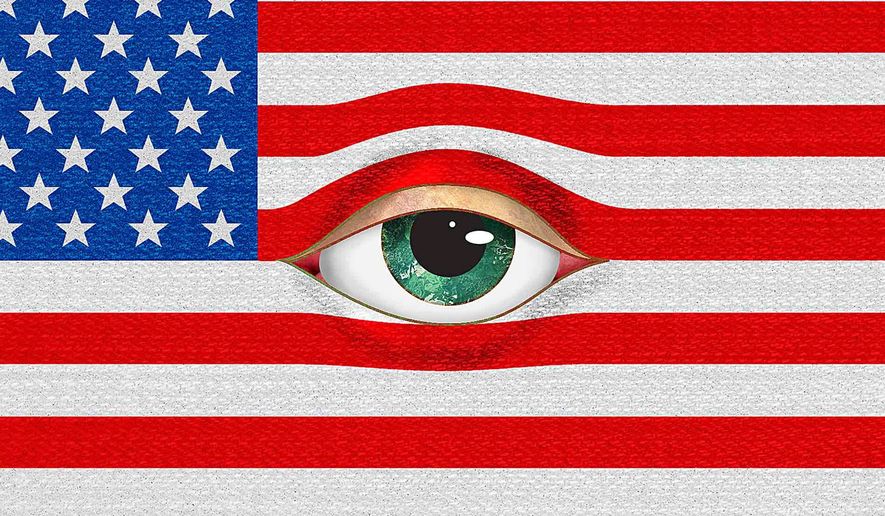
When a government agency comes to an internet service provider demanding information about Americans because of what they have said on social media, the provider should discard the demand, close the door or hang up the phone.
The government is not entitled to rummage through the political opinions, associations, criticisms and angry rhetoric of anyone merely because a government official finds those opinions offensive, threatening to an agency’s reputation or inconvenient to its mission.
Recently, Immigration and Customs Enforcement (ICE) has dramatically expanded its monitoring of social media platforms and issued administrative subpoenas seeking information to identify users whose posts have criticized ICE. Reported subjects of investigation have included Americans and aliens who have not been charged with crimes.
People were interested in these podcasts
An administrative subpoena is not a judicial search warrant or a grand jury subpoena. It can be issued by one government official to another for investigative authorization, or to an entity legally subject to the issuing agency, such as from bank regulators to a banking institution.
Absent that unique regulatory relationship, because there is no intermediary like a judge or a grand jury between the issuer and the target of the subpoena, an administrative subpoena is of no legal significance when issued to a person outside the government or because of speech.
The federal government does not possess a general police power to investigate people because of what they think, believe, say, read, write or post. The feds only possess powers delegated to them by the Constitution. Those powers do not include the authority to create a political surveillance apparatus designed to discover who dislikes them.
The government cannot investigate speech; only genuine crimes. And when a particular person is reasonably suspected of committing a particular crime, the government has investigative tools at its disposal.
But that’s fundamentally different from starting with someone’s speech and asking: Who is this person? Where does he live? Who are his friends? What other accounts does he have? What else has he said?
The proper law enforcement sequence is crime first, suspect second, investigation third. The government cannot constitutionally begin with protected expression and work backward to find a crime.
To commence all federal government investigations, the Constitution requires articulable suspicion that an identifiable person has committed an identifiable crime. A vague government assertion that a social media post is concerning, hateful, extreme, anti-government or potentially disruptive to government operations is not legally sufficient.
Otherwise, every person becomes a potential investigative subject simply because he has a keyboard and an opinion.
The First Amendment exists because government officials cannot be trusted to decide which opinions are acceptable.
This applies with particular force to political speech, which is at the heart of the First Amendment. The government may not investigate people simply because they condemn its policies, despise its officials, advocate the abolition of an agency or use coarse and inflammatory language in expressing their political views.
And that means hate speech.
“Hate speech” is a moral and social description, not a constitutional category of unprotected expression. The First Amendment does not disappear because speech is hateful. Nor does it disappear because someone hates the government.
All in America have a constitutional right to say that the government is evil. They have a right to say that their officials are tyrants. They have a right to call government agents whatever words come to mind. They have a right to demand that an agency be abolished. They have a right to express hatred of government itself.
The First Amendment was written to protect these sorts of expressions.
The Supreme Court’s First Amendment jurisprudence has repeatedly emphasized the extraordinary protection afforded to political advocacy. Under Brandenburg v. Ohio, all innocuous speech is absolutely protected, and all speech is innocuous when there is time for more speech to rebut or challenge it.
Stated differently, even advocacy of unlawful conduct generally cannot be punished unless it is directed toward producing imminent lawless action and imminently produces it.
In order to obtain a warrant, the government must identify the crime and produce probable cause that the place to be searched or thing to be seized will likely produce evidence of that crime. It cannot simply declare that an unpleasant statement is dangerous to the government and authorize itself to identify and intimidate its author.
A person’s social media history can reveal vastly more than a single conversation ever could: political beliefs, religious views, friendships, professional associations, travel, personal relationships, affiliations and years of political expression. A government demand for that information is not some trivial request for a name and address. It can expose an extraordinarily detailed portrait of a person’s life.
That creates a profound chilling effect that will deter people from expressing their opinions.
The First Amendment was ratified to prevent chilling.
Moreover, the government cannot expand its powers merely because technology makes expansion possible. Police departments cannot purchase surveillance technology and then announce that its availability entitles them to use it. Federal agencies cannot turn social media platforms into a nationwide surveillance database simply because contractors can build the software.
America has new technology, but the same Constitution.
The government cannot manufacture criminals out of Americans whose opinions it dislikes. A free society cannot survive if every angry post becomes an investigative lead, every government critic becomes a potential threat, and every unpopular opinion becomes grounds for a government dossier.
The First Amendment does not protect only polite speech. It protects all speech — dissent, unpopular speech, offensive speech, hateful speech and criticism of government. It even protects the right to be wrong.
The government has no constitutional authority to require any person to first demonstrate that their opinions are sufficiently agreeable before being permitted to live free from surveillance.
So, when ICE comes asking for anyone’s social media histories because of what they have said, the answer should be unequivocal: Go get a warrant.
Until then, ICE can leave us and our speech alone.
• To learn more about Judge Andrew Napolitano, visit https://JudgeNap.com.
Follow the author

Please read our comment policy before commenting.