


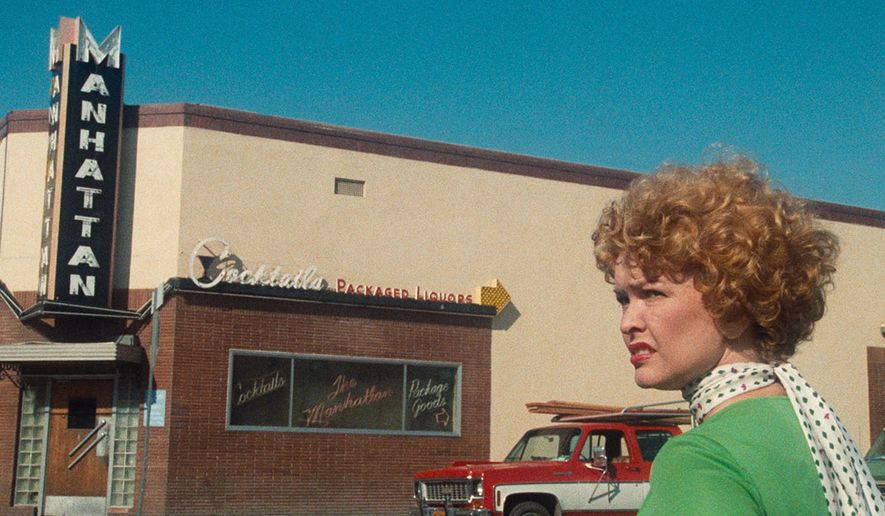

Ellen Burstyn’s Academy Award-winning performance returns to the disc format after a two-decade hiatus, now in the 4K format with brand-new extras in Alice Doesn’t Live Here Anymore (Criterion, rated: PG, 1.85:1 aspect ratio, 112 minutes, $39.96).
Perhaps it’s an odd choice for the esteemed director Martin Scorsese, eventually known for gangster epics, but his 1974 dramedy succeeds in telling the difficult life of Alice Hyatt (Ms. Burstyn), recently widowed and traveling across the Southwest with her precocious preteen son Tommy (Alfred Lutter) as she tries to restart her singing career, if she can get to Monterey, California.
Multiple stops in Arizona, one requiring escaping from a soon-to-be-abusive relationship with a married man (Harvey Keitel is genuinely scary), find her settling in Tucson, not belting out songs but working as a waitress just to keep from being broke.
People were interested in these podcasts
She lands at Mel and Ruby’s Cafe, where she settles in with her new pals: waitresses Vera Gorman (Valerie Curtin) and foul-mouthed Florence Jean “Flo” Castleberry (Diane Ladd); owner Mel Sharples (Vic Tayback); and possible romantic interest David (Kris Kristofferson).
Through it all, she tries to keep her musical dream alive while struggling to pay the bills.
By the way, Tommy’s new trouble-making friend Audrey happens to be a young Jodie Foster (“Taxi Driver”), a favorite of the director.
Ultimately, Mr. Scorsese brilliantly captured a moment in the life of a woman empowered by her need to survive in a real world filled with humor and pain.
And yes, this is the film that spawned the legendary TV sitcom “Alice” that cemented Linda Lavin’s career, but the film never featured TV Flo’s signature catchphrase: “Kiss my grits!”
4K in action: This new 4K restoration was created from the 35mm original camera negative, supervised and approved by the director. A 35mm print from Mr. Scorsese’s personal collection was also used as a color reference.
What immediately stands out is an opening scene (with a 1.33:1 aspect ratio) with a young Alice outdoors on a farm, with a setting sun casting a bloody red glow over the location, looking like the beginning of “The Wizard of Oz,” if it took place in hell.
Moving on to the screen-filling presentation, viewers get warm, natural visuals, though the director and cinematographer Kent L. Wakeford’s choice to keep the camera roaming and active disrupts the warmth at times, with sometimes long handheld sequences providing tension and a documentary feel.
The slightly saturated 1970s textures and details shine in a green field contrasted with Alice’s strawberry blond hair; or a teal blue bathroom compared to Flo and Alice’s pink waitress uniforms; or the pair getting some sun with impeccable nuances of reds and pinks on their face close-ups.
Some film grain does exist to provide faithfulness to the original source material but never overwhelms or detracts.
Best extras: Viewers first get a select optional commentary track mostly originating from the Warner Bros. DVD release of the film in 2004 but enhanced by Criterion with stars Mr. Scorsese, Ms. Burstyn, Kristofferson, Ladd, Ms. Foster and Mr. Lutter.
The individual speakers are recorded separately, with highlights including the director explaining the movie’s origins; Ms. Burstyn talking about her appreciation of “Mean Streets”; and Ms. Ladd covering her career and mentioning the appearance of her daughter Laura Dern in the film.
Mr. Lutter and Ms. Foster are new to the vintage track, added back in by Criterion from what I suspect might be the original recordings from back in 2003. If that is true, viewers are getting a very rare treat.
Ms. Foster recalls playing the rebellious Audrey, while Mr. Lutter proves the more substantial addition, dominating much of the film’s first half with memories of playing Tommy. Both talk about being child actors and working with Mr. Scorsese.
Next, viewers get a precious 24 minutes with nonagenarian Ms. Burstyn, interviewed by film critic Farran Smith Nehme.
Sounding like she shot the film last week, she talks about the cast and its origins; the violent scene with Mr. Keitel; what really is method acting; and her other movies such as “The Last Picture Show” and “Resurrection” (one of her favorites).
Equally compelling is 20 minutes with Academy Award-winning editor Marcia Lucas, who not only assembled this film (her first feature film) but also the original “Star Wars” and “Return of the Jedi.” She offers a recap of her career, working with Mr. Scorsese and George Lucas, and the strategy and magic of her craft mostly tied to “Alice Doesn’t Live Here Anymore.”
Lucas passed shortly after this interview, and it should never be forgotten that she was arguably one of the major reasons for the success of her former husband’s galaxy far, far away.
Next, a retrospective documentary from 2003 offers Ms. Burstyn and Kristofferson in separate interviews looking back on the project, working with the director, discussing select moments from the film and touching on their lives and careers. It’s another worthwhile extra to explore an actor’s motivations for their performances.
Finally, a 10-page, accordion-style, full-color booklet features an analysis by film critic Stephanie Zacharek highlighting the film’s appeal to older women stuck in Alice’s situation and not yet part of the younger feminist movement.
Contact the author

Please read our comment policy before commenting.