


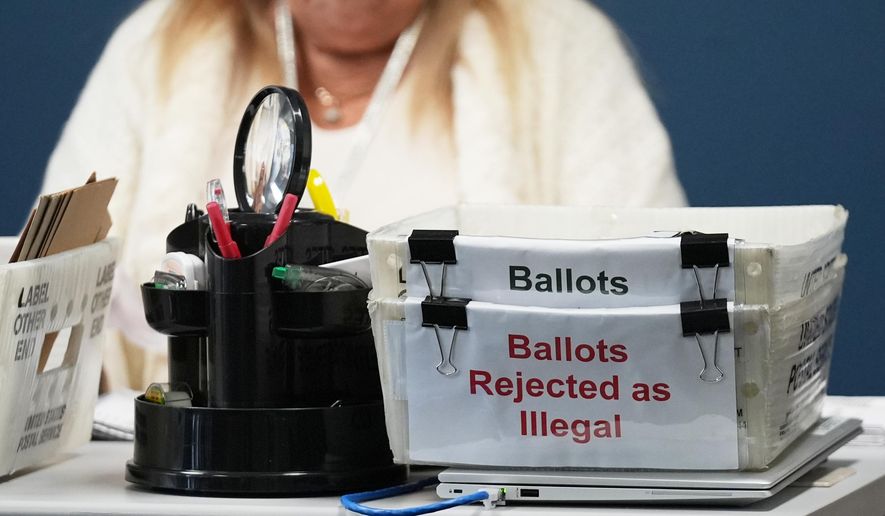

The Trump administration filed a quick appeal late last week, just hours after a federal judge issued a new restraining order forbidding the U.S. Postal Service from carrying out President Trump’s plans to police which mailed ballots can be delivered for November’s election.
U.S. District Judge Indira Talwani, an Obama appointee to the court in Massachusetts — and a frequent stumbling block for Mr. Trump — said the president’s plans are likely “unconstitutional” because they interfere with states’ ability to run elections.
Her ruling late Thursday shut down the post office’s progress, days after the Supreme Court had seemed to breathe new life into the plans.
People were interested in these podcasts
On Friday, the Justice Department asked the 1st U.S. Circuit Court of Appeals to step in and revive the election plan.
Federal officials said some states are scheduled to begin mailing out ballots to voters in the next two weeks, heightening the urgency of the matter.
Judge Talwani, though, has said those states’ plans are exactly why she needed to issue a restraining order.
Without it, she said, states’ elections could be thrown into chaos as they try to meet the post office’s demands about the mailed ballots.
States would be forced to redesign their ballot mail envelopes, reorder those supplies, train election officials to comply with the new federal mandate and provide voter lists to the postal service — all in the couple of months before the election, she said.
“In light of the state election officials’ unrebutted declarations that compliance with the final rule at this late date is impossible, the risk of irreparable harm to voters in those jurisdictions is grave,” Judge Talwani said.
She rejected the government’s justification that the new rules are needed to prevent fraud in mail-in voting, saying the case record “continues to lack any evidence” of fraud. “In any event, the USPS’s interest in correcting an unsubstantiated problem through likely unconstitutional means is dwarfed by the overwhelming risk of pervasive disenfranchisement of citizens who need access to mail ballots in order to vote,” she wrote.
Whatever the 1st Circuit appeals court will decide, the matter is certain to rush to the Supreme Court, which a week ago erased a previous blockade from Judge Talwani, ruling that it wasn’t ripe.
That was because the previous injunction came before the postal service finalized its plans. Late last week those plans were made final, which Judge Talwani said puts the issue squarely before her.
Under the now-blocked rule, states that want to allow voting by mail would be required to submit lists of eligible voters to the postal service. States would then have to use approved envelopes to send the ballots out, and to get the ballots back — and they must be marked with unique bar codes so they can be tracked.
The postal service’s plan was issued in response to a directive from Mr. Trump, who issued an executive order in March calling for federal intervention to ensure only legitimate voters get ballots.
Another part of his plan called on Homeland Security to compile lists of those legitimate voters.
DHS has yet to finalize its own regulation to carry that out.
Contact the author


Please read our comment policy before commenting.