



OPINION:
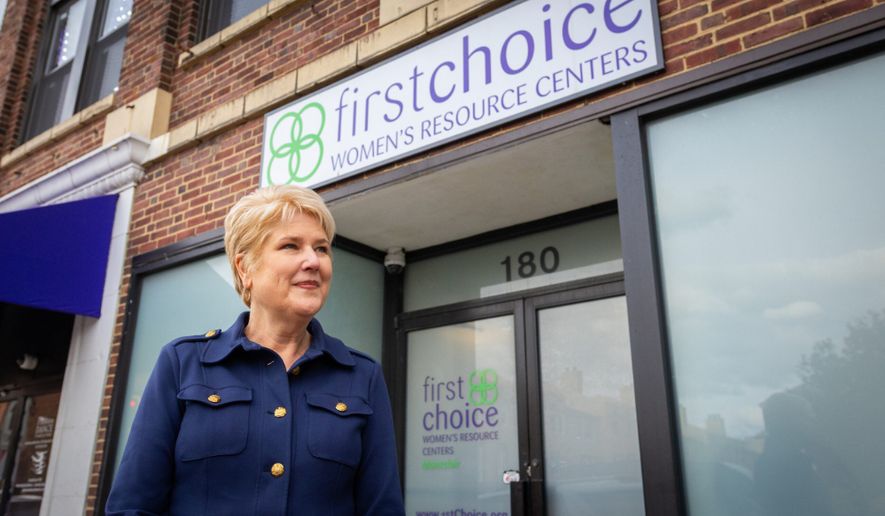
The Supreme Court’s unanimous April decision rebuking New Jersey’s harassment of pro-life pregnancy centers reminded state officials that they cannot trample constitutional rights simply because they dislike a nonprofit’s mission.
Yet Americans should not have to rely on years of costly litigation and Supreme Court intervention to stop state officials from targeting nonprofit donors in the first place.
That should be our takeaway from First Choice v. Davenport, which is not a simple feel-good story. First Choice achieved this remarkable victory only after a prolonged legal battle led by some of the country’s best constitutional lawyers.
The fight is not over for them. Their day in court has won them another day in court to challenge the state’s subpoena seeking the names, addresses, employers and phone numbers of First Choice’s donors.
In the meantime, the threat of having their donor list exposed to a hostile state attorney general still hangs over them. As a result, many New Jerseyans may decide that supporting the organization is too risky. What if the state eventually prevails and comes after them too?
Then there is the problem of enforcement. How many times have we seen bureaucrats and activist judges ignore precedent to help their political allies? Donor privacy has been a frequent casualty of this partisan behavior.
First Choice should have won its fight long before it reached the high court. Since the 1958 NAACP v. Alabama — another unanimous decision — the Supreme Court has consistently held that state demands for donor lists infringe on our constitutional rights.
Yet the 3rd U.S. Circuit Court of Appeals still ruled in favor of New Jersey in the case. Just like the 9th Circuit ruled for California a decade ago, when state Attorney General Kamala Harris demanded that every nonprofit in the state hand over its list.
In both cases, only the Supreme Court’s intervention saved Americans from having their donations and personal information exposed. Still, the Supreme Court cannot take every case. Nor should Americans have to wage constant, costly and lengthy legal battles to protect such basic rights as privacy and freedom of association.
That is where legislation comes in. Since 2018, 22 states have enacted versions of the Personal Privacy Protection Act, designed to explicitly prohibit government agencies and officials from making unlawful demands for confidential donor information.
Officials who violate these protections can face legal consequences under statutes designed to prevent politically motivated fishing expeditions.
New Jersey, of course, is not one of those states. That is one reason the attorney general was able to go after First Choice’s donors without a single complaint against the organization.
Every state in the country should pass the Personal Privacy Protection Act to protect donors to nonprofits, no matter their beliefs. This is not a partisan issue. Liberal groups in red states benefit from these protections just as conservative groups in blue states do.
No one wants the government to be weaponized against them because of their beliefs or support for a nonprofit, but that is exactly what happens when donor lists are exposed.
We can sit around waiting for the next state to go off the rails in pursuit of a nonprofit’s donor list and embark on yet another bruising, years-long legal battle, or we can get proactive. Pass the Personal Privacy Protection Act and a federal equivalent to defend every American’s right to support the causes they believe in.
Donor privacy laws are needed today for the same reason our Founders insisted on including the Bill of Rights in our Constitution: When our liberties are not clearly guaranteed, it is only a matter of time before the government finds a way to take them away from us.
The Supreme Court gave Americans an important victory in First Choice. Legislatures should not wait for the next abuse of power before acting. Privacy protections must be written into law before government officials decide to test the limits yet again.
• Rick Santorum, a former U.S. senator from Pennsylvania, is a board member of People United for Privacy Foundation.

Please read our comment policy before commenting.