



OPINION:
For centuries, Qatar was a sparsely populated sheikhdom under the loose influence of successive Islamic empires, caliphates and regional Arab rulers. In 1916, it transitioned into a British protectorate.
At that time, its main industry was pearl diving, which sounds romantic but was in fact an arduous trade. Divers suffered from ruptured eardrums and chronic lung ailments. During the offseason, many families lived in poverty.
Conditions in Qatar deteriorated sharply when the Great Depression reduced global demand for luxuries and cultured pearls from Japan devastated the market for natural pearls.
Then, in 1939, geologists working for a European-American consortium discovered oil beneath the Connecticut-size peninsula’s desert sands. Ten years later, commercial extraction began.
In 1971, Shell geologists discovered natural gas reserves offshore that proved to be the largest field in the world. That same year, the British granted Qatar independence.
Today, Qatar has a population of roughly 330,000 citizens — about equal to Honolulu — and, thanks to petroleum, they are crazy rich.
So, the question is: How are the Qataris spending their fortune?
Natalie Ecanow, a senior research analyst at the Foundation for Defense of Democracies, has spent more than a year digging through financial records. She has found that more than $400 billion has been spent in the U.S. since 2000, approximately $1.2 million per Qatari citizen.
That is probably a lowball figure, since much of Qatar’s spending is hard to track.
Qataris have poured money into multiple sectors of the U.S. economy, including real estate, sports teams and Hollywood studios. The Qataris also spent more than $295 million on roughly 70 lobbying and public relations firms.
In addition, they buy gifts for officials, donate to think tanks, underwrite congressional baseball games and pick up the tab for elaborate dinner parties for the Washington media elite.
The Qataris have garnered goodwill at the Pentagon by hosting, since 2003, the U.S. air operations center at their Al-Udeid base. In 2022, President Biden named Qatar a “major non-NATO ally.”
President Trump has not removed that designation and, in 2025, extended U.S. security assurances to Qatar.
Qatar has provided a Boeing 747, valued at roughly $400 million, that is being refurbished for use as Air Force One during Mr. Trump’s term.
None of these activities appears to be illegal, but recall Qatargate: In 2022, Belgian authorities arrested several members of the European Parliament on suspicion of accepting bribes from Qatar to influence European Union policy.
In a foreword to “Mapping Qatar’s $400 Billion Footprint in the United States,” FDD Executive Director Jonathan Schanzer points out that the ruling Al Thani family has sheltered al Qaeda, supported the Taliban, remains a patron of Hamas and is the primary backer of the Muslim Brotherhood, “a global network of violent and nonviolent Islamist groups that seek the downfall of the West. Several branches of this network have recently been sanctioned by the U.S. government.”
If you understand this, then you also grasp why it is disturbing that Qatar has spent more than $8.8 billion to infiltrate U.S. higher education.
The schools that receive the most Qatari funding are those with satellite campuses in Doha: Cornell, Carnegie Mellon, Georgetown, Northwestern, Virginia Commonwealth and Texas A&M, which announced in 2024 that it will close its Doha campus by 2028.
Qatar also has set up partnerships with historically Black colleges and universities. Commentator Dumisani Washington observed that the HBCUs “are following the example of the president and bipartisan lawmakers on Capitol Hill: Take Muslim Brotherhood terrorist money, because everyone else is.”
The influence does not stop at higher education. Since 2009, the Qataris have been providing funds to public K-12 schools, including “study-abroad” trips to Doha and “suggestions” for curricula concerning the Middle East. The dollar amounts invested are difficult to ascertain, but FDD researchers are working to determine them.
As an old ink-stained wretch, I am no less troubled by Qatar’s Al Jazeera Media Network. Though most of the spending on these channels is not in the U.S., they influence what Americans see, read and hear.
Al Jazeera was founded in 1996. In its early years, as noted by Shibley Telhami, a professor at the University of Maryland, it gave “voice to Osama bin Laden.” After the terrorist attacks of Sept. 11, 2001, the scholar Fouad Ajami wrote in The New York Times Magazine that “Al Jazeera deliberately fans the flames of Muslim outrage.”
For years, Al Jazeera featured Yusuf al-Qaradawi, who defended the death penalty for Muslims who convert, and praised Imad Mughniyah, the Hezbollah mastermind behind the 1983 suicide bombings that slaughtered 241 Americans and 58 French servicemen in Beirut.
As noted in the FDD report, a clip of former Qatari Prime Minister Hamad bin Jassim Al-Thani resurfaced in November 2025 in which he boasts that Doha “had journalists on our payroll in many countries.” In 2020, the Justice Department ordered Al Jazeera’s U.S.-based affiliate, AJ+, to register under the Foreign Agents Registration Act. It failed to comply, and there were no serious repercussions.
These days, Al Jazeera’s content is absorbed into the large language models that power many artificial intelligence platforms. Its coverage is more accessible to AI training pipelines than articles in Western media that are locked behind paywalls.
That gives Al Jazeera an advantage in shaping what AI systems “know.”
I will conclude by highlighting a glaring irony: The Qataris are crazy rich thanks to Western science and capitalism, and they are using their lucre to support the Muslim Brotherhood, whose mission is to bring down the West.
Mr. al-Qaradawi, who died in Doha in 2022 at age 96, was quite clear about that. He argued relentlessly that Muslims are obliged to spread “Islam until it conquers the entire world and includes both the East and West, [marking] the beginning of the return of the Islamic caliphate.”
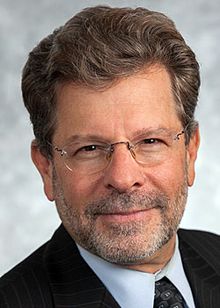
• Clifford D. May is founder and president of the Foundation for Defense of Democracies, a columnist for The Washington Times and host of the “Foreign Podicy” podcast.
Follow the author

Please read our comment policy before commenting.