



OPINION:
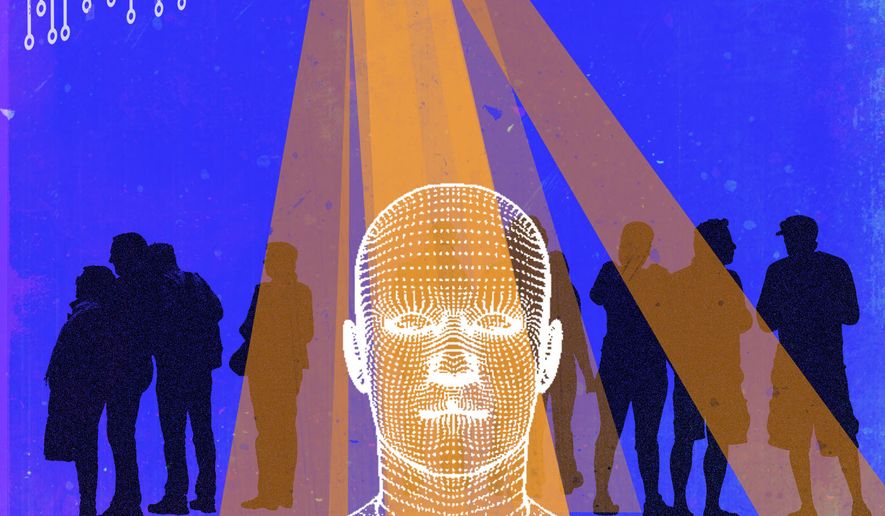
We may have just received a preview of what an artificial-intelligence-powered surveillance state could look like, and it should give every American pause.
AI promises extraordinary innovation. It will accelerate medical breakthroughs, streamline logistics and unlock efficiencies we are only beginning to imagine. Recent events reveal how AI could also supercharge the government’s ability to monitor, track and profile citizens at an unprecedented scale.
A Pentagon battle over AI
People were interested in these podcasts
A high-level battle is unfolding over how the federal government may use AI systems.
In February, tensions between AI company Anthropic and the Defense Department became public. Anthropic’s model Claude was the only AI system integrated into certain classified military environments. The dispute is about limitations Anthropic placed on Claude, prohibiting its use in “mass domestic surveillance” and “fully autonomous weapons.”
Defense Secretary Pete Hegseth argued that the AI system should be available for “all lawful purposes.” He noted that mass domestic surveillance is already illegal. He reportedly demanded that the restrictions be removed and warned Anthropic that it could otherwise be labeled a “supply chain risk” or face intervention under the Defense Production Act.
On Feb. 26, Anthropic publicly rejected this ultimatum, which revealed the potential scope of an AI-powered surveillance state it is trying to safeguard against.
‘Automatically and at massive scale’
In its rejection letter, Anthropic addressed the two contested limitations. On autonomous weapons, Anthropic stated that current AI models “are simply not reliable enough” and warned that such systems could put U.S. soldiers and civilians at risk.
The section on mass domestic surveillance was even more revealing. “Using these systems for mass domestic surveillance is incompatible with democratic values,” the letter reads. “AI-driven mass surveillance presents serious, novel risks to our fundamental liberties.”
Anthropic also addressed the argument that AI should be usable for “all lawful purposes.” It wrote, “To the extent that such surveillance is currently legal, this is only because the law has not yet caught up with the rapidly growing capabilities of AI.”
In other words, surveillance law was crafted for a pre-AI world.
The letter then outlined a sobering scenario: “For example, under current law, the government can purchase detailed records of Americans’ movements, web browsing, and associations from public sources without obtaining a warrant. … Powerful AI makes it possible to assemble this scattered, individually innocuous data into a comprehensive picture of any person’s life — automatically and at massive scale.”
Just a few years ago, scattered GPS pings or browsing histories were fragmented and largely useless without enormous manpower to connect the dots. Now, AI systems can instantly synthesize millions of data points into a predictive profile of an individual’s life, where they go, whom they associate with, what they read and what they believe.
What was once cumbersome and impractical could become effortless.
An expanding AI surveillance tool kit
Above is just one way AI could enable mass surveillance. Other proposals are already emerging. Last year, an AI startup made headlines by claiming it would “end crime” by building a nationwide network of AI-enhanced cameras.
Today, law enforcement relies on a patchwork of private security cameras and CCTV systems, which are often useful only after a crime has occurred. In the company’s vision, those cameras would be interconnected and continuously analyzed by AI. AI could autonomously flag suspicious behavior in real time, potentially even predicting criminal activity before it happens.
In Britain, officials have proposed an AI-driven crime prevention initiative. The program includes interactive crime maps designed to “identify where crime is most likely to happen to allow for better prevention.” In addition to traditional crime statistics, reports suggest that social media data may be used to identify “anti-social behavior” before it escalates.
Individually, these tools appear to improve safety. Combined, they begin to resemble surveillance infrastructure. This infrastructure is capable of monitoring movement, predicting behavior, mapping associations and centralizing identity.
Innovation while protecting liberty
Artificial intelligence will usher in remarkable advancements such as curing diseases, optimizing supply chains and expanding human potential. We should embrace this innovation while remaining vigilant about its impact on liberty and personal autonomy.
We are opening the door to a future where data can be assembled without warrants, behaviors can be flagged without context, and profiles can be generated without consent.
A free society depends on personal autonomy, privacy and limits on concentrated power. AI does not erase those principles, but it can strain them to the breaking point if left unchecked.
• Donald Kendal (dkendal@heartland.org) is the director of the Emerging Issues Center at The Heartland Institute. Follow @EmergingIssuesX.

Please read our comment policy before commenting.