



OPINION:
“It is forbidden to kill; therefore all murderers are punished unless they kill in large numbers and to the sound of trumpets.” —Voltaire (1694-1778)
Last week, when the Pentagon resumed its attacks on small boats in the Caribbean and eastern Pacific Ocean, the media barely noticed. The U.S. military has now destroyed 56 vessels and killed 190 people. The killings began in September 2025 and have continued to this month.
The attacks caused a stir a few months ago, when one of the strikes disabled the boat at which the attack was aimed but failed to kill all the passengers. When a follow-up strike was ordered, it succeeded where the initial strike had failed. The admiral who ordered the killing of the survivors told members of Congress in secret that he believed he was following orders.
People were interested in these podcasts
The secretary of defense denied that he ordered the survivors to be killed.
Killing survivors is expressly prohibited by federal law as well as by the Uniform Code of Military Justice. Of course, ordering the killing of innocents is always unlawful.
So the Pentagon made two changes. It produced more lethal strikes so as not to be burdened with the problem of survivors, and it either stopped killing survivors or stopped revealing that it had killed them.
Everyone who professionally monitors the government expects it not to be truthful when the truth is unpleasant or reveals criminal behavior. This expectation is realistic, considering history and Supreme Court rulings that permit the government to lie.
The U.S. Navy rescued two survivors whom it failed to kill. Under the law, rescues are to be conducted by the Coast Guard, but the law was written when the Coast Guard was part of the Department of Defense. Today, it is in the Department of Homeland Security, which is largely mistrusted by the Defense Department.
Rather than share information about its attempted murders with a department of the government over which it has no control, rather than having a team ready and nearby to rescue survivors, the Pentagon assigned the Navy to arrive long afterward and rescue two fishermen.
Still, the Navy didn’t know what to do with them, so its legal team asked Department of Justice lawyers for guidance. They asked the Defense Department for evidence of crimes against these fishermen. The department was unable to provide an answer that would rise to the level of probable cause, the legal standard for charging and detaining anyone.
Probable cause is a level of evidence such that a neutral person would conclude that it is more likely than not that the detained persons committed a stated crime. At that point, the Justice Department told the Defense Department to return these would-be victims to their home countries.
In 56 attacks and one follow-up attack, only three people survived. Two of them have hired American lawyers and served notice of their intention to sue the federal government for its attempted murder of them.
The government initially claimed that these killings were of known drug dealers and that this was part of a law enforcement operation. Yet, under federal law, the military is prohibited from engaging in law enforcement. When confronted with that, the White House claimed that the folks in the boats were enemy combatants and thus susceptible to targeting by the military.
Yet that would require some empirical evidence of their use of force or violence against U.S. personnel, of which the government revealed none.
Then the White House likened the effect of the sale of drugs to a war on the American people and offered that the job of the military is to defend the country in wartime from what it called narco-terrorists. Yet controlled dangerous substances are initially ingested voluntarily either by those looking to become addicted and separated from reality, or by those who believe that they — not the government — own their own bodies.
It is clear that none of the government’s changing justifications for these killings amounts to a legally cogent argument. The Constitution requires due process (notice, fair trial, right to appeal). It permits only judges to impose sentences, and it requires judges to impose only sentences that have been prescribed by law.
Stated differently, the president cannot order the killing of a person because he thinks or fears — or even knows — of their criminal behavior. It is apparently of no moment to him that drug dealing is not a capital offense.
The Voltaire quotation at the top of this piece about murders and trumpets has haunted me since I first read it as a college student. The reference to the trumpets was Voltaire’s way of calling attention to government wars and executions, many of which, in his day, were often accompanied by trumpets.
Yet trumpets or not, all this raises the question: How can an act that is intrinsically evil (the intentional killing of the legally innocent) become moral or lawful just because it is committed by government officials? The short answer is that it cannot.
Moreover, intrinsically evil acts can never produce moral outcomes, because the toleration of pure evil will propagate it.
In America, all people are innocent until proved guilty beyond a reasonable doubt and to a moral certainty. This principle has been a bedrock of Anglo-American jurisprudence for 600-plus years. The president and all in government take an oath of fidelity to the Constitution, whose values embody this principle.
A government is illicit when it violates the very laws it enforces. When the government breaks its own laws, it invites others to do so. When it kills innocents, it invites others to do so. It is always immoral and criminal for anyone intentionally to extinguish innocent human life.
Now, President Trump’s ordered killings are so commonplace that there is little coverage and less outrage, but we will see both when the killings come home.
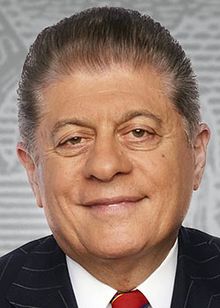
• To learn more about Judge Andrew Napolitano, visit https://JudgeNap.com.
Follow the author

Please read our comment policy before commenting.