



Houseplants are a wonderful way to add a little green to your home, especially in the colder months. And if you choose ones that bloom, they can add a rainbow of color to remind you of your summer garden.
Flowering houseplants are just as easy to grow as their leafy counterparts, but some require special care in order to rebloom. Provide what they need, and it’ll be like having a living bouquet in your home for weeks or months on end.
Here are five favorites:
People were interested in these podcasts
Cyclamen
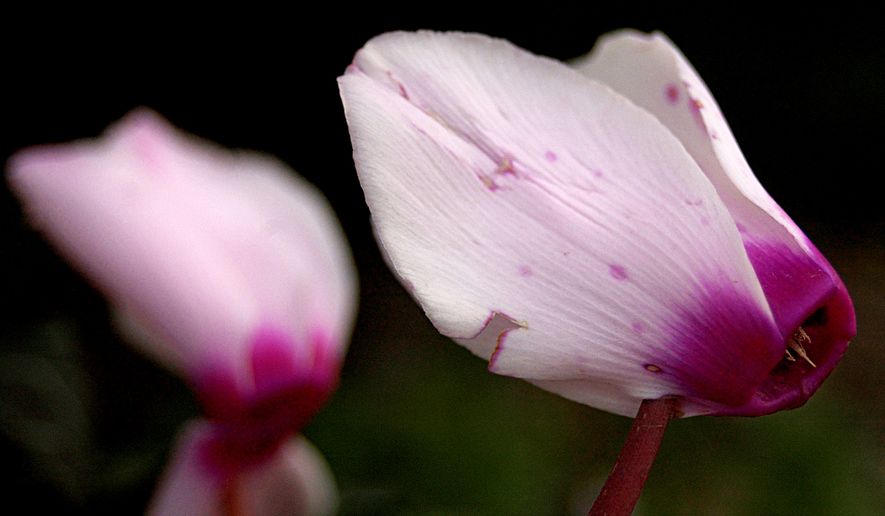
Cyclamen bloom in white, pink, red or purple. Their petals curl backward, giving them an odd, butterfly look.
To encourage and prolong blooming, place the plants in indirect light near an east- or north-facing window in a cool room that stays between 60 and 70 degrees Fahrenheit (15-21 degrees Celsius). The plants also like humidity, so put them on a tray to which you’ve added pebbles and water, or run a humidifier nearby.
Since the plants are susceptible to root rot, avoid wetting their crowns, the junctures where the roots meet the lower stems. To avoid this, water from below by placing the pot on a saucer of water and allowing the soil to drink through the pot’s drainage hole. Then discard any excess water. Fertilize monthly when the plant is in its active growth, budding and flowering stages. Stop watering and feeding in late spring when leaves turn yellow, and move the plant to a cool, dim or dark spot to rest until fall.
African violets
African violets can be a bit capricious, but they aren’t difficult to grow. They require slightly acidic soil with a pH between 6.0 and 6.8. They aren’t heavy feeders, but should be fertilized with a 20-20-20 houseplant fertilizer (or one specially formulated for African violets) every two or three months.
Place them in direct light from October through the end of February (except in the Deep South, where the winter sun is stronger). But during spring and summer, move them off to the side of, not in front of, a north- or east-facing window.
Their leaves will become spotted and blotchy if they get wet, so avoid splashes by bottom-watering with room-temperature water, but don’t let the pot sit in water for too long.
The plants also require warmth (but not heat) and high humidity. If the room is dry, run a humidifier or use a pebble tray.
Bromeliads
Bromeliads bloom only once, their green leaves giving way to tall, bright bracts of red, yellow, orange, purple or peach that last for months. Afterward, the plants produce “babies,” their mother slowly fades and the next generation takes over.
The plants are easy to grow and fun to water, as they take in water through their leaves, not their roots. Place them in bright, indirect light and pour water into the plant’s central “cup,” the point in the middle where the leaves meet. Rinse out that reservoir weekly before filling it with fresh, room-temperature water.
Peace lilies
Peace lilies are tropical plants that like bright, indirect light and temperatures between 64 and 72 degrees Fahrenheit (17-22 Celsius).
Water them regularly to keep the soil slightly moist (but never soggy) and mist their foliage occasionally with room-temperature water.
Removing faded flowers will encourage more blooms.
Kalanchoe
Kalanchoe grows best in full, but not harsh, sunlight, and is happiest with daytime temperatures between 50 and 70 degrees Fahrenheit (10-21 degrees Celsius). Cooler nighttime temperatures of 45-65 degrees Fahrenheit (7-18 Celsius) will prolong flower life.
Plant them in well-draining potting mix and allow the soil to dry slightly between waterings. Fertilize plants in their active growing stage once a month with ordinary houseplant fertilizer.
___
Jessica Damiano writes weekly gardening columns for The Associated Press. She publishes the Weekly Dirt Newsletter. Sign up here for weekly gardening tips and advice.
___
For more AP gardening stories, go to https://apnews.com/hub/gardening.

Please read our comment policy before commenting.