


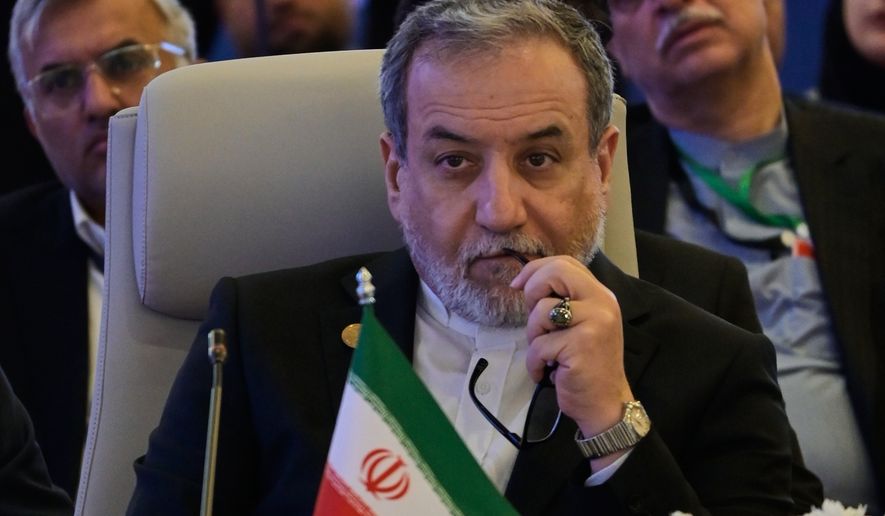

Iranian Foreign Minister Abbas Araghchi on Monday met with Pakistani army chief Field Marshal Asim Munir, one of the diplomats spearheading mediation efforts between Tehran and Washington, on the sidelines of an Economic Cooperation Organization meeting in Islamabad, as regional leaders look for a way out of the U.S.-led war.
Mr. Araghchi and Field Marshal Munir discussed regional developments and international relations, according to a readout from Iranian state-affiliated media. Mr. Araghchi also reportedly stressed the importance of regional cooperation on security measures.
In addition to Field Marshal Munir, Mr. Araghchi met with Pakistani Prime Minister Shehbaz Sharif and Foreign Minister Ishaq Dar, who have also played an outsized role in mediating conversations between Iran and the U.S.
People were interested in these podcasts
Following his meeting with Mr. Araghchi, Mr. Dar told reporters that his country is awaiting the response of the U.S. to the latest Iranian peace proposal. He added that Pakistan remains optimistic that a deal can be won and that his country is “committed to continuing our efforts to achieve lasting stability in the region.”
The meetings come after President Trump declared last week that the U.S. does not need a diplomatic agreement with Iran that ends the war and that the economic pressure imposed by his administration is enough.
In a social media post announcing the decision, Mr. Trump directed Vice President J.D. Vance, who had played a public role in Iran diplomacy, to focus instead on domestic corruption.
The change in direction is the result of demands that Washington says are fundamentally unacceptable.
Iranian officials in recent weeks have publicized a list of demands that Washington must meet in order to end the war that include wide-ranging sanctions relief, ending the naval blockade and the unfreezing of more than $12 billion in Iran’s assets.
Notably, the demands do not mention Iran’s controversial nuclear program, which Washington has insisted is the central issue.
Meanwhile, the kinetic aspect of the war has heated up in the region, as Iran targets U.S. military infrastructure.
Over the weekend, Iran reportedly attacked a U.S. air defense radar facility at the Al-Riffa helicopter base in Bahrain with drones, marking the second such assault in three days. Bahrain’s military and air defenses intercepted all the drones before they hit their targets, according to authorities.
Still, the attack was the first major drone barrage launched by Iran at one of its Persian Gulf neighbors in months and indicated Iran’s willingness and ability to return to war.
At the same time, multiple oil tankers and other commercial vessels have been damaged after striking mines in the Strait of Hormuz, according to Iran’s military.
Contact the author


Please read our comment policy before commenting.