



Democrats are trying to solve a conundrum: They want to block funding for the Iran war, but they do not want to shut down the government.
Congress faces a Dec. 11 deadline to fund the government; Republicans still control what bills come to the floor.
Democrats are debating how hard to fight to defund the war now, versus when they take control of both chambers in January and can take the lead on legislation.
People were interested in these podcasts
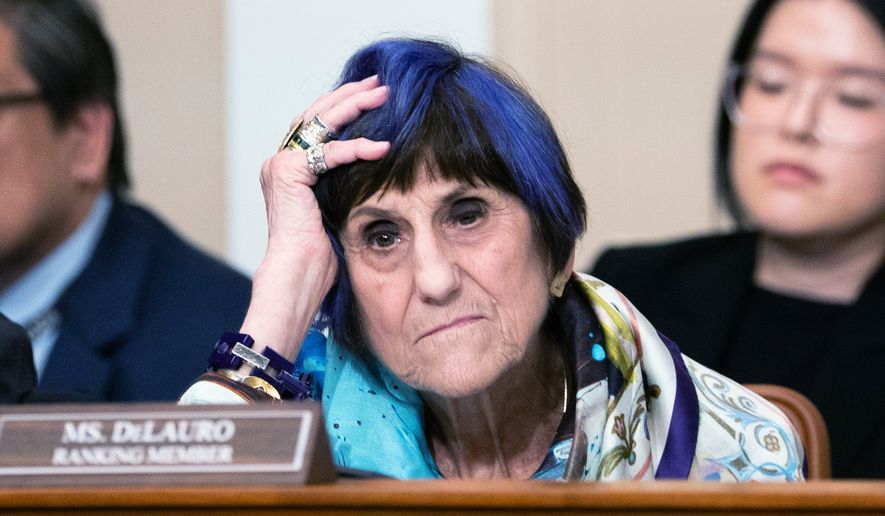
“What we all want to do is to end that funding,” Rep. Rosa DeLauro, the top House Democratic appropriator, told The Washington Times. “The issue is how quickly can we do it? What can we do now? And then what can we do after that?”
Ms. DeLauro, of Connecticut, said she does not want a government shutdown and believes most of her party also wants to avoid that outcome.
“The shutdown doesn’t stop the war,” she said.
Senate Democrats are also wrestling with the question. With the minority power of the Senate filibuster, any effort to block a government funding measure that continues financial support for the Iran war would likely fall to them.
“Everyone in our caucus wants this war to end, and to do it responsibly without a shutdown,” top Senate Democratic appropriator Patty Murray of Washington told The Times.
Senate Democrats are working on coming up with a unified position as a caucus on what to ask Republicans for in the funding negotiations.
“Nobody in our caucus wants a shutdown,” said Sen. Tim Kaine, Virginia Democrat. “We got to be creative.”
Maryland Sen. Chris Van Hollen has made the imminent fight over defunding the Iran war a central plank of his campaign for Senate majority leader against Charles E. Schumer of New York, who has served as the top Democrat for the past decade.
Mr. Schumer has said he supports Congress using its power of the purse to end the Iran war, but has not yet publicly addressed whether Democrats should push to defund the war next month or wait until they take control in January.
“My view is that we should have at the very least an amendment that would provide people an option to say we’re not going to provide any more money for the illegal war that’s driving up prices,” Mr. Van Hollen said.
Democratic Sens. Tammy Duckworth of Illinois, Elizabeth Warren of Massachusetts and Kirsten E. Gillibrand of New York have already floated text of such an amendment.
Their proposal would block the Defense Department from spending appropriations on “military operations or activities against Iran until the date on which Congress authorizes the use of military force against Iran.” It includes typical exceptions for defense against an attack and intelligence sharing.
President Trump has not asked Congress to formally authorize the war, which Democrats say violates the War Powers Act and the Constitution.
Ms. Duckworth’s amendment would also prevent Defense Secretary Pete Hegseth from spending money on travel until he submits a report to Congress on the war’s impact on military readiness and service members.
The report would need to include a detailed accounting of expended munitions and damaged and destroyed assets, as well as projected costs and timelines for replacements and repairs. It is also expected to contain a list of service member casualties from the war, wounded-in-action rates, associated costs of medical care and resulting disability rates.
“We need a whole lot more questions answered before we provide additional funding for the war,” said New Hampshire Sen. Jeanne Shaheen, the top Democrat on the Foreign Relations Committee.
“I think we need to support our war fighters, but the administration has not been at all transparent about the cost of this war, about the damage to our facilities in the Middle East,” she said. “And until they provide that, they’re not going to get any funding.”
Mr. Kaine said Ms. Duckworth’s amendment is one of several proposals Democrats are batting around as they try to come up with a consensus position, ideally one that could pick up Republican support.
“We’re not trying to design it in a way that Republicans would not like,” he said. “I think it’s going to be a pretty straightforward provision that will have the overwhelming support of the electorate, and might even have some things in it that Republicans are interested in.”
Senate Majority Leader John Thune said Democrats have not yet engaged in negotiations on how to keep the government funded beyond Dec. 11, noting he is “increasingly concerned” they will force the third government shutdown of this Congress.
“That would be a terrible outcome for the American people,” the South Dakota Republican said. “It’s something I hope that they will think better of.”
Contact the author


Please read our comment policy before commenting.