


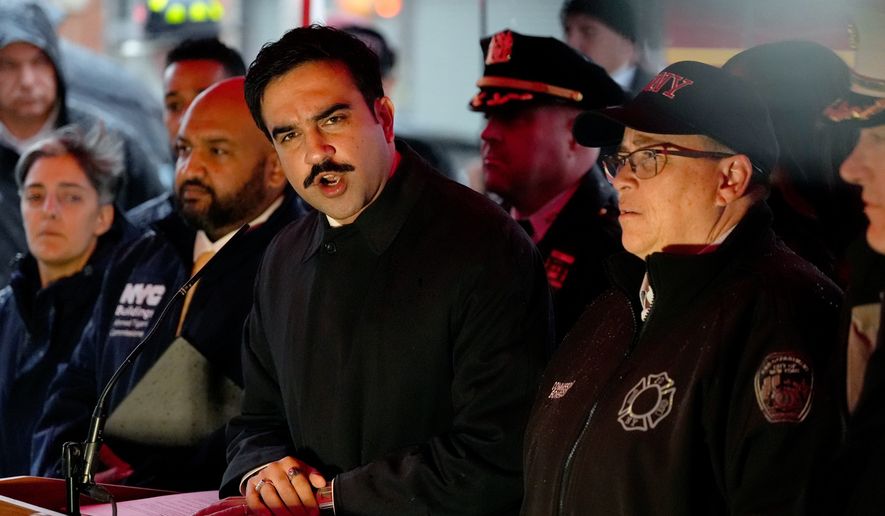

New York City Mayor Zohran Mamdani isn’t buying into the prediction market craze.
The 35-year-old self-described socialist says he’s never traded on platforms like Kalshi or Polymarket and is openly skeptical of the industry’s growing reach
“I think it does also degrade so much of life to make everything the subject of a bet,” Mr. Mamdani said Wednesday at The New York Times DealBook Summit.
People were interested in these podcasts
He said the growth of betting-like products across American life, and the addiction concerns that come with them, are “troubling.”
Asked directly whether he had ever used Kalshi or Polymarket, two of the industry’s biggest players, Mr. Mamdani said, “No, I have not.”
His remarks come at a pivotal moment for prediction markets, which the Commodity Futures Trading Commission oversees and allow users to wager money against other users on yes-no questions.
The industry’s future, particularly in sports wagering, is still being hashed out in the courts, while companies prepare for a Democratic-controlled Washington after years of support from a Trump-aligned Republican Party that largely embraced their expansion.
Mr. Mamdani’s skepticism also runs counter to the idea that prediction markets are a natural fit for a younger generation of elected leaders raised on technology, online communities and alternative sources of information.
At a recent Kalshi event in Washington, Justin Slaughter, a senior adviser at the crypto investment firm Paradigm and a former insider at the CFTC, said that prediction markets have already become a trusted tool inside political campaigns.
“I have yet to meet a single campaign manager this cycle who didn’t use prediction markets for information gathering,” Mr. Slaughter said.
He recalled a breakfast conversation with the head of a super PAC who described using prediction markets, which proved overwhelmingly accurate in the midterms, as a reality check on whether a favored candidate was outperforming conventional wisdom.
“As a result, I think a lot of members are going to come into office having been citing Kalshi themselves in private meetings with donors, with their staffs,” he said.
Mr. Slaughter even noted that Mr. Mamdani occasionally referenced Kalshi’s odds during his surprise rise in 2025, when the platform gave him roughly a 40% chance of winning the Democratic primary and about a 90% chance ahead of the general election.
Some say this is evidence that prediction markets are becoming part of how people process information.
Kalshi Chief Executive Tarek Mansour recently said that the platforms give younger generations a chance to turn their passion into specialized knowledge, test their convictions and, if they’re right, profit from that insight.
“They find community in doing that because they disagree with some people, and they agree with others,” Mr. Mansour said.

Please read our comment policy before commenting.