



SEOUL, South Korea — Two top Tokyo power players urged the United States to instill better discipline among its troops after a U.S. Marine was arrested in Okinawa over the weekend.
In an indication of the sensitivities surrounding crimes by U.S. service personnel in Japan, the latest case was addressed by both Chief Cabinet Secretary Minoru Kihara and Defense Minister Shinjiro Koizumi.
The American Marine, named in Japanese media as Kalvin Montoya Cardona, is accused of driving under the influence and breaking a midnight curfew by around 25 minutes, which ordinarily would not prompt such a high-level Japanese response, but the offense comes on the heels of the Oct. 4 arrest of Marine Lance Cpl. Devin Ballard in the death of a local woman at a hotel in Naha, Okinawa’s capital.
People were interested in these podcasts
He faces murder and robbery charges in the case.
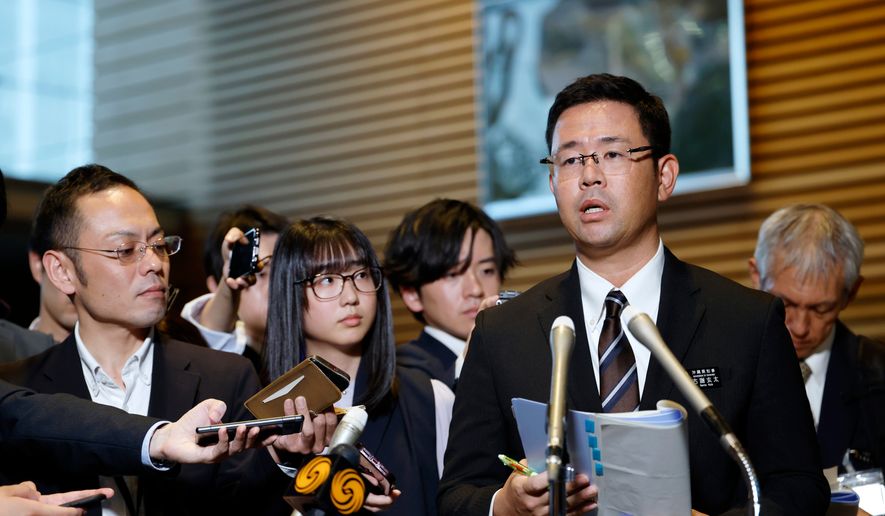
On Monday, Mr. Kihara, the government’s main spokesman, called the latest incident “regrettable.”
Also Monday, Mr. Koizumi, the son of a former prime minister and widely seen as a possible future premier himself, asked U.S. commanders to consider the matter “seriously” and to take effective preventive actions to ensure the curfew is maintained.
A midnight to 5 a.m. curfew was imposed upon U.S. troops in Okinawa in the wake of the alleged hotel robbery and killing as a 30-day “period of reflection.”
These vocal signals suggest strong metropolitan support for Gov. Genta Koja, an independent conservative who won Naha City Hall in a gubernatorial election on Sept. 30.
Mr. Koja ousted two-term Gov. Denny Tamaki, who had held office since 2018 and who was a high-profile critic of the U.S. presence in Okinawa and the other Ryukyu Islands to its south and southwest.
Mr. Koja, who is reportedly close to conservative Prime Minister Sanae Takaichi, has given the green light to operations of the controversial Osprey vertical takeoff and landing aircraft.
The U.S.-made airframe had long been opposed by Mr. Tamaki.
Yet even if Mr. Koja is more pro the U.S. presence than his predecessor, he cannot appear to look weak on crimes committed by U.S. troops, given the local hackles such incidents raise.
In a data point that is widely quoted, Okinawa represents just 1% of Japan’s total land mass but hosts 70% of the U.S. military bootprint across the nation.
According to a 2024 study by the Mainichi daily newspaper, troops who make up that bootprint also committed 60% of all crimes by GIs in Japan.
Quoting Okinawan data, the newspaper also found that in the half-century between 1972 and 2022, U.S. troops in the prefecture committed more than 6,000 crimes, including 134 rapes and 27 murders.
Meanwhile, Okinawa and its southern isles, part of the First Island Chain off China’s southern coast, are increasingly vital to East Asian security and U.S. interests in the region.
With a heavy presence of both U.S. and — increasingly — Japanese troops, the Ryukyus provide a vital aerial-maritime area-denial shield northeast of Taiwan.
The Japanese island guard key straits through which Chinese fleets would need to maneuver if they ever launch a blockade or assault on the democratic island claimed by Beijing.
In 2021, Adm. Philip Davidson, head of U.S. Pacific Command, said before the U.S. Senate Armed Services Committee that China’s threat to Taiwan would be manifest within six years.
That means the so-called “Davidson Window” — the timeframe in which Beijing’s armed forces will be invasion-capable — closes in 2027.
Contact the author


Please read our comment policy before commenting.