



Senators spent their final week in Washington before the midterm elections offering last-ditch attempts to pass a slew of stalled bills, including legislation to protect children online.
The Kids Online Safety Act and most other bills senators sought to fast-track through the chamber were blocked, but a few did pass before the Senate adjourned late Wednesday until after the Nov. 3 midterm elections.
The Senate floor was unusually busy this week because of the flurry of unanimous consent requests from senators trying to pass their priority bills. There are usually a few each week, but this final week before the midterms saw more than 20.
People were interested in these podcasts
Among the few that passed were bills to eliminate tax penalties for Americans held hostage abroad; to make it easier for states to use prescribed fire to prevent wildfire emissions; and to apply the same criminal penalties for theft from off-site ATMs as those hosted at a bank.
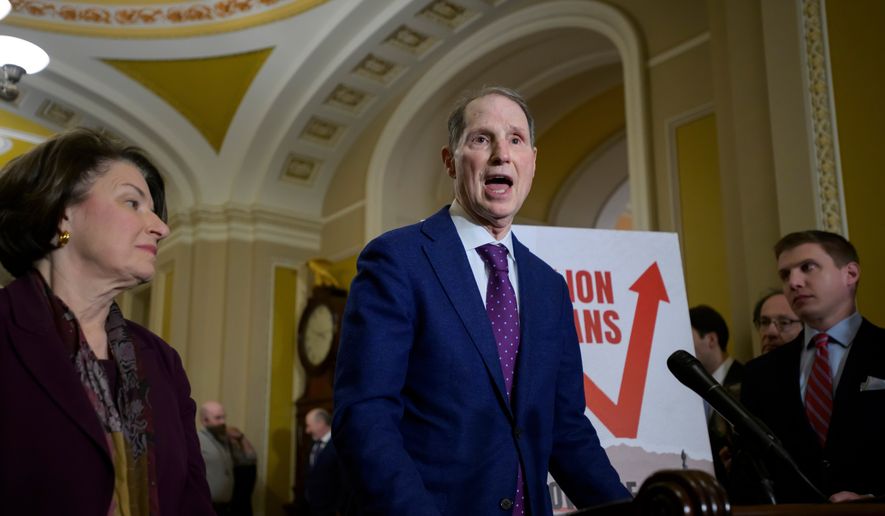
Senate Finance Committee leaders Mike Crapo, Idaho Republican, and Ron Wyden, Oregon Democrat, also received unanimous consent to pass the Taxpayer Assistance and Service Act, a package of 65 bipartisan provisions to modernize the IRS and strengthen taxpayer rights.
Those successful attempts were squeezed in between several failures.
Some were partisan pursuits blocked by the other party. Others were bipartisan bills with minimal opposition, but it only takes one senator to object to passing a bill by unanimous consent.
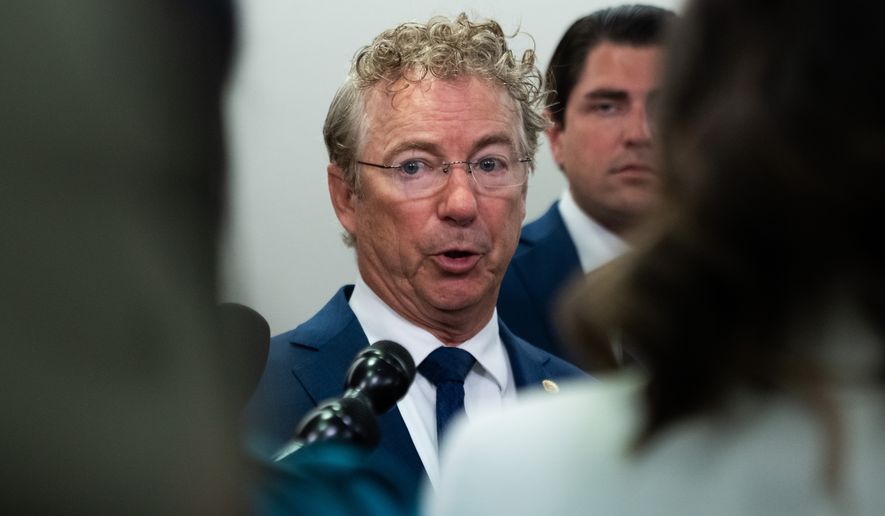
Sen. Rand Paul, Kentucky Republican, blocked KOSA. He said while the bill is well-intended, it would open up “a Pandora’s box of unintended consequences.”
“KOSA would impose an unprecedented duty of care on internet platforms to mitigate certain harms associated with mental health, such as anxiety, depression, and eating disorders,” he said, noting that requirement “will inevitably lead to one outcome: the stifling of First Amendment protected speech.”
Sen. Richard Blumenthal, Connecticut Democrat, who sought to pass the bill, denied this, saying the bill’s duty of care applies to social media platforms’ design features and is an effort to crack down on algorithms that push harmful content.

“The duty of care has nothing to do with censorship,” he said, noting the measure includes a provision specifying that platforms cannot prohibit minors from searching for content.
KOSA’s co-author, Sen. Marsha Blackburn, Tennessee Republican, also tried to pass another bipartisan bill called the NO FAKES Act, which is intended to combat the online proliferation of unauthorized AI deepfakes.
The measure, co-sponsored by Sen. Chris Coons, Delaware Democrat, creates intellectual property rights for Americans to control their digital replicas.
Sen. Ted Cruz, Texas Republican, objected to passing the bill, saying he “wholeheartedly” supports the effort but the bill needs additional free speech protections, particularly for political parodies.
“This bill contains the necessary, broad exceptions for entire categories of speech, including news, public affairs, sports broadcasts, documentaries, biopics, commentary, including political commentary, criticism, scholarship, satire and parody,” Ms. Blackburn said.
Other exchanges were more partisan.
Senate Democrats unsuccessfully tried to pass a number of bills and resolutions to curb President Trump’s executive actions on a number of topics that Republicans blocked.
Those included measures to block Mr. Trump and officials in his administration from demolishing the Kennedy Center, building a massive arch in Washington, using taxpayer dollars for political ads, firing the Federal Housing Finance Agency inspector general, and imposing additional tariffs on Canada.
Democrats also tried to cancel an $810 million “pocket rescission” the White House announced last week and to prevent the administration from using the legally questionable move to cancel congressionally approved spending in the future.
“Everyone knows that is ridiculous and illegal. Congress would never have created a system that gave any president the ability to decide to just ignore or bypass a law,” said Sen. Patty Murray of Washington, the top Democratic appropriator.
Senate Budget Chairman Ron Johnson, Wisconsin Republican, objected to Democrats’ bill, saying the underlying impoundment law governing rescissions was “very poorly written.”
He said the Supreme Court can decide whether pocket rescissions are illegal but he does not want to stop Mr. Trump or any president from cutting spending when the country is “$40 trillion in debt with no end in sight.”
To tackle some of the government’s unnecessary spending, Republicans tried to pass a bill codifying the Justice Department’s National Fraud Enforcement Division and an anti-fraud package called the Protecting American Taxpayers Act.
Sen. Joni Ernst, Iowa Republican and the sponsor of the latter measure, estimates it could save $240 billion in wasted taxpayer dollars.
But Mr. Wyden blocked the bill, saying it is “chock full of automatic triggers, privacy violations [and] power grabs for Trump’s false flag schemes on fraud.”
Surprisingly, only one of the unanimous consent requests came from a senator considered in danger of losing his reelection race.
Sen. Dan Sullivan, Alaska Republican, tried to pass his bill to ensure future administrations cannot block existing or future oil and gas leases in the Arctic National Wildlife Refuge.
“It’s strongly in our national interests, and certainly good for my state and the people I am honored to represent — particularly hard-working union members and others who develop these resources, not just for Alaska, but for America,” he said.
Sen. Martin Heinrich of New Mexico, the top Democrat on the Energy and Natural Resources Committee, objected to passing the bill.
“I don’t support drilling in the crown jewel of America’s national wildlife system,” he said, citing concerns about the “devastating impacts” it would have on the area’s wildlife and the locals who rely on its natural resources for subsistence.
The unanimous consent requests senators brought to the floor are just a small portion of the bills the Senate tries to fast-track.
Dozens of other bills quietly passed by unanimous consent this week, without any senator coming to the floor to speak about it.
Those include bills designed to improve food safety, expand access to capital and economic development, and encourage skills-based hiring in federal contracting, as well as measures to reauthorize expiring federal programs.
Contact the author


Please read our comment policy before commenting.