



OPINION:
One thing that keeps economists such as me in business is that even the simplest inviolable economic rules are routinely violated by politicians — and sometimes by confused economists.
Here is one of these rules: If you tax something, you get less of it. So taxing work and investment at ever-higher rates will hurt the economy. Tell that to Sen. Bernard Sanders, Vermont independent, and Rep. Alexandria Ocasio-Cortez, New York Democrat. Many on the left think we can raise tax rates without hurting the economy.
Now, another basic rule is being swept under the rug.
People were interested in these podcasts
Government price controls never work — with the exception of periods of war, when patriotism can trump normal economic rules. Another basic rule: Demand curves are downward-sloping. If the price goes up, people buy less of it.
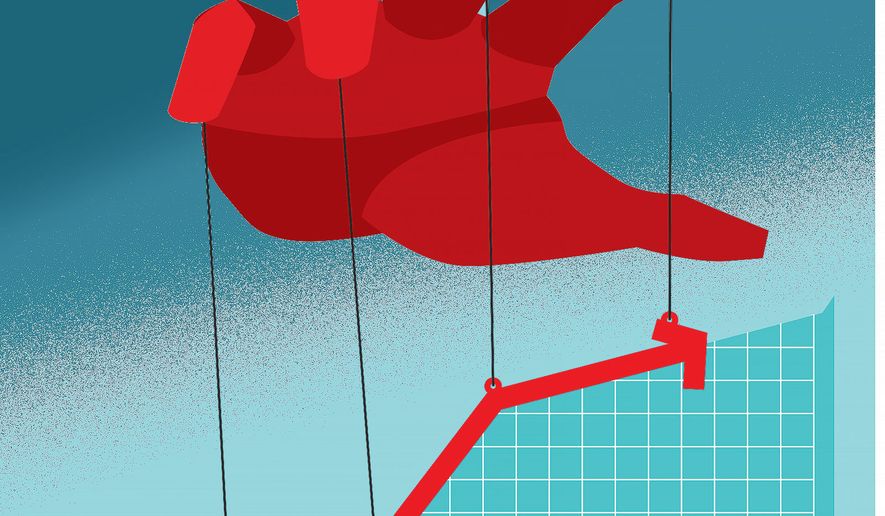
It is no longer only Democrats who seem incapable of understanding this law. Now, even Republicans in the House and Senate who supposedly believe in free market economics have rallied around bills to impose price controls on energy, credit card fees, prescription drugs and even food.
This is the depressing lead from a Sept. 28 Wall Street Journal article: “Americans in both parties back government-imposed price caps and other market interventions to make life more affordable, suggesting new support for populist ideas that were once largely outside the political mainstream.”
The Journal’s poll finds that about 90% of Democratic voters favor price controls on healthcare, childcare and credit card “interchange fees.”
Even more depressing, more than half of Republican voters support these government price caps. They should know better.
The last time price controls were in vogue was back in the 1970s. In the face of rising inflation, Presidents Nixon, Ford and Carter tried to bring down prices by capping what businesses could charge. There were also windfall profits taxes if companies dared make too much money.
Nixon even infamously tried to impose a nationwide universal price freeze. On Aug. 15, 1971, in a nationally televised address, he announced, “I am today ordering a freeze on all prices, rents, wages and salaries throughout the country.”

No business was allowed to raise its prices, as if inflation could be halted by government fiat.
After that, the price freeze was lifted, and prices shot up again like an unhinged jack-in-the-box.
The 1970s also brought airline, media and telephone price controls.
Carter tried oil and gas price controls and excess profits taxes to hold down prices in stores. They did not work. Instead, we got higher prices and more unemployment. We had shortages, 11% inflation, gas lines and eventually stagflation.
To his credit, Carter did deregulate trucking and airlines near the end of his presidency, and costs fell.
When President Reagan was elected in 1980, he ended virtually all price controls, and inflation, which had reached double digits, plummeted to 3% in less than a year. Tight money from Federal Reserve Chairman Paul Volcker certainly helped sweat inflation out of the system.
For the next 40 years, most politicians of both parties did not dare suggest a return to the failed wage and price controls of yesteryear.
Until now. With inflation having reached 9% under President Biden and remaining sticky today, voters are angry at the checkout counter and the gas pump.
What will be the results of price controls? Shortages, black markets, people losing access to credit cards, less production, more delays in bringing new lifesaving drugs to market and so on.
The solution to inflation is simple: stable money and supply-side policies that incentivize greater production of goods and services, which naturally squeeze prices down.
That so many voters — and politicians — do not understand this today is yet another example of the steep decline of our education system in America. Let us hope our politicians learn from their mistakes before they repeat them.
• Stephen Moore is a senior fellow at the America First Policy Institute and a co-founder of Unleash Prosperity.
Follow the author

Please read our comment policy before commenting.