



OPINION:
We owe the Founders a debt deeper than patriotism.
Through reason, experience and something higher, they built the most balanced political system ever given to a free people: a republic designed to protect life, liberty and the pursuit of happiness. From this, we have improved morally over time.
Shared, good-faith effort increases equality and moves us toward a more perfect union.
We were given three branches of government, rich in checks and balances. America is not a machine built for speed. It is a moral structure. Power is carefully partitioned so that a country full of deep differences can move forward peacefully.
In this design, liberty has room to breathe. America is an exciting fracas with good rules, where free people argue their way forward, working to create a just common life.
These branches are not interchangeable tools. Congress is the massive centerpiece of weight and debate. It is a body large enough, slow enough and representative enough to hold America’s real differences in one place and still produce the laws a nation needs to meet the constant flow of progress.
The executive branch, headed by the president, implements the laws Congress enacts. The judiciary is a small group of judges who, through precedent and humility, are meant to decide deep matters for us all. Both are rightly placed with the power they need. Neither has the breadth of Congress.
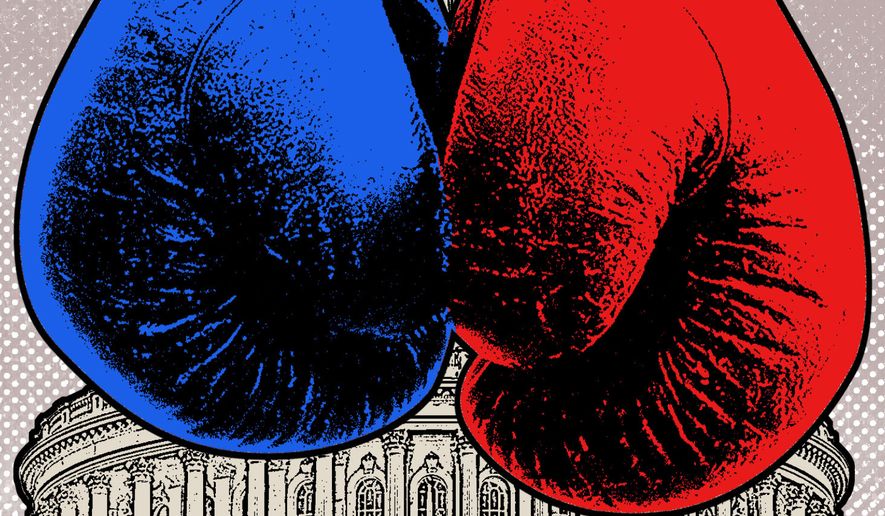
It is the work of Congress to “war” over views, methods, ideologies and policy with a civility and dignity that honors America and produces legislation richer than the decrees of a single person or the manipulation of judges and courts.
Tragically, Congress has abandoned that role. The House will adjourn this week and not return until after the midterms.
Through August, it had held votes on only 65 days and enacted 34 public laws, the lowest midterm-year numbers in a generation. One of those laws authorized the creation of a time capsule.
Approval hovers near 10%.
This is not normal gridlock. It is an institution failing to do the work for which it was created.
For most of our history, Congress survived sharp and intense partisanship. Yet it still produced major laws that carried the country toward the promise of free and equal people seeking a more perfect union.
Polarization, which had been rising for decades, finally broke this branch. Ideological overlap between the parties disappeared in the House by 2002 and in the Senate by 2004. The deeper break came later.
After the Affordable Care Act passed almost entirely on one party’s votes, unified opposition hardened into a strategy. In 2010, the Senate minority leader said the top priority was to make the sitting president a one-term president. That is not legislating; it is treating the other party as an enemy rather than a counterpart with whom one must still govern.
Since then, members of both parties have served the caucus, the primary and the next election cycle. Citizens have become incidental.
The executive filled the vacuum with a proliferation of executive orders. A president signs; agencies act. This speed looks like governance. It is not.
An executive order does not represent 435 districts and 50 states. It does not force factions to sit in one room until they produce laws for the whole country. It is the daily decree of one person doing work meant for a legislature of massive breadth. A land ignorant of civics comes to see this as normal.
Where does resistance happen? In the streets and in the grotesque misuse of the courts.
When Congress will neither check nor channel the executive, the opposition goes to a chosen district judge and asks one courtroom to halt national policy. Injunctions become the minority’s statutes. Forum-shopping becomes the new cloture.
The judiciary was created to say what the law is in a case before it. It was not created to act as a second Congress for whichever party is out of power.
Ask a president to govern a continental republic by decree, and he will look like a monarch. Ask judges to settle the country’s ideological wars, and they will look like politicians in robes.
The executive and the judiciary cannot repair Congress’ failure. They are simply exploited by cynical political hustlers and rabid ideologues.
Our Founders’ genius was to place America’s vast differences in two legislative chambers and trust that good-faith effort could steer the country forward.
Unless we restore to Congress noncorrupt, genuinely patriotic public servants, we will continue on a path toward rupture. An oscillating executive, kept in check only by a sickened judiciary, cannot hold the country together.
The Founders created three branches of government, not two.
• Frank Kaufmann is president of the Settlement Project and the author of “Woke Ideology, Critique and Counter Proposal.”

Please read our comment policy before commenting.