


SPONSORED What's This?
Why the TCL NXTPAPER 14 Is the Best Tablet for Musicians
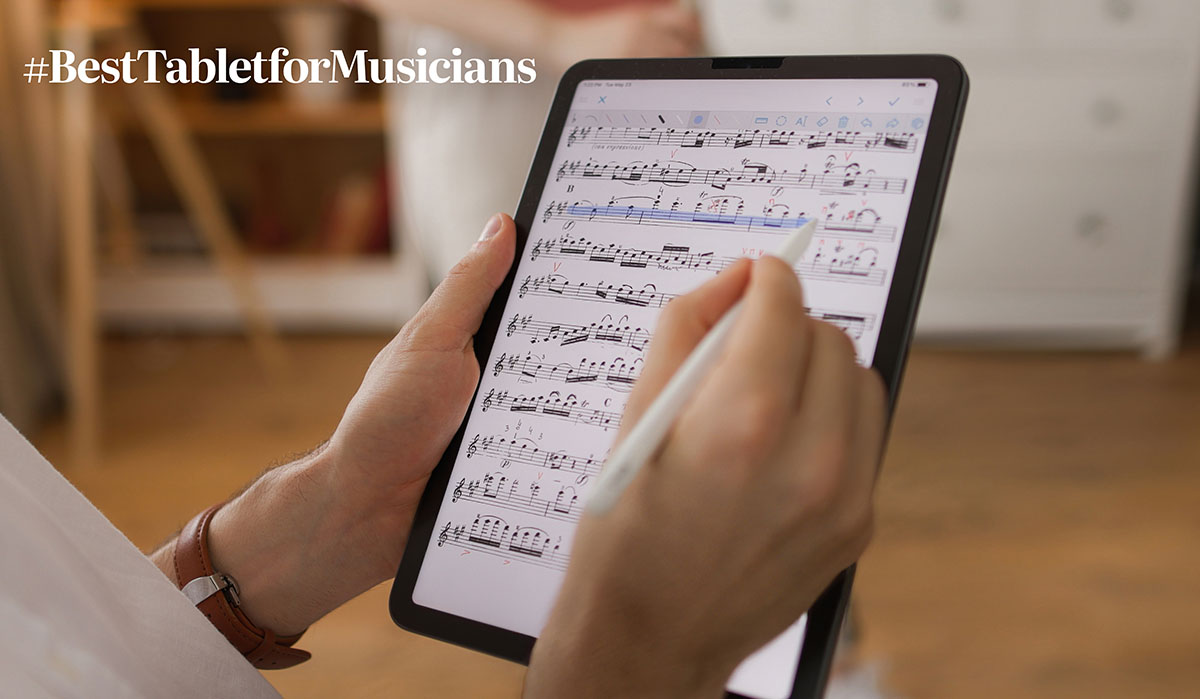
Tablets have been used for sheet music for years, yet many performers still treat them as a compromise. Glare from stage lighting, inconsistent readability, and visual fatigue remain persistent issues. These are not minor inconveniences. They affect timing, confidence, and ultimately performance quality.
The TCL NXTPAPER 14 enters this space with a different premise. It does not attempt to outperform flagship tablets on speed or display brightness. Instead, it addresses the conditions musicians actually face on stage.
The most immediate difference appears under lighting. Traditional tablets use glossy glass panels that reflect light sources directly back to the performer. In a rehearsal room, this can be managed. In a live setting with overhead rigs and shifting angles, reflections become unpredictable. The NXTPAPER display has a matte, light-diffusing surface that physically reduces glare. It also automatically adjusts brightness and uses micro-textured matte surfaces to diffuse intense stage and studio lighting, helping sheet music stay clear and reflection-free during performances.
Under stage lighting, the page remains visible without constant repositioning of the stand or adjustment of brightness. The experience is closer to reading printed paper than interacting with a backlit screen.
The size and format of the display reinforce this approach. At 14.3 inches, it aligns closely with standard sheet music proportions. The near-A4-sized display presents full pages at a familiar, print-like scale, allowing musicians to read comfortably from a stand without disruptive zooming or scrolling. A full page can be read at a natural scale from a typical stand distance. For ensemble players and pianists in particular, this translates into fewer page management decisions during critical moments.
The NXTPAPER system also reduces blue light at the hardware level and avoids the flicker associated with traditional dimming methods. The result is a softer presentation that remains legible without becoming visually aggressive. Over the course of a rehearsal or a multi-set performance, this difference becomes noticeable.
Unlike e-ink devices, which are sometimes used for sheet music, the NXTPAPER 14 maintains the responsiveness of a standard tablet. This allows for real-time interaction, including annotation and navigation between pieces, without latency.
What distinguishes the NXTPAPER 14 is a shift in priorities. It treats the display as a controlled environment, stabilizing readability across changing lighting conditions, viewing angles, and performance intensity. For musicians, that approach aligns with how the device is actually used. The goal is to remain dependable under conditions that are often difficult to control.
As paperless musicians become more common, expectations for tablets in performance settings are changing. An increasing number of professional musicians are replacing paper scores with digital alternatives during live performances. Devices are no longer judged solely on versatility. They are judged on whether they can replace paper without introducing new problems. The TCL NXTPAPER 14 comes closer to meeting that standard than most alternatives currently on the market.
