



The push to redraw congressional maps defined the 2026 campaign — and it’s not over yet.
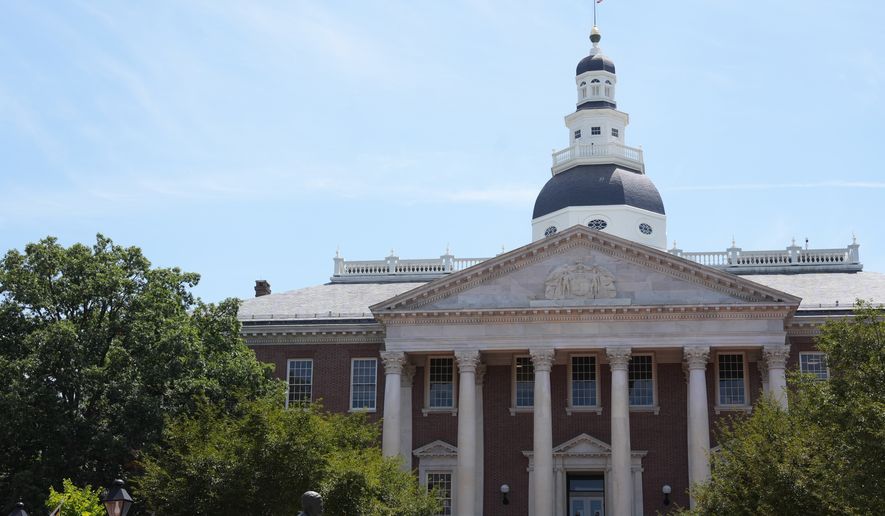
Voters in Maryland went to the polls Tuesday to decide whether to grant their legislature the power to toss out the state’s current map, which gives Democrats a 7-1 edge, and replace it with a map that wipes out that last Republican district.
In Missouri, meanwhile, voters were deciding whether to adopt or reject a new map there that erased one of the state’s two Democrat-held seats.
People were interested in these podcasts
And once the midterm elections are in the books, states whose legislatures had false starts on redistricting, such as South Carolina and Indiana, could try again.
National Democrats pressured Maryland to rewrite its lines, seeking to regain some ground against Republican states that had rushed to change their own maps.
Gov. Wes Moore backed the effort but met resistance from Democratic Senate President Bill Ferguson.
Mr. Ferguson said a redistricting attempt could backfire if challenged in court, potentially resulting in a court-ordered map costing Democrats congressional seats.
Ballot Question 3, crafted in a special session, removes those obstacles by exempting the congressional map from the state constitution’s anti-gerrymandering requirements, such as compactness and equal population.
If it succeeds, it would give the legislature the chance to nix the seat held by Rep. Andy Harris, a Republican who represents the state’s more conservative Eastern Shore region.
National Democrats cast the effort as a matter of retaliation against Republican states.
“You can help stop this Republican power grab by voting ‘yes,’” former President Barack Obama said in a video urging passage. “It lets Maryland draw its own fair maps.”
Mr. Moore, who is often mentioned as a potential presidential candidate, described Question 3 as a “no to Donald Trump” and a chance to fight back in the redistricting fight.
In liberal-leaning Chevy Chase, Maryland, GOP voter Walter Douglas, 71, emerged from the polls Tuesday saying he voted against Question 3.
“I don’t think those people in the Eastern Shore should be denied their representation, because that’s an overwhelmingly Republican area,” the retired diplomat said. “It’s already gerrymandered enough. I don’t think we need to gerrymander anymore.”
Karen Kuchins, who works in real estate, said after voting that she thought she had backed the ballot measure.
“I think I voted yes for it. I didn’t read it that closely. I was voting down ticket,” she said.
Maps adopted now could last through the 2028 and 2030 elections, and then would be replaced in 2032 by maps drawn after the next census.
Polls show the vast majority of Americans oppose the idea of partisan gerrymanders — but in practice that’s chiefly aimed at the other guy.
The drive to maximize power has spurred leaders of both parties to pursue redraws, and voters in blue and red states alike have generally been supportive.
The fight escalated in the summer of 2025, when Texas Republicans, at the urging of Mr. Trump, redrew their map in an attempt to flip up to five seats.
The result was a map Republicans hoped would drop Democrats’ share of the state’s 38 House seats from 13 to 8.
Democrats in California then retaliated with a map that they figured would cut Republicans’ share of the state’s 52 seats from 9 to just 4.
Those maps were both in use Tuesday.
As the big states traded blows, the Supreme Court this year delivered its ruling in Louisiana v. Callais that undercut long-standing racial gerrymanders meant to protect minority voters’ power.
That spurred southern states that previously carved out heavily Black — and Democratic — districts to rewrite their maps.
By the time the dust settled in the redistricting war, Republicans had redrawn GOP-friendlier lines in North Carolina, Tennessee, Ohio, Louisiana and Florida.
Republicans also tried to push new maps in South Carolina, Georgia, Mississippi and Indiana, but those efforts stalled.
Meanwhile, Democrats eyed new maps in Maryland, Washington, Virginia and New York.
The state assembly in New York is poised to propose a constitutional amendment that would allow a Democrat-friendly rewrite of its maps. That measure is likely to be on the ballot in 2027, paving the way for the map to be in place for 2028.
Democrats control the state governments in Colorado, New Jersey, Oregon and Washington, and could advance redistricting measures, too.
In Missouri, the Republican-dominated legislature already approved a map, but opponents won enough signatures to put the proposal to voters. The state Supreme Court — backed by the U.S. Supreme Court — said the old map had to remain in place for the 2026 election.
In Virginia, Democrats won voters’ approval of a ballot measure in April to allow a gerrymander that could have reduced the GOP from five of the state’s 11 seats to just one. But the state Supreme Court said lawmakers cut too many corners in rushing the map to voters.

Please read our comment policy before commenting.