


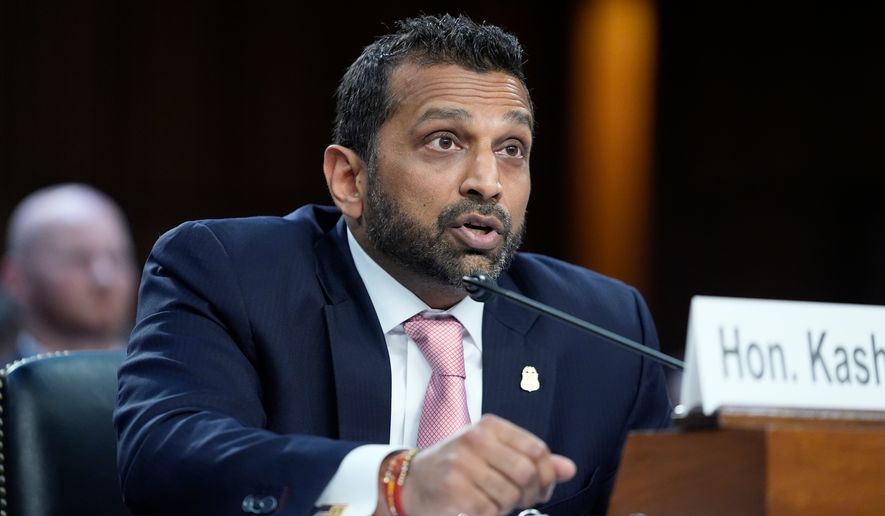

FBI Director Kash Patel mounted a strong defense for Flock cameras on Tuesday, telling senators they help solve crimes and rescue children from sexual predators.
The cameras are privately run, but the data the company maintains can be sought by the FBI during investigations, Mr. Patel said.
He said this is particularly important in cases where a child has been snatched and the FBI needs leads. Agents might have a photo of a car and take it to Flock, which can use its license plate reader technology to track where the vehicle went.
“We have saved children over and over again from these child predators, we’ve retrieved these victims, and we’ve also prosecuted these kidnappers,” he told the Senate Judiciary Committee.
Mr. Patel also said a Flock camera helped the FBI track down the man who perpetrated the mass shooting attack on Brown University last year.
He said the cameras at the university weren’t very good and investigators couldn’t get any facial recognition of the man. But they did get a license plate from a Flock camera.
“We were then able to trace that license plate to the individual and his scheme and ultimately find that individual,” Mr. Patel told senators.
When authorities closed in on the man, he took his own life.
The gunman, Claudio Manuel Neves Valente, a Portuguese citizen and a legal permanent resident of the U.S., killed a professor at the Massachusetts Institute of Technology and killed two students and wounded nine others at Brown.
Flock cameras are among the big players in a growing trend of private surveillance. The cameras are put up by individuals and communities and read and report license plates back to the firm, which catalogs the data.
Civil Liberties groups say it’s a dangerous intrusion into Americans’ lives, allowing the firms — and anyone they share data with — an unprecedented look at the patterns of individual Americans.
Contact the author

Please read our comment policy before commenting.