




OPINION:
Thomas Jefferson was not enthusiastic about either foreign wars or military spending, but he sent the nascent U.S. Navy to the shores of Tripoli because he understood that paying tribute to the Barbary pirates was more expensive than fighting them.
The Barbary pirates were jihadis on the Mediterranean coast of North Africa who seized American merchant ships and took their sailors hostage. Today, the rulers of Iran, modern jihadis, have been attempting to hold the global economy hostage.
One-fifth of the world’s seaborne oil passes through the Strait of Hormuz. The theocrats have laid claim to that international waterway, demanding tribute from ships that pass through.
Yes, they did so in response to American and Israeli efforts to prevent them from developing nuclear weapons, but the Strait of Hormuz was a card they always had up their sleeve. Making them play it while they were weaker rather than waiting until they grew stronger was the right call.
American strikes are now blinding the regime’s surveillance, making it increasingly difficult for its missiles to hit vessels on the strait’s southern route near Oman.
Since July, a U.S. blockade has been preventing the regime from exporting oil by sea, cutting off its main revenue source. The pressure must continue. Tehran’s strategy is to outlast us. America’s defeat should not be an option.
The squeeze on Tehran has a second benefit: Iran’s rulers now find it harder to send military supplies to Russian President Vladimir Putin, whose war against Ukraine is grinding into its fifth year.
American support for Ukrainians should be based not only on our values — they are fighting for their freedom — but also on our national interest. Russia now produces roughly 100,000 drones a month.
Beyond Ukraine, Mr. Putin is waging hybrid warfare against NATO allies. Should he escalate and the U.S. fail to respond effectively, we would be seen as weak and unreliable.
Russia is also allegedly sending China submarine-quieting technology, which will hurt the U.S. in the Pacific.
Chinese electronic components used in Russia’s drones go in the other direction, and Chinese chemical and industrial inputs are being shipped to Tehran for its ballistic missile program.
Kim Jong-un, North Korea’s dynastic dictator, has reportedly lent Mr. Putin more than 16,000 soldiers and delivered some 15 million artillery rounds.
In return, Mr. Putin is believed to have given Mr. Kim air defenses and electronic warfare equipment. In July, Ukrainian President Volodymyr Zelenskyy disclosed that Russia had used Ukrainian targets — mostly civilian — to dramatically improve the accuracy of North Korean ballistic missiles.
Expect North Korea’s improved missiles to be aimed at Seoul, Tokyo, American bases in the Pacific and perhaps American cities.
This growing threat will benefit Chinese President Xi Jinping should he use military force to conquer Taiwan.
That island democracy is of unique importance to the United States. The Taiwan Semiconductor Manufacturing Co. produces roughly 90% of the world’s most advanced semiconductors. We need them.
Experts at my think tank assess that Mr. Xi would prefer to conquer Taiwan non-kinetically, leaving TSMC alive and well and in his pocket. If Americans are seen as having abandoned their allies in the Middle East and Europe, that will strengthen his campaign of coercion and sweet talk to persuade the Taiwanese to resign themselves to Chinese Communist Party domination.
Connect the above dots, and a clear picture emerges: A new cold war is being waged against America by Beijing, Moscow, Tehran and Pyongyang — an Axis of Aggressors.
In response, President Trump sensibly seeks higher military spending. His fiscal year 2027 request of $1.5 trillion is a significant increase over this year’s roughly $1 trillion. Even so, it would remain well below the percentage of gross domestic product we spent during Cold War I.
No less important is recognition that we are not getting sufficient bang for our buck when interceptors worth millions of dollars are fired at drones worth thousands of dollars.
That brings me to Dan Driscoll, who resigned Aug. 31 after 18 months as secretary of the Army. He contends that America’s military and those of many of our allies “have not adopted the speed and the innovation that they need.”
His first appearances since leaving the administration were on Saturday and Sunday at the Yalta European Strategy annual meeting in Kyiv. His central argument was that Ukraine is demonstrating a new model of warfare: rapid, bottom-up iteration of drones, software, sensors, artificial intelligence and battlefield data — in contrast with our yearslong development programs that produce weapons already outclassed by adversaries before they reach our troops.
The uncomfortable truth is that the current U.S. administration, like those that preceded it, has been reluctant to adopt Ukraine’s scrappy, fast, adaptive methods for integrating commercial technology or planning for cheap, mass-produced systems such as drones.
Mr. Driscoll pointed out that American forces have lacked adequate defenses against Tehran’s Shahed drones. As secretary, he did not call traditional defense contractors. He called Eric Schmidt, the former Google CEO, who now heads Perennial Autonomy, an American defense firm that builds interceptors for Ukraine. The company quickly supplied 23,000 drones.
Mr. Schmidt, also attending the forum, asked, “Why hadn’t the U.S. government planned for this?”
Mr. Driscoll refrained from mentioning the generals committed to modernization who have been fired and the drone battalion the Army shut down in August — the very unit charged with learning from Ukraine’s war.
Sooner rather than later, that battalion should be revived, and officers who understand why it matters should be promoted.
When Jefferson decided to stop paying tribute, he had advanced and formidable frigates to make America’s enemies regret demanding it. The question before us now is whether we will build what this era requires — or find ourselves, at the worst possible moment, making frantic phone calls.
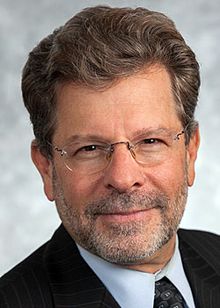
• Clifford D. May is founder and president of the Foundation for Defense of Democracies, a columnist for The Washington Times and host of the “Foreign Podicy” podcast.
Follow the author

Please read our comment policy before commenting.