



OPINION:
The Dallas Cowboys owe their existence, in part, to “Hail to the Redskins.”
In 1959, Clint Murchison Jr. acquired the rights to Washington’s fight song from bandleader Barnee Breeskin — who owned the copyright after a falling out with the team — and held them hostage. George Preston Marshall wanted the song back; Murchison wanted Marshall’s vote for a Dallas franchise. A deal was struck. The Cowboys were born. Washington got its song.
Nearly seven decades later, the more important story is still inside the lyrics. Composed in 1937 and introduced at games during the 1938 season, the song originally urged “Fight for old Dixie!” before later adopting “Fight for old D.C.!” alongside “Hail to the Redskins” and “Braves on the warpath!”
People were interested in these podcasts
October is a good month to hear them again. Fifty years ago, President Ford proclaimed Oct. 10-16, 1976, Native American Awareness Week, the forerunner of Native American Heritage Month.
A Blackfeet record provides context for those words. In 1892, George Bird Grinnell published “Blackfoot Lodge Tales.” Among the All Comrades societies stood the Mut’-siks, the “Braves.” Grinnell called them “tried warriors,” the “chief society” and, later, “the most important and best known” of the Blackfeet societies. Their standing rested on courage, warfare and spiritual power. He also recorded the detail that matters here: The Braves were “painted with streaks of red.”
Decades later, Smithsonian ethnologist John C. Ewers documented the same mix of warfare, ceremony and paint. Traders, he wrote, would detour south rather than risk Blackfoot warriors. In his book “The Blackfeet,” he calls them “rough-and-ready redskins.”
So, to recap, we have Grinnell calling the Blackfeet “Braves” and tried warriors painted in red. Ewers: formidable Blackfoot fighters called redskins. The 1937 song: Redskins, Braves, warpath, fight. The language keeps landing on the warrior.
The record does not stop with paint and societies. John Two Guns White Calf, a Piegan Blackfeet chief, became one of the most photographed Indian faces in America. His profile was already national before it ever touched a football helmet.
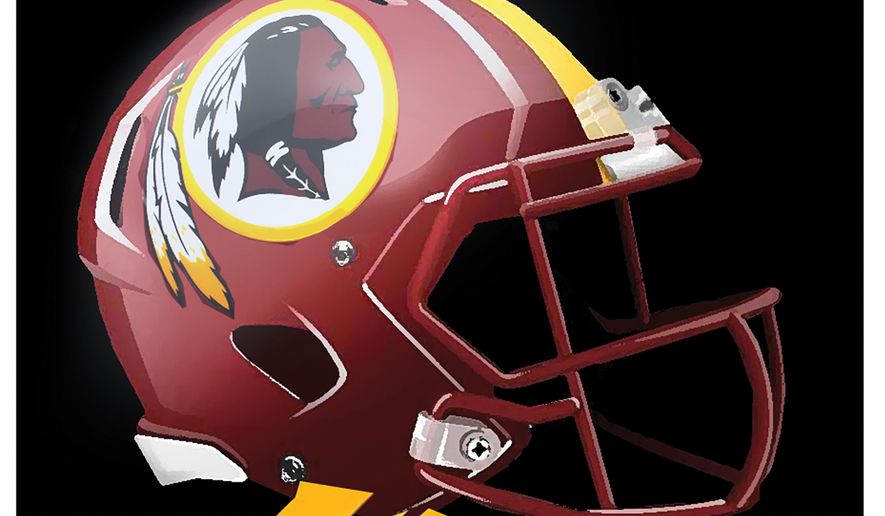
In 1971, Walter “Blackie” Wetzel — Blackfeet tribal chairman and former president of the National Congress of American Indians — walked that face into the team offices. Washington was then wearing a letter “R.” Wetzel wanted a warrior.
He brought photographs, including some of Two Guns White Calf, and pressed the club to put an Indian on the helmet. In 1972, the profile appeared. Wetzel later said it made Indian people proud to see an Indian on a big-time team.
Song first, then paint, then a named chief, then a National Congress of American Indians president who put that chief on national TV every Sunday. Same people, same warrior language.
The song’s date matters. It debuted in 1937, four years after the team took the Redskins name. Its language is martial from the first line.
Another Blackfeet thread runs into this October. In 1915, a Blackfoot man, Red Fox James, crossed the country seeking a national American Indian Day and arrived in Washington with endorsements from 24 states. Six decades later, Ford’s Awareness Week came. Today, November is Heritage Month. The Blackfeet keep appearing.
The hostage story has come full circle. In 1959, future Cowboys ownership controlled Washington’s song without owning the team. Today, Washington’s owners control the Redskins name and imagery — yet choose not to use them.
The replacement name has none of that weight. “Commanders” is a rank, not a people. It has no warpath, no paint, no society, no chief and no song. It was adopted to end an argument, not to start a tradition. The club still protects the old marks. When trademark rules required a sale, a limited run of Redskins throwbacks sold out in two days. The Cowboys — born in that 1959 trade — remain among the NFL’s strongest merchandise brands. Washington’s living name is a generic rank. Its valuable name is the one it will not speak.
The Cowboys once held the song to get a franchise. Washington now holds the legacy while the historical record around the name keeps growing.
Grinnell documented “Braves” painted in streaks of red. Ewers called Blackfoot warriors “rough-and-ready redskins.” Two Guns White Calf gave the warrior a face. Wetzel put that face on a helmet. Washington’s own fight song had already put Redskins, Braves, warpath and fight in one line of warrior identity.
Those words have been there for 89 years. The history behind them has been there longer.
• Andre Billeaudeaux is a retired U.S. Coast Guard commander, writer and researcher studying American Indian history, warrior traditions and their influence on American culture. He is the author of “How the Redskins Got Their Name.”

Please read our comment policy before commenting.