


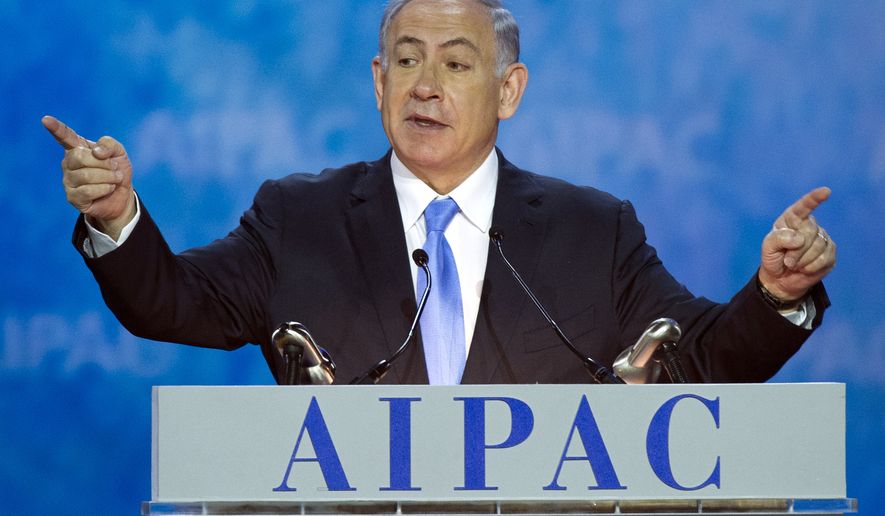

One of the most influential pro-Israel lobbying groups is ending candidate endorsements and direct contributions from its political action committee.
The American Israel Public Affairs Committee told members in a Wednesday letter that it will no longer issue formal endorsements, make direct contributions to candidates or earmark donations.
Instead, it will focus on encouraging individual donors to give directly to candidates, while its super PAC, the United Democracy Project, continues to operate.
People were interested in these podcasts
AIPAC said that “endorsements, direct PAC contributions, and earmarking will no longer be part of our approach so we can expand individual giving and utilize new tools to help our friends win.”
It will be recommending contributions to candidates “who are worthy of your support.”
Stopping its direct contributions to candidates, which are capped at $5,000 per candidate per election, does not affect its super PAC, which can spend unlimited amounts on independent expenditures.
AIPAC spokesperson Deryn Sousa said its members gave more than $90 million directly to candidates this cycle, adding that “organized, direct giving from our members will continue and increase.”
“To win the fight for the future of the country and the U.S.-Israel alliance, we must build a more strategic, consequential, and nimble political operation. We will prioritize increasing direct, organized contributions from individual Americans to candidates — expanding upon our current efforts — and maximizing the emerging political fundraising tools,” the letter sent to AIPAC members says. “Endorsements, direct PAC contributions, and earmarking will no longer be part of our approach so we can expand individual giving and utilize new tools to help our friends win.”
For decades, AIPAC focused on issue-based lobbying, but beginning in the 2022 midterm cycle, it pivoted to direct campaign contributions and super PAC spending.
The change will take effect after the November midterm elections.
AIPAC endorsements and donations have polarized members across the aisle, becoming a potential liability for certain candidates facing public backlash over the war in Gaza.
It paused fundraising for 18 House Democrats it had endorsed after they voted in July for an amendment to end billions in U.S. military financing for Israel.
The ongoing Israel-Gaza war has fundamentally fractured the Democratic Party, solidifying a deep ideological chasm between its establishment leadership and a liberal base. What began as a debate over foreign policy has evolved into a high-stakes battle for the electoral identity of the party, leading to historic primary challenges and an unprecedented influx of political spending.
Contact the author


Please read our comment policy before commenting.