



Qatari mediators continue to ferry peace proposals between Washington and Tehran, officials from Iran and the U.S. said Sunday, as fears of an escalation in the eight-month-old war loom ahead of this week’s midterm elections.
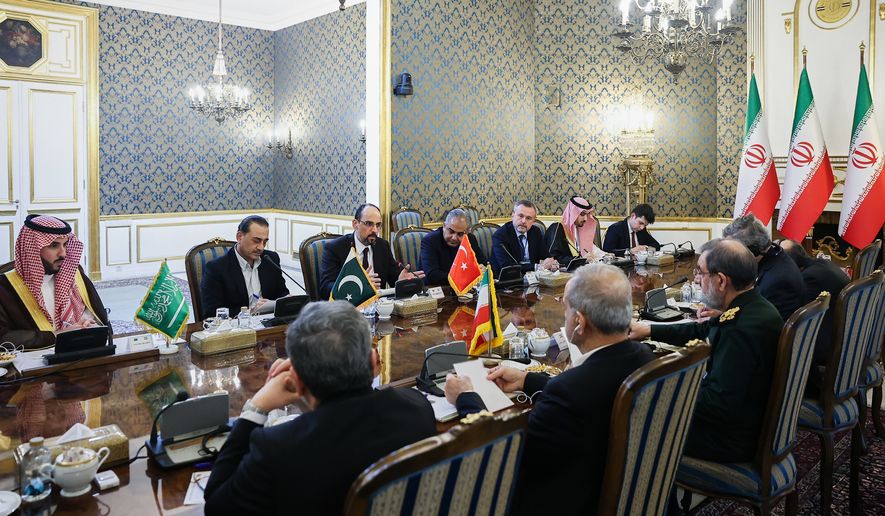
Iranian diplomats held a third consecutive day of negotiations with Qatari representatives in Doha on Sunday, according to reports, during which the officials discussed proposals aimed at ending the war.
Iran’s Foreign Minister Abbas Araghchi confirmed that talks were ongoing in a statement on Sunday.
People were interested in these podcasts
“Consultations with the mediators regarding the two-day plan are continuing and moving toward implementation, but we have not yet reached a definitive conclusion,” Mr. Araghchi said.
He added that reaching a conclusive agreement depends on the U.S. providing a satisfactory response, though he did not elaborate.
The so-called two-day plan is reportedly a condensed version of the previously proposed seven-day plan, announced by Mr. Araghchi while he was still in New York City for the United Nations General Assembly in September.
The new proposal would reopen the strategic Strait of Hormuz and institute a ceasefire agreement across the region within 48 hours, leaving the door open to further, detailed negotiations between the two nations.
Iranian officials, however, have said that reopening the strait is contingent upon the U.S. meeting several conditions, notably sanction relief and the release of over $12 billion in frozen assets.
Iran has also publicly refused to negotiate over the future of its nuclear program, a key demand from Washington, while the U.S. maintains a crushing sanctions regime and a suffocating naval blockade. The blockade has been in effect since the summer and has prevented Iran from exporting its valuable crude oil.
U.S. officials have been publicly accepting of diplomacy while at the same time suggesting that another round of strikes against Iran may be inevitable.
“The hand of negotiation has been extended, and those channels have continued to be open and active,” Assistant Secretary of State for Near Eastern Affairs Donald Blome said at the Manama Dialogue conference in Bahrain on Sunday. “At the same time, we’ve been also prepared to go in another direction.”
President Trump, too, has shown a willingness to reopen negotiations with Iran while insisting that the U.S. has many options available should Iran refuse to make concessions on its support for proxy groups and its nuclear program.
Vice President J.D. Vance reportedly sent a letter to Mohsen Rezaei, the secretary of Iran’s Supreme National Security Council, late last month calling for a resumption of in-person negotiations and an immediate discussion of the nuclear issue.
Iran said last week that it had received the letter and was preparing a response. It is unclear if Mr. Rezaei, or any other member of Iran’s leadership, delivered a response to Qatari mediators when they visited Tehran late last month.
Mr. Trump said last week that he had approved the contact between Mr. Vance and Iranian leadership, but added that the communication was about the delivery of medical aid and supplies.
The U.S. has not launched major strikes against Iran since July, when the war flared up following the breakdown of the Islamabad Memorandum of Understanding. Since then, the U.S. has ramped up an economic pressure campaign against Tehran aimed at collapsing the regime or forcing a diplomatic solution to the war.
The U.S. midterm elections have emerged as a crucial moment in the war. Some analysts have predicted that Iran is delaying the peace process, anticipating a loss for Republicans that could see Mr. Trump’s Democratic opponents take control of both houses of Congress.
If that happens, Mr. Trump could face serious congressional challenges to his ability to wage war against Iran.
Mr. Trump has also reportedly ruled out launching further attacks against Iran ahead of the midterms to limit the economic consequences that threaten Republican chances across the country.
However, reports from last month indicated that the Pentagon is preparing for a short, intense campaign against Iran, focusing on hitting the country’s energy and military infrastructure. U.S. Central Command chief Amd. Brad Cooper reportedly briefed Mr. Trump on possible strike plans in a rare White House meeting last month.
Contact the author


Please read our comment policy before commenting.