



OPINION:
Several decades ago, I was appointed by my law firm to head a committee euphemistically called the “Smoking Committee.” It was established for the purpose of developing rules intended to limit the then-widespread habit of smoking in our offices. Of course, there were plenty of lawyers and staff who believed that they had an untrammeled right to smoke and who vociferously objected to any constraint on their right to smoke.
Ultimately, however, the impetus toward prohibiting smoking, fueled by a powerful moral indignation among those who had come to consider smoking a kind of sin, gained strength. We were steadily able to whittle down the number of places where smoking was permitted in the firm and finally, after the passage of a number of years, we banned all smoking in our offices.
Today, the notion that cigarette smoking could even be allowed in an office building seems preposterous. This marks a truly beneficial evolution. The steady reduction in the number of smokers among Americans has represented unqualified progress. Lives have been saved, and the quality of life for millions of others has been enhanced.
People were interested in these podcasts
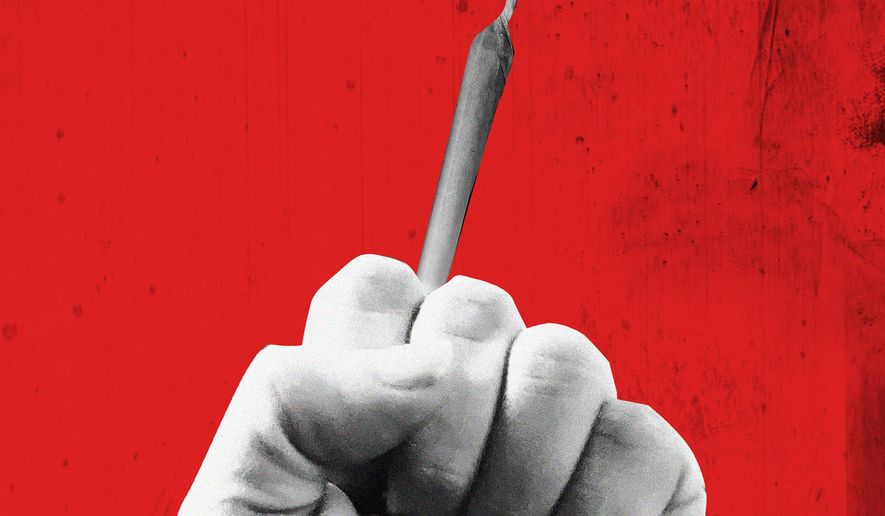
It is in that context that I have been observing the reversal in the evolution of attitudes toward smoking. Over the last few years, in spite of the seeming repugnance against smoking tobacco that continues to prevail, there has been an increasing momentum toward reintroducing smoking into our society and even making it yet again respectable. But there is a difference. This time the product being smoked is not the reprehensible tobacco; it is the newly blessed “cannabis.”
This movement has all of the attributes of a sophisticated public relations campaign to promote a new industry. Marijuana, weed, grass or pot, as we used to call it, has been renamed cannabis — a word that seems more sophisticated, respectable and acceptable. It has increasingly been repositioned as allegedly beneficial medication, and even as a symbol of personal expression and freedom. It is now frequently characterized as a liberating drug that reduces stress and opens the mind. Legalizing cannabis has even been hijacked into a symbol of opposition to racism, with the concomitant notion that allowing the widespread use of cannabis will somehow stop the disproportionate incarceration of racial minorities.
The cannabis industry is rapidly developing and sales of the product are steadily growing. Obviously, more and more people are smoking cannabis — just walk down any urban street and you will soon smell a whiff of the acrid odor of the substance, including from smoke wafting out of car windows. It is gaining a veneer of respectability.
But, of course, this evolving pattern is directly contrary to the transformation of America over the last 50 years in its rejection of tobacco smoking. When I was young, it was entirely normal to be surrounded by smoke; to inhale smoke while walking down the street, to be besieged by smoke in every social environment and even, of course, to be in smoke-filled rooms in most business situations. In recent decades, we were substantially liberated from this ever-present scourge of tobacco smoke.
Now we are in the midst of a growing movement to encourage a different kind of smoking. Just recently, President Biden decided that he wants “cannabis” to be reclassified by the Department of Justice so that it is no longer deemed a dangerous substance and can become freely available to all Americans. His fellow Democrats are doing everything they can to make cannabis ever more accessible.
Yet psychiatrists — those not intimidated by their liberal colleagues — can readily attest to the harm that this allegedly benign hallucinogen causes. There are plenty of articles that remind us that a large proportion of young people with profound psychological problems smoke cannabis regularly. If not caused by cannabis, these psychological problems are assuredly aggravated by the drug. There is also evidence that cannabis smoking is harmful to fetuses and is a gateway drug. Making cannabis more available and giving it the imprimatur of government approval can only make the situation worse.
A few months ago, David Brown, Chicago’s superintendent of police, expressed the belief that much of the violent crime in that city can be traced to cannabis use.
It is self-evident that, if tobacco smoking has been considered a health hazard, then how much more so should cannabis use be discouraged. Not only is cannabis smoke harmful physically, but unlike tobacco, which seems to have only a limited impact on mental processes, cannabis clearly impacts and impedes them. In fact, it is precisely for that purpose — to dull the senses and create artificial sensations — to put it in the vernacular, to get themselves stoned — that people use cannabis.
Let there be no illusion: Legalizing cannabis is legitimizing it. It is making it acceptable and thereby giving a societal benediction to a harmful drug.
Indeed, it is rather astounding that after so many years of combating tobacco smoke, in a moral crusade led mostly by the left, our power elites have now decided to encourage smoking. Where we sought to remove noxious smoke from our world, we are now encouraging more of it — and this is at a time of heightened concern for the environment.
Sadly, it is very possible that soon one of my law partners may be asked to chair a committee, this time in order to determine where in our offices our employees can go relax by smoking a cannabis reefer.
• Gerard Leval is a partner in the Washington office of a national law firm. His book, “Lobbying for Equality, Jacques Godard and the Struggle for Jewish Civil Rights During the French Revolution,” was published by HUC Press earlier this year.

Please read our comment policy before commenting.