




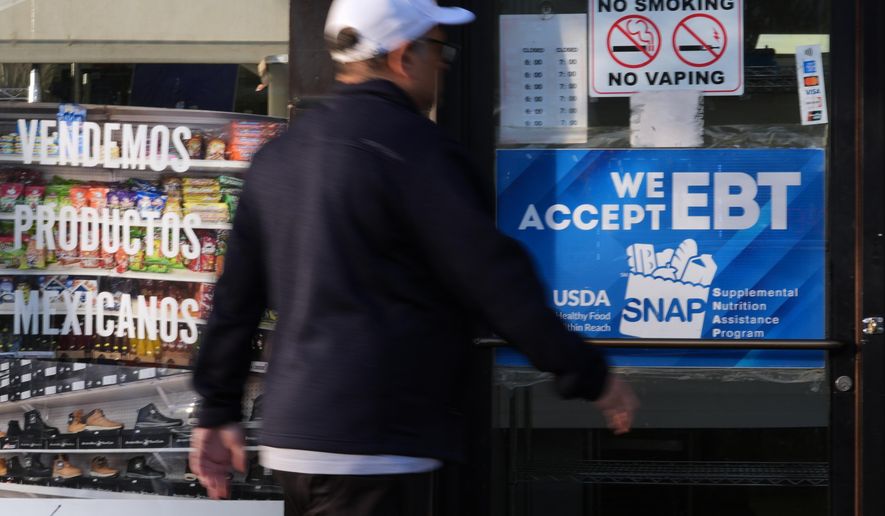
In a number of California strip-mall restaurants, next to the hours-of-operation sticker and the contactless-payment logo, hangs a small window decal: a fork and knife inside a circle, alongside the words “We Accept EBT.” It marks a place where a Supplemental Nutrition Assistance Program card can do something federal rules generally forbid: pay for a hot meal, eaten at the counter or carried out the door.
The decal belongs to the Restaurant Meals Program, a little-known federal option that most SNAP recipients, in the vast majority of states that don’t run it, will never see.
A narrow exception carved into the rules of food stamps
SNAP, the successor to food stamps, is built around groceries meant to be cooked at home. Federal rules generally bar the purchase of food that is “hot at the point of sale,” which is why a rotisserie chicken at the supermarket deli counter is typically off-limits even though the same chicken, cold and packaged, is not.
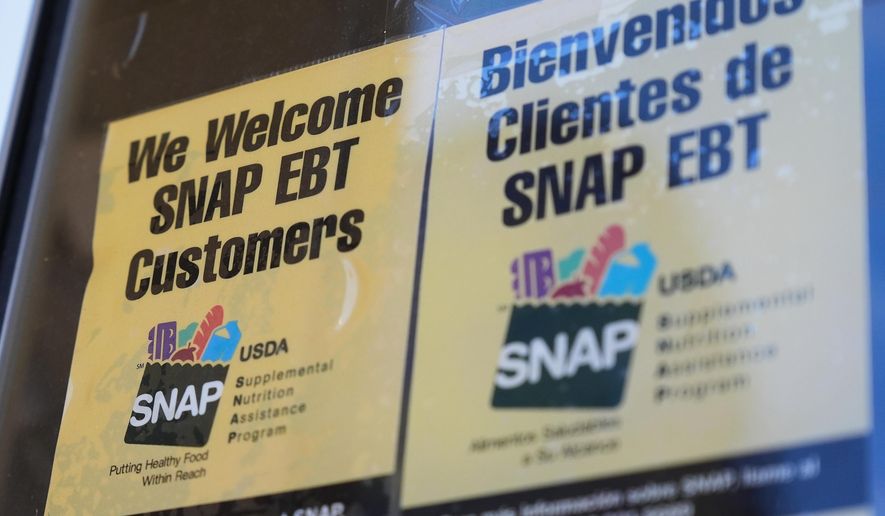
Congress opened a narrow exception to that rule through 1977 amendments to the Food Stamp Act, according to Senator Joni Ernst’s office, and the option took effect for elderly and disabled recipients the following year, according to California’s Department of Social Services, which runs the nation’s largest version of the program.
In 1996, under the Mickey Leland Memorial Domestic Hunger Relief Act, Congress widened the option to include people experiencing homelessness, who often have nowhere to store or prepare food at all.
9 states, a coded card, and a small discount
Today the Restaurant Meals Program operates in nine states: Arizona, California, Illinois, Maryland, Massachusetts, Michigan, New York, Rhode Island and Virginia, according to USDA. Eligibility still runs narrow: every member of a household must be 60 or older, disabled, homeless, or the spouse of someone who qualifies. The household’s Electronic Benefit Transfer card is coded so that it will simply be declined at a restaurant if no one in the household meets the criteria.
Restaurants must separately apply to and be certified by the federal agency, on top of whatever authorization they already hold to accept SNAP as a grocery-style retailer, which is part of why officials can isolate restaurant spending from ordinary grocery redemptions when the data is requested.
California runs by far the largest program: it began as a pilot in San Francisco in the early 2000s, expanded county by county for nearly two decades, and became available in all 58 counties on September 1, 2021, after the legislature passed Assembly Bill 942. Participating restaurants are barred from charging sales tax or a gratuity on food bought with benefits, and several states require a discount off the regular menu price.
Half a billion dollars, mostly in one state
The program’s modest footprint recently became a flashpoint in Washington. More than $524 million in SNAP benefits were redeemed at RMP-authorized restaurants nationwide between June 2023 and May 2025, according to data USDA provided to the offices of Representative Brandon Gill of Texas and Senator Ernst of Iowa. California alone accounted for roughly $475 million of that total; Arizona was a distant second at $41.4 million, and the remaining seven states combined for less than $8 million.
Total federal SNAP spending in the 2025 fiscal year was $101.7 billion, according to USDA’s Economic Research Service. Two years of restaurant redemptions amounted to a small fraction of the overall program, though Ernst and Gill argue the growth trend, not the current share, is the real concern.
Ernst had already introduced her own narrower bill in November 2025, the McSCUSE ME Act, to bar fast-food and quick-service chains from the program while leaving grocery stores and other retailers with healthier prepared options in place. In July 2026, she and Gill jointly asked the Agriculture and Health and Human Services departments to review the program, and in September, Gill introduced broader legislation, the Ending Restaurant Purchases with SNAP Act, to eliminate it outright while preserving meal delivery through public and nonprofit groups.
A program its defenders call a lifeline and its critics call a loophole
“SNAP is supposed to help struggling Americans put nutritious food on the table,” Gill said in a statement to Newsweek, arguing that taxpayers should not be subsidizing fast-food purchases through a program meant for groceries.
Ernst, introducing her own bill, put it more bluntly: “The ’N’ in SNAP stands for nutrition,” she said in a statement announcing the legislation. Anti-hunger advocates counter that the program serves a population Congress specifically carved out because its members often cannot cook, not the SNAP caseload broadly.
Chris Bernard, executive director of Hunger Free Oklahoma, told a Nexstar-affiliated television station that singling out the program risks “stigmatizing a single group of people” for choices most Americans make routinely. It’s an argument echoed by disability and homelessness advocates who note that eligibility already excludes anyone outside the elderly, disabled or homeless categories.
Whichever side prevails, the fight over a few hundred million dollars in restaurant meals is unfolding alongside far larger changes to SNAP, including new state cost-sharing requirements set to begin in 2027 and a federal agency that was itself renamed and reorganized this year. How narrowly the government defines what counts as food within its largest anti-hunger program, it seems, is a question that will keep resurfacing long after this particular bill is decided.
This article was constructed with the assistance of artificial intelligence and published by a member of The Washington Times' AI News Desk team. The contents of this report are based solely on The Washington Times' original reporting, wire services, and/or other sources cited within the report. For more information, please read our AI policy or contact Steve Fink, Director of Artificial Intelligence, at sfink@washingtontimes.com
The Washington Times AI Ethics Newsroom Committee can be reached at aispotlight@washingtontimes.com.

Please read our comment policy before commenting.