



OPINION:
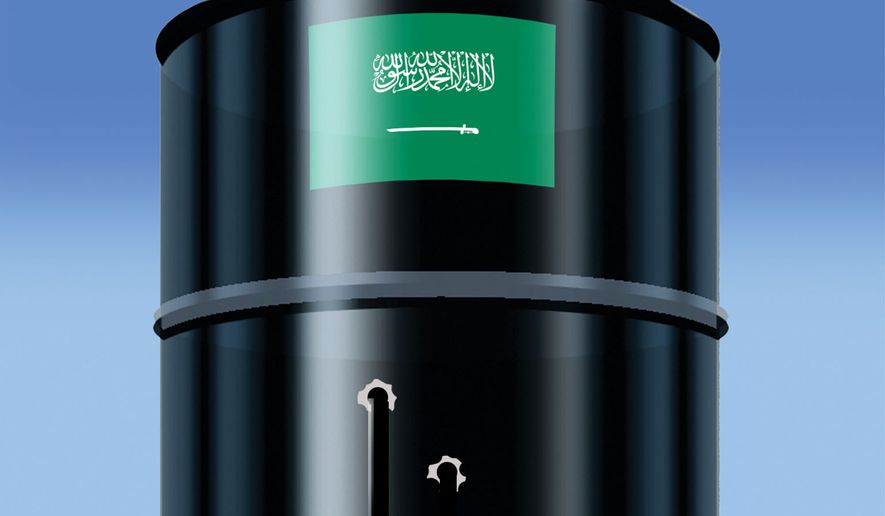
The recent Houthi attacks on Saudi oil facilities add a new dimension to the U.S.-Israel war with Iran — by raising global energy prices and further undermining the already depressed confidence in energy supplies.
Coming within weeks of America’s midterm elections, the attacks create cost pressures that will diminish the Republicans’ election chances and postelection support for the war and the Trump administration.
More important, the Houthis’ targeting reflects a subtle strategy that balances their need to maintain Iranian support while potentially avoiding American counterstrikes. By not striking U.S. bases, facilities or forces, the Houthis are complying with their May 2025 ceasefire agreement with the U.S. that ended their attacks against U.S. vessels in the Red Sea and Gulf of Aden.
In exchange, the U.S. agreed to end its operations against the group — hence, President Trump’s denial of the Saudi request for American strikes against the Houthis.
Herein lies America’s strategic dilemma. Denying the Saudis’ request risks their support for the war effort. Riyadh not only hosts the bulk of the U.S. forces involved but also stores much of the ordnance and provides the fuel that sustains American operations.
One can argue that Saudi Arabia cannot refuse to support America, but it can choose how it supports Washington.
For example, Aramco is maximizing oil production and doing all it can to export its products. Simply reducing production or exports will intensify the price pressures affecting the global economy and the U.S. electorate, among which affordability has become a major election issue.
It can also decelerate logistics deliveries or restrict some flight operations, complicating American operations and strategy.
However, hitting the Houthis will reignite their anti-shipping campaign, expanding the war in a way the U.S. cannot afford without diverting significant forces away from Iran and other strategic U.S. concerns. Houthi shipping attacks would further escalate shipping and maritime insurance costs beyond their current record levels, adding more inflationary pressures.
America’s problem lies in its misunderstanding of Iran’s strategic thinking and that of its allies, and this has impeded U.S. success in this conflict. The U.S. has engaged Iran’s government in the mistaken belief that it has the authority to deliver on any agreement.
In fact, the clerics and the Islamic Revolutionary Guard Corps dictate Iranian actions. The “supreme leader,” who is now under the IRGC’s control, can negate any government decision, overturn any judicial ruling and veto any legislation. The IRGC controls Iran’s security forces and military and the funding of Iran’s allies — Hamas, Hezbollah and the Houthis.
America cannot achieve its political objective of ending Iran’s nuclear program while the IRGC retains power.
The Houthis’ priority is the preservation of their mountain homeland and their sovereignty over it. They require Iranian support to maintain both, but that does not mean the Houthis are Iranian toadies. They have been fighting for their autonomy since the Islamic schism that followed the Prophet Muhammad’s death.
In the early 1960s, the Houthis’ Zaydi forebears — the royalist tribal forces of the Mutawakkilite Kingdom — received covert Israeli support against the Egyptian-backed republican forces fighting to install a Nasser-aligned government in North Yemen. Since then, they have worked with whatever allies and partners they could gain. Iran became their major supporter after Ruhollah Khomeini’s Islamic Revolution took power in Iran in 1979.
However, Houthi leadership — which claims direct descent from the Prophet Muhammad — always calculates what is best for the Houthi community before taking action.
American leaders may have believed the May ceasefire agreement precluded Houthi action in this conflict. If so, they were mistaken.
The Houthi strategy is subtle and intended to fulfill the terrorists’ obligations to Iran, under the U.S.-Houthi ceasefire agreement. These attacks also signal that the Houthis have calculated that the conflict’s strategic momentum has shifted against the United States.
America’s only real option now is to reverse that calculation by significantly intensifying the pressure on the IRGC, which is and has always been the power behind Iran’s decision-making.
• Carl O. Schuster is a retired U.S. Navy captain with 25 years of active-duty service on a variety of U.S. and allied ships, submarines and staffs.

Please read our comment policy before commenting.