


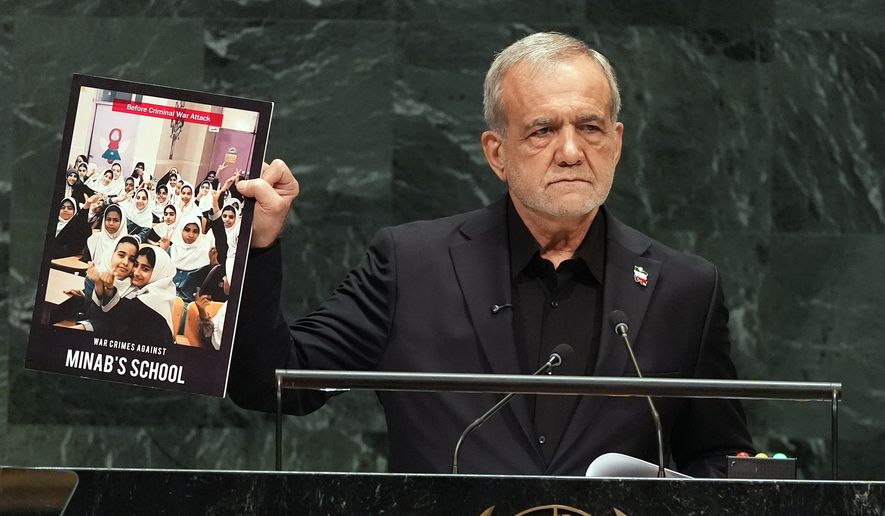

Iranian President Masoud Pezeshkian said Tehran won’t back down on the terms of its ceasefire offer, “even if it comes to a doomsday war.”
Mr. Pezeshkian said he is waiting for President Trump, through U.S. mediators, to officially respond to Iran’s terms for a seven-day ceasefire, a day after Mr. Trump appeared to flatly reject the offer.
U.S. Ambassador to the United Nations Mike Waltz told CNN’s “State of the Union” that Mr. Trump doesn’t trust the Iranians to hold up their end of the deal.
People were interested in these podcasts
Iran offered to open the Strait of Hormuz, a major chokepoint for oil shipping, as part of a ceasefire deal that would first require the United States to release $12 billion in frozen assets, lift Iranian oil sanctions and end the blockade of Iranian ports, among other conditions.
Iranian Foreign Minister Abbas Araghchi told NBC’s “Meet the Press” that when Iran’s conditions are met, which he said would take four or five days, “on Day Six the straight would be open.” He said the two sides would resume talks on a permanent deal “on Day Seven.”
Iran’s offer comes days after Mr. Trump threatened in a United Nations address to “annihilate the Islamic Republic and do it quickly, never giving them a chance to kill and destroy people and countries again,” if Tehran fails to agree to a deal with the United States to end the war and open the strait.
SEE ALSO: Iran’s president says Supreme Leader Ayatollah Mojtaba Khamenei is ‘completely healthy’
Mr. Pezeshkian said Iran isn’t backing down on the demands for the ceasefire, even in the face of Mr. Trump’s threat.
“We stand firm in the face of any challenge, any aggression against us, even if it comes to a doomsday war,” Mr. Pezeshkian said. “At the same time, we are ready for diplomacy. And now there is a reasonable plan on the table.If they reject it with no reason, this is their fault.”
Mr. Waltz told CNN the United States is rejecting the deal because Iran “was asking for everything up front,” and isn’t trustworthy. He noted the memorandum of understanding signed last summer between the United States and Iran, saying Tehran violated the agreement soon after by launching drone attacks against commercial cargo ships in the strait.
“The president’s just not confident that the Iranians are coming in good faith, and that will truly negotiate the end of their nuclear program,” the ambassador said.
Mr. Trump first rejected the deal Saturday in remarks to reporters.
“They want to make a deal where they open the strait immediately because they’re losing so badly. … We’re winning tremendously,” the president said. “They want to make a deal, and I think that’s fine. I like making a deal too, but that deal would not be acceptable. … What they want to do is immediately open the Hormuz Strait. You know why? Because they’re dying. You know why they’re dying? Because they have no money coming in.”
Correction: An earlier version of this article misidentified the Iranian official who spoke on NBC’s “Meet the Press.”
Contact the author


Please read our comment policy before commenting.