



OPINION:
Democracy was on display during the 2026 midterm elections in the United States.
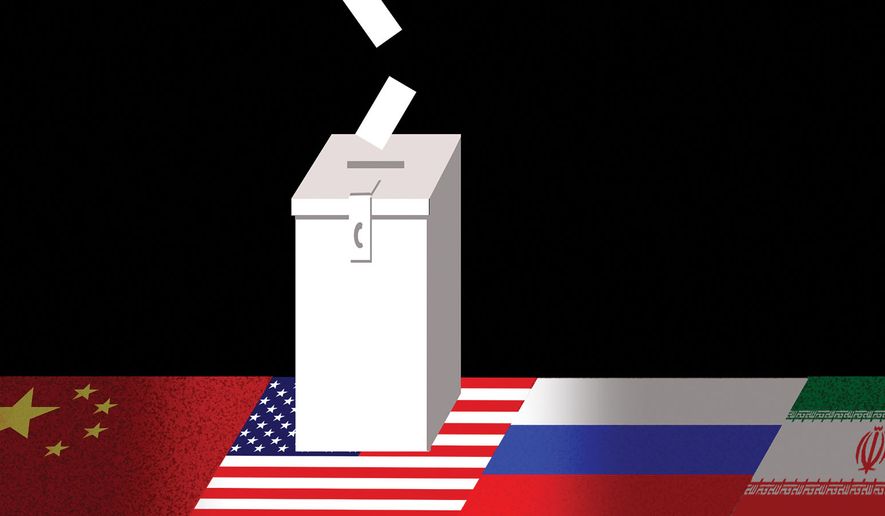
More than 124 million ballots were cast across the country, with considerable foreign interest. It was a testament to the power of the people, who engaged in governance through free and fair elections that ensure all public officials are answerable to the electorate.
A few authoritarian countries, where a peaceful electoral transition of power is nearly impossible, followed these elections and provided their people with selective information.
People were interested in these podcasts
Russia acknowledged the results and said the political shift would not alter Russia’s current geopolitical strategies. Deputy Foreign Minister Sergei Ryabkov said Moscow has historically had strained interactions with Democrats. He said Russia’s position on the war in Ukraine would remain unchanged regardless of the election outcome.
China said the election was an internal U.S. matter. Its Foreign Ministry spokesperson emphasized China’s readiness to manage differences and maintain a stable, bilateral relationship based on mutual respect.
Iran publicized the election results, with Mohammad Bagher Ghalibaf, speaker of the Islamic Consultative Assembly, posting a message Nov. 4 asserting that the U.S. electorate had rejected the Iran war.
As Americans were casting ballots, North Korea test-fired multiple missiles toward the East Sea/Sea of Japan. The display was highly unusual because it paired a new surface-to-air defensive missile with a drill using long-range strategic cruise missiles. It was apparently a show of force to demonstrate North Korea’s advanced electronic warfare and defense-evading capabilities.
Kim Yo-jong, the sister of leader Kim Jong-un, issued statements coinciding with the U.S. election. She said North Korea had no need to sit face to face with such unreliable and hostile people and demanded that Washington abandon its hostile policies and show respect to North Korea.
This is typical of Ms. Kim’s previous statements about the U.S. and a response to President Trump’s willingness to again meet with Mr. Kim.
It must have been difficult for these authoritarian countries to comment about the U.S. election when their people and many others are denied the ability to participate in free and fair elections. Such governments are not answerable to the people. They answer only to a supreme leader, a ruling theocracy or a political party.
Russian President Vladimir Putin must be concerned about the public’s support of his war against Ukraine. Russia has amassed more than 1 million casualties. In 1989, Soviet leader Mikhail Gorbachev withdrew from Afghanistan after casualties mounted and the people said no to losing any more of their sons and daughters.
Will the Russian people say no to Mr. Putin too? If Russia’s elections were free and fair, Mr. Putin would have good reason to be concerned.
The Iranian theocracy was brutal toward its people during the 2009 Green Movement, when Iranians protested the disputed reelection of President Mahmoud Ahmadinejad. The government was brutal in suppressing widespread demonstrations throughout Iran in 2022 — the “Woman, Life, Freedom” movement — and again in response to recent demonstrations over crushing inflation and deep poverty caused by government failures.
Surely, the Iranian regime is concerned about a lack of support from the people and what would happen if there were free and fair elections.
Will North Koreans continue to support a regime that sends troops to Russia to suffer extreme casualties in Moscow’s war? These and other issues — including inferior medical facilities, a lack of food and the gulags that imprison political dissidents — jeopardize the people’s support of the government. Would Pyongyang permit free and fair elections?
Will the Chinese people continue to support the CCP when they are denied the right to vote and elect officials who will represent and be answerable to them?
It is obvious why these authoritarian countries do not permit free and fair elections.
According to The Economist’s Democracy Index, authoritarian countries account for 36.5% of the world’s countries. Hopefully, this percentage will shrink.
Recent elections in Serbia, Hungary and Brazil give hope that democracy will prevail. It is what the people want and demand of their governments.
• The author is a former associate director of national intelligence. All statements of fact, opinion or analysis expressed are those of the author and do not reflect the official positions or views of the U.S. government.
Follow the author


Please read our comment policy before commenting.