


SPONSORED What's This?
Why More Than 85,000 Travelers Have Trusted Adventure Life Since 1999
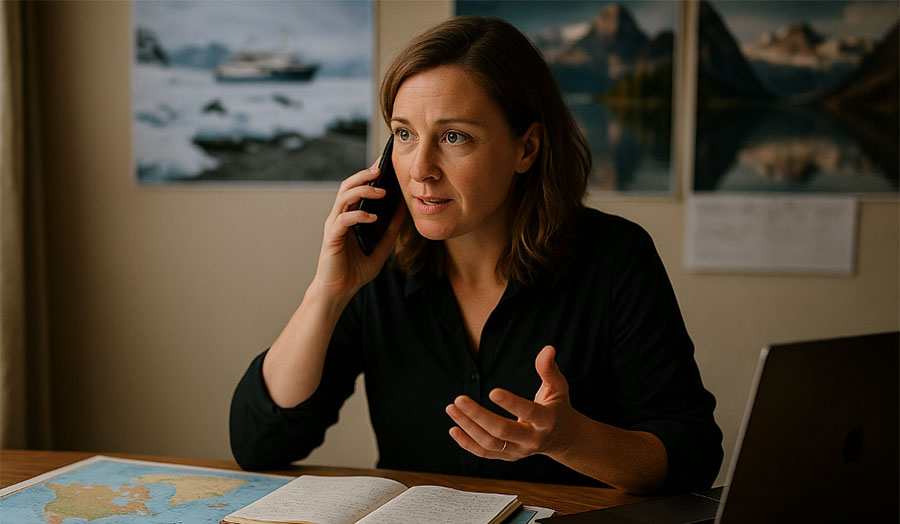
There was a time when planning a journey meant surrendering to uncertainty. A folded map. A phone call placed across time zones. A leap of faith. In 1999, when Adventure Life began with a narrow focus on Peru and the Galápagos, travel still carried that weight. You trusted a human voice because there was little else to trust. Two decades later, the world is saturated with information, yet that original anxiety has returned in a different form: paralysis by abundance.
The modern traveler does not lack options. They drown in them.
Today’s traveler scrolls through thousands of itineraries, conflicting reviews, algorithmic rankings, and influencer promises. The tools are endless; clarity is not. It is in this landscape - not the analog past, but the digital present - that Adventure Life has quietly built its relevance. More than 85,000 travelers have trusted the company not because it offered more choices, but because it offered judgment.
The Burden of Too Much Freedom
The travel industry likes to frame itself as a story of empowerment. Book directly. Customize everything. Build your own adventure. But freedom without guidance is not liberation; it is labor. Research becomes unpaid work. Risk shifts from institutions to individuals. When a trip fails - when a ship is canceled, a border closes, a medical emergency arises - the responsibility lands squarely on the traveler who clicked “confirm.”
Adventure Life was built as a rebuttal to that logic. It does not own cruise ships or operate lodges. It operates something less visible and more fragile: trust. Its model is not to sell exclusivity, but to stand between travelers and a fragmented global system, absorbing complexity so others don’t have to. The company’s average booking: about two and a half people at roughly $6,900 per traveler, is not a mass-market impulse buy. It is a considered decision, often once-in-a-lifetime. That scale demands accountability.
Human Judgment in an Algorithmic Age
More than 60 percent of Adventure Life’s itineraries include small-ship expedition cruising - vessels often carrying fewer than 200 passengers, sometimes fewer than 50. These trips go where large ships cannot: Antarctic ice, Galápagos channels, Arctic fjords. They also go where mistakes are costly. In this fastest-growing segment of cruising, demand has surged in recent years, even as scrutiny around sustainability, safety, and governance has intensified.
Adventure Life’s response has not been technological bravado. It has been human presence. Live chat answered by real people and Trip Planners who know the region because they have been there. A company culture that measures expertise not in clicks, but in days spent on the ground, more than 550 collectively each year.
“People aren’t a number in our system,” says CEO Monika Sundem. “They’re a name, a set of concerns, a set of hopes. Our job is to listen before we design anything.”
When the System Breaks, Who Stands With You
The pandemic exposed a truth the industry rarely acknowledges: booking direct is only empowering when nothing goes wrong. When borders closed and ships stopped sailing, travelers who had assembled trips piece by piece were left to negotiate alone. Adventure Life’s clients, by contrast, had advocates. Credits were secured. Refunds negotiated. Futures salvaged.
That moment did not create loyalty. It revealed it.
Many travelers who once prided themselves on planning everything independently returned with a different conclusion: the smoothest trip is not the one you control entirely, but the one where someone else is responsible when control disappears.
Why This Still Matters
By 2030, travel discovery will increasingly be mediated by artificial intelligence. Algorithms will recommend destinations. Machines will summarize options. But machines do not take responsibility. They do not argue with an operator on your behalf. They do not care if your honeymoon collapses or your family misses a once-in-a-generation window.
Adventure Life’s quiet endurance suggests something countercultural: that in an age obsessed with scale, intimacy still scales. That moral clarity - standing with clients when it is inconvenient—creates a legacy more durable than optimization.
“We don’t just sell trips,” Sundem says. “We advocate for our travelers. We use our experience, leverage, and relationships to make sure things are done right.”
That may be why, after more than 25 years, travelers keep coming back. Not because the world has become easier to navigate - but because it hasn’t.
