


SPONSORED What's This?
How are Synthetic Diamonds Made? - The Science Inside
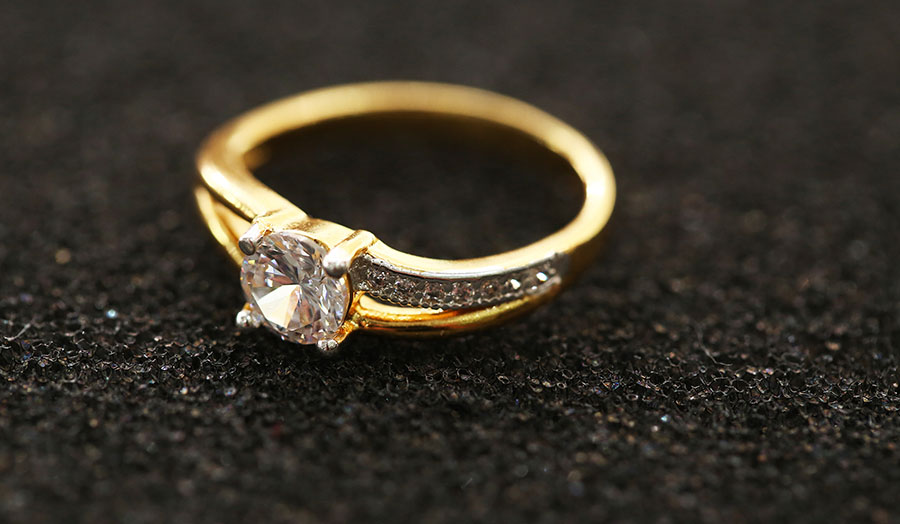
Have you ever wondered how those resplendent lab-grown gems are created? Buckle up because we're in for a deep dive, discussing some cool stuff about how those synthetic gemstones are made. Nowadays, lab grown diamonds raise a lot of talk in the field of the jewelry business. This hence provides certain sustainable and ethical alternatives to their mined counterparts. But how does one go about making such a sparkly wonder? Well, let us unravel the mystery together!
Understanding Lab-Grown Diamonds
What Is a Lab-Grown Diamond?
Let me explain it this way: Lab-created diamonds are not some cheap imitation; they are chemically, physically, and optically identical to their mined brothers, only grown in high-tech labs, not extracted from the Earth. Cool, right?
The Rise of Lab-Created Diamonds in the Jewelry Industry It's no secret that the lab-grown diamonds area is disrupting the jewelry world. More and more couples are opting for these, especially as Engagement Rings, and it's easy to see why: they are drawn to them by their conflict-free qualities and usually more petite price tags. But how did we get here? Well, it's all thanks to some pretty nifty scientific advancements!
The Two Major Ways Diamonds are Grown in the Laboratory
Now, let's get into some specifics. HPHT and CVD treatment are two significant ways these sparkly stones get cooked up. Both have unique processes and quirks, so let's break them down!
High-Pressure High Temperature (HPHT)
The HPHT Process Explained
Think of replicating conditions deep in the Earth's crust but in a laboratory. That's the HPHT method!
In the process, a small diamond seed is used, and then a chamber with pure carbon is created. The cool part then comes along, where the temperature has to rise to about 1,500°C and pressing at an estimated 1.5 million pounds per square inch. Under these extreme conditions, the carbon tincture will melt to form a diamond around the seed. In a nutshell, it's like making a pearl, except it's wild!
Advantages and Disadvantages of HPHT
The clarity and color of most diamonds made from the HPHT method are usually impeccable. This technique can also create more giant stones, which is great for anyone hoping for a bold, sparkly piece. However, it is an energetic process, and the material is expensive, limiting production.
Chemical Vapor Deposition (CVD) Method
The CVD Process Explained
If HPHT is like baking a cake of diamonds, CVD is more like 3D printing!
It starts with the thin slicing diamond seed in a sealed chamber filled with carbon-rich gas, usually methane, mixed with hydrogen. Heated to ca. 800°C, it creates a plasma that allows carbon atoms to rain down on the seed, building up a diamond layer by layer. It's slower than HPHT, but it's literally like watching a diamond grow before your eyes!
Advantages and Disadvantages of CVD
CVD diamonds are virtually transparent and of the highest purity. This technique yields stones with fewer defects and is, for that very reason, well-suited for use in jewelry and high technology. This can, however, be a slower method, particularly for larger stones.
Quality and Certification of Lab-Grown Diamonds
Grading Lab Grown Diamonds
Are lab-grown diamonds as good as accurate? But here's the catch—they are real! Lab-grown diamonds are graded based on the same criteria as mined diamonds, including the famous 4 Cs: carat, clarity, cut, and color. Now, that should put all your doubts to rest.
Certification Process and Entities
But, yes, lab-grown diamonds, like their earth-extracted cousins, are also certified through similar but stringent processes. Organizations such as the Gemological Institute of America (GIA) and the International Gemological Institute (IGI) grade lab-grown diamonds and subsequently create reports to confirm the stone's identity as a diamond and state that the diamond is grown in a laboratory.
The Future of Lab-Grown Diamonds
Technological Advancements Buckle up, ladies and gentlemen, because the world of lab-created diamonds moves at the speed of light! Scientists are constantly improving production processes, using higher quality and larger diamonds each time. We will finally see the lab-grown diamond that outshines even the most prestigious mined stones in a few years!
Market Trends and Consumer Acceptance The lab-grown diamond's future is bright (and sparkling). More and more consumers accept this ethical gem, especially the young generation interested in sustainability. As production techniques improve and prices decrease, lab-grown diamonds may become the new norm in the jewelry industry.
Conclusion: The Sparkling Future of Lab-Grown Diamonds
There is the science behind those fabulous synthetic diamonds. From that high-pressure, high-temperature pressure cooker to the 3-D printing-like process of CVD, these gems show human ingenuity at their best. With the development of technologies and the fluctuation of customers' preferences, lab-created diamonds will also show an upsurge in the jewelry world. That is a powerful combination of allure, ethos, and innovation in one thing: lab-grown diamonds. Whether it be buying that exciting new piece of jewelry, some stunning scientific marvel, or simply a lab-grown diamond, the next time anyone sees it sparkling, it will have a lot to spark about.
