Skip to content
Advertisement
Author profile
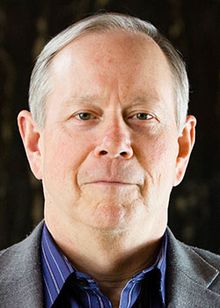
Bill Gertz

Bill Gertz

bgertz@washingtontimes.com

Bill Gertz is a national security correspondent for The Washington Times. He has been with The Times since 1985.
He is the author of eight books, four of them national best-sellers. His latest book, "Deceiving the Sky: Inside Communist China's Drive for Global Supremacy," reveals details about the growing threat posed by the People's Republic of China. He is also the author of the ebook "How China's Communist Party Made the World Sick."
Mr. Gertz also writes Inside the Ring, a weekly column that chronicles the U.S. national security bureaucracy.
Mr. Gertz has been a guest lecturer at the FBI National Academy in Quantico, Va.; the Central Intelligence Agency in Virginia; the National Defense University at Fort McNair in Washington; and the Brookings Institution in Washington. He has participated in the National Security Studies Program at the Johns Hopkins University School of Advanced International Studies and Syracuse University Maxwell School of Citizenship and Public Affairs.
He studied English literature at Washington College in Chestertown, Md., and journalism at George Washington University. He is married and has two daughters.
He can be reached at bgertz@washingtontimes.com.

Articles by Bill Gertz

In this June 15, 2020, file photo, the Voice of America building stands in Washington. The new chief of U.S. global media is plowing ahead with changes to the Voice of America and other international broadcasters that are heightening concerns about their future as independent news organizations. Although Agency for Global Media chief executive Michael Pack has assured Congress that VOA and its sister networks will remain independent and pledged he would consult lawmakers on significant developments, last week he initiated personnel changes and began a review of visas for foreign employees. (AP Photo/Andrew Harnik, File)

VOA cancels Chinese-language programs on Taiwan

The Voice of America is canceling two Chinese-language programs focused on the standoff between China and Taiwan in a move critics say signals a softening of the broadcaster's coverage of communist China.

August 18, 2022
In this Tuesday, July 11, 2017, photo released by China's Xinhua News Agency, ships carrying Chinese military personnel departs a port in Zhanjiang, south China's Guangdong Province. (Wu Dengfeng/Xinhua News Agency via AP) **FILE**

Chinese navy intel ship spied on RIMPAC

China's military dispatched a spy ship to collect war fighting secrets during the U.S. Navy's major international exercises known as Rim of the Pacific (RIMPAC) that ended earlier this month, according to defense sources.

August 17, 2022
Spectators wave Chinese flags as military vehicles carrying DF-41 ballistic missiles roll during a parade to commemorate the 70th anniversary of the founding of Communist China in Beijing, Tuesday, Oct. 1, 2019. China on Friday, Jan. 21, 2022, criticized Washington for imposing sanctions on Chinese companies the U.S. says exported missile technology and accused the United States of hypocrisy for selling nuclear-capable cruise missiles. (AP Photo/Mark Schiefelbein) **FILE**

China moving toward nuclear coercion

Beijing's rapid large-scale buildup of nuclear weapons is a sign the Chinese military is moving away from its past defensive strategy toward the use of "nuclear coercion" to achieve Chinese Communist Party aims, such as the takeover of Taiwan, according to a think tank report authored by a Strategic Command analyst.

July 27, 2022
In this Monday, March 9, 2020, file photo released by the North American Aerospace Defense Command (NORAD), a Russian Tu-142 maritime reconnaissance aircraft, top right, is intercepted near the Alaska coastline. A similar incursion by two Russian maritime patrol aircraft tested the U.S. and Canadian air defense zone in early July 2022, in a show of force in the midst of Moscow's military operation in Ukraine and nuclear saber-rattling, the commander of the Northern Command said on July 22. The U.S.-Canadian air defense command is playing down two recent Russian military encounters near Alaska as non-threatening — despite one intrusion that included nuclear-capable bombers. The North American Aerospace Defense command delayed releasing details on the two separate incidents for two days, even though multiple U.S. fighter jets and support aircraft were used to intercept and escort the Tu-95 bombers and Su-35 jets off the Alaskan coast on May 11. (North American Aerospace Defense Command via AP, File)

Russia tests U.S. air defenses in midst of Ukraine war

Two Russian maritime patrol aircraft tested the U.S. and Canadian air defense zone two weeks ago in a show of force in the midst of Moscow's military operation in Ukraine and nuclear saber-rattling, the commander of the Northern Command said Friday.

July 22, 2022
U.S. and Chinese national flags are hung outside a hotel during the U.S. Presidential election event, organized by the U.S. embassy in Beijing. A government report is outlining how spy services from China, Russia and Iran are hard at work trying to steal trade secrets and proprietary information from U.S. companies, government labs and universities. (AP Photo/Andy Wong, File)

British intelligence retools for spying on China

Britain's MI6 foreign intelligence service has retooled the storied spy agency with a major focus on the threat posed by China, the agency's director said in rare public remarks Thursday.

July 21, 2022
In this file photo, Chief of Space Operations at U.S. Space Force Gen. John Raymond testifies before the Senate Armed Services Committee on May 6, 2020. (Greg Nash/Pool via AP)  **FILE**

Space Force leader backs soft Biden agenda

Air Force Gen. John Raymond, chief of the newly created Space Force, says he supports efforts by the Biden administration to reach a U.N.-sponsored agreement on military activity in space, something past administrations has rejected an arms control ploy by China and Russia to limit the American power in space.

July 20, 2022