Skip to content
Advertisement
Author profile
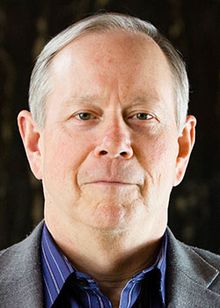
Bill Gertz

Bill Gertz

bgertz@washingtontimes.com

Bill Gertz is a national security correspondent for The Washington Times. He has been with The Times since 1985.
He is the author of eight books, four of them national best-sellers. His latest book, "Deceiving the Sky: Inside Communist China's Drive for Global Supremacy," reveals details about the growing threat posed by the People's Republic of China. He is also the author of the ebook "How China's Communist Party Made the World Sick."
Mr. Gertz also writes Inside the Ring, a weekly column that chronicles the U.S. national security bureaucracy.
Mr. Gertz has been a guest lecturer at the FBI National Academy in Quantico, Va.; the Central Intelligence Agency in Virginia; the National Defense University at Fort McNair in Washington; and the Brookings Institution in Washington. He has participated in the National Security Studies Program at the Johns Hopkins University School of Advanced International Studies and Syracuse University Maxwell School of Citizenship and Public Affairs.
He studied English literature at Washington College in Chestertown, Md., and journalism at George Washington University. He is married and has two daughters.
He can be reached at bgertz@washingtontimes.com.

Articles by Bill Gertz
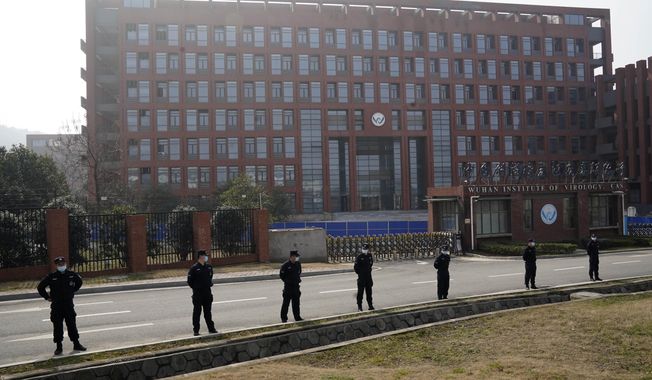
A security person moves journalists away from the Wuhan Institute of Virology after a World Health Organization team arrived for a field visit in Wuhan in China's Hubei province on Wednesday, Feb. 3, 2021. The WHO team is investigating the origins of the coronavirus pandemic has visited two disease control centers in the province. (AP Photo/Ng Han Guan)

DNI: China still blocking virus origin probe

China is continuing to prevent international investigators from tracing the origins of the COVID-19 pandemic, and has falsely blamed the United States for the deadly pandemic, the annual threat assessment produced by the office of Director of National Intelligence Avril Haines revealed this week.

March 9, 2022
Ukrainians cross an improvised path under a destroyed bridge while fleeing Irpin, in the outskirts of Kyiv, Ukraine, Tuesday, March 8, 2022. Demands for ways to safely evacuate civilians have surged along with intensifying shelling by Russian forces, who have made significant advances in southern Ukraine but stalled in some other regions. Efforts to put in place cease-fires along humanitarian corridors have repeatedly failed amid Russian shelling. (AP Photo/Felipe Dana)

Some civilians escape Ukraine as Pentagon nixes Polish jet offer

Delicate cease-fires held for several hours along humanitarian aid and civilian evacuation corridors in some areas of Ukraine on Tuesday, even as Russian forces pounded other negotiated escape routes and local authorities warned that the number of civilians killed by Russian missile strikes continued to climb.

March 8, 2022
Russian President Vladimir Putin enters a hall to chair a Security Council meeting in Moscow, Russia, on Feb. 25, 2022. Putin is raising fears that he has become more reckless, more committed to restoring the USSR, perhaps more likely to set off a world-altering war. There's no way to determine from a distance whether the Russian president is becoming unstable or if he is simply preying on the West's fears. (Alexei Nikolsky, Sputnik, Kremlin Pool Photo via AP, File)

Putin nuclear threat part of new escalation policy

Russian President Vladimir Putin's veiled threats to use his nuclear arsenal if the West comes to Ukraine's aid in the current fighting highlight a new military doctrine called "escalate to deescalate," which calls on the military to resort to nuclear weapons more rapidly in conflicts.

March 2, 2022
Ukrainian President Viktor Yanukovych shakes hands with Chinese President Xi Jinping during a signing ceremony at the Great Hall of the People in Beijing last week. Mr. Yanukovych's visit is aimed at gaining Chinese support for Ukraine's battered economy. The country's economic malaise has helped fuel ongoing protests in Kiev. (ASSOCIATED PRESS)

Putin’s war tests China’s nuclear pact with Ukraine

Russian President Vladimir Putin's order raising the alert status of Russia's massive nuclear forces this week in the midst of an invasion of neighboring Ukraine is presenting a test of a 2013 agreement that calls on China to provide a nuclear deterrent umbrella for Kyiv.

February 28, 2022
Chinese President Xi Jinping, right, and Russian President Vladimir Putin talk to each other during their meeting in Beijing, Feb. 4, 2022. China is the only friend that might help Russia blunt the impact of economic sanctions over its invasion of Ukraine, but President Xi Jinping’s government is giving no sign it might be willing to risk its own access to U.S. and European markets by doing too much. (Alexei Druzhinin, Sputnik, Kremlin Pool Photo via AP, File)

Putin threat tests China’s nuclear umbrella pact with Ukraine

Russian President Vladimir Putin ordered Moscow's military to raise the alert status of its large nuclear forces on Sunday, and the threat will test a 2012 agreement that calls on China to provide a nuclear deterrent umbrella for Ukraine.

February 27, 2022
Chinese Foreign Ministry spokesperson Hua Chunying reacts during the daily press conference held at the Foreign Ministry on Thursday, Feb. 24, 2022, in Beijing. China’s customs agency on Thursday approved imports of wheat from all regions of Russia, a move that could help to reduce the impact of possible Western sanctions imposed over Moscow’s attack on Ukraine. (AP Photo/Liu Zheng)

China blames U.S. for inciting Ukraine conflict

China's government leaned further toward supporting Russia's military incursion into Ukraine on Thursday blaming the Eastern European conflict on U.S. arms transfers to Kyiv.

February 24, 2022
Chinese President Xi Jinping is seen leading other top officials pledging their vows to the party on-screen during a gala show ahead of the 100th anniversary of the founding of the Chinese Communist Party in Beijing, June 28, 2021. Chinese government instructions posted on social media reveal that Chinese Communist Party propaganda organs have been ordered to avoid criticizing Russia's invasion of Ukraine. (AP Photo/Ng Han Guan, File)

China restricts media criticism of Russia

Chinese government instructions posted on social media reveal that Chinese Communist Party propaganda organs have been ordered to avoid criticizing Russia's invasion of Ukraine.

February 23, 2022
President Joe Biden listens during an event in the South Court Auditorium in the Eisenhower Executive Office Building on the White House complex, Tuesday, Feb. 22, 2022, in Washington. (AP Photo/Alex Brandon)

Intel praised, Biden faulted in Ukraine crisis

Security analysts familiar with internal U.S. government thinking say most of the blame for the Ukraine crisis and Russian invasion this week in seizing two eastern regions rests with President Biden and grew out of the chaotic U.S. withdrawal from Afghanistan in August.

February 23, 2022
China's Foreign Ministry spokesperson Wang Wenbin speaks during the daily briefing in Beijing on Friday, June 11, 2021. China on Friday said the U.S. and Australia were "flexing their muscles” with recent naval drills in the South China Sea, underscoring Beijing’s sensitivity over the strategic waterway it claims as its own. (AP Photo/Liu Zheng)

China: Moscow has ‘legitimate’ security concerns with NATO, Ukraine

China on Tuesday appeared to back Russian grievances over Ukraine and NATO following Russian President Vladimir Putin's recognition Monday of two separatist enclaves in the eastern part of the country, noting what it called Moscow's "legitimate security concerns."

February 22, 2022
This June 14, 2018, file photo shows an FBI seal on a podium before a news conference at the agency's headquarters in Washington. The FBI and other federal government agencies are increasingly looking to counter cyberthreats through tools other than criminal indictments. That's according to the bureau’s top cyber official. (AP Photo/Jose Luis Magana, File)

FBI sting in Navy nuclear secrets case may have links to China

The FBI sting operation that ensnared an Annapolis U.S. Navy engineer and his wife in a conspiracy to sell nuclear submarine secrets involved an unidentified foreign nation that could be China, The Washington Times has learned.

February 18, 2022